
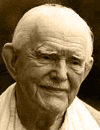
The Corn of Wheat That Must Die
Norman Grubb teaches that true spiritual strength and love come from recognizing God's presence and love even in suffering and appearances of evil, learning obedience and faith through practice.
In this devotional sermon, Norman Grubb explores the profound truth that God's love and presence are constant, even amidst suffering and appearances of evil. He encourages believers to develop faith that sees beyond outward circumstances, learning obedience through trials and becoming mature spiritual intercessors. Drawing on biblical examples and personal insights, Grubb challenges listeners to practice seeing God at work in all situations, thereby growing stronger in their walk with Christ.
Full Transcript
We're just adding praise to praise because you add glory to glory. It's sure been that this week. Thank you for these last few times we get this hour, time this morning, thank you for your same living presence.
Jesus Christ, the same yesterday, today, tomorrow, forever. Amen. Well, it's been a wonderful time to me.
Um, I'm a kind of quiet English bloke. So, um, we're sort of cautious and don't know how to embrace anybody. Uh, must be introduced first, Mr. Mrs. So, um, however, the Holy Spirit does break through every now and then.
And I've loved, I've loved the love of Christ here. I've loved the love of Christ in people, in people. I've loved, it's been lovely, the stream of love, God's love.
Beautiful. And, uh, it's He in us. It isn't that we got excited.
It's so it'll continue where, where it doesn't appear to be God's love. He, that's it, will go where that doesn't appear to be God's love. He's loving through us just the same.
If I look at myself, am I loving? Because here I come against this, this is, am I loving? God's doing the loving business, not you. As I say, He lives in funny forms, but you're a form of Christ and you go on loving. And don't you go home and say, oh, it's all go.
I don't feel like loving now. You won't make me feel like that because you're not the lover. He's the lover.
And through your non-feeling of love, he'll put his love. So God believing is loving when you don't think he is loving. And when you don't think you're loving either.
He is loving. Just go on accepting he's loving and accepting the other, the other, the dear ones are exactly as they mean to be at the moment. This is this mystery of God using evil.
God purposes people to be exactly as they are now, cause them to see exactly what they do now, so that they'll see something better a little later on. That's the point. And we'll be strong in the Lord because we've been strong in the devil.
That's why. And so, except, I've got to learn it over and over again. I've got to go back and see, except this dear one, that one, God means them to be a bit like this, a bit like that.
Of course, I'm never a bit like anything. It's only they. A bit like this, a bit like that.
No, God means them to be. God causes them to see like that and produce what we may think are pleasant things as a consequence. God causes them.
Accept them, because God's on his job. You think he's asleep. No, you're asleep.
Your faith is asleep. He's on his job. He's on his love job.
He's on his saving job. So I've got to learn. I am the love of God.
All right, well you don't feel. I still say, God, you're loving through me. And you see that now by accepting him as you are.
God, you're loving through them. You're loving there. You're loving, although they're doing and saying things which by no means love.
All right. God's loving because he's loving very negatively first. Let the fingers get a little burnt first.
Then they'll come up from some finger cell or something a little later on. So this is why I've got to learn. So this is it.
So it isn't just an emotional love. It's a beautiful love you're hearing, a beautiful flow. We can't go on like this.
We'd love to go and hug everybody, but it might not always work. So we have to go to a different atmosphere. It's the same Jesus, the same Lord, the same love coming through.
So learn. We've got to learn. This is what we've got to learn.
We've got to learn he is where he doesn't appear to be. That's how we become strong in him. We become strong by eternity, through eternity, because we've learned to see him where he doesn't appear to be.
Because in a sense all manifestations are appearances. All manifestations are appearances. They aren't.
They're forms of him. Now I presume through eternity we've got new heavens and new earth where he dwells righteousness. So we're somewhere going to be operating in new heavens and new earth forms of him.
Now if I haven't learned the habit of seeing through the appearance of a living person coming through these ways, you see, I shall get all caught up again. But if I practice now, learning he's there where it appears to be the devil, it's still he. The cup which my father has given me, that was the devil's cross.
My father has given it, shall I not take it? That if I begin to learn to see this and practice this, practice makes habits. Habits make destiny. And the point is if we, as we get at ease down here, hurting, problems, disturbances, this is where we root down in our sufferings.
We call sufferings and we see them this way down. We see them this way down in their sufferings. And we transfer, that we learn to practice the presence of God.
He catches us. He's already caught you in salvation. He's already caught you in unification.
He goes on catching us now in habits of life. So we begin to see, no it's all the Lord, all the Lord, and get quicker at it, quicker at it. Or when I'm an awful quick person and I lose a paper, I bother that.
Instead of saying the Lord made me lose it, I haven't learned my lessons not a bit. I'm 76 tomorrow and I haven't learned one lesson yet I don't think. I'm just starting.
But Moses and I started living at 80, so I've just started living four years time. Then he started his job. So it's all right.
So there's no age in this business. Age is human stuff. We're in eternal life.
We're not, I never keep a birthday. Even my wife never says hello to me. I don't want her to.
Because we're ageless. Dates make you look at time. We're not in time, we're in eternity.
However that's a philosophy I'll leave alone just now. But so this is it, you see, we're learning to practice the presence of God, which means seeing God where it doesn't appear to be Him at all. It's all He.
I learn to see Him. I know His love. I'm accepting what He is doing.
I'm accepting what people appear to be and I don't like it any more than lots about me they don't like. And I'm learning, learning, learning, and then that's accepting. Then we're accepting as a loving, as a loving, as a believing.
And we're learning and bringing into being, bringing into being the manifestation. As all Jesus, Jesus was the most earthly person who ever lived and the most heavenly person who ever lived. He was thoroughly earthy.
That's why they can't get away from Him. He really loved the leper. He really lived down where man is.
He really died for man. So He was real earthy. Right down there.
What a naughty Jesus turning water into wine. That was very naughty. First thing He ever did.
So Jesus liked parties. You know, the old word for parties in the old Bible word is feast. Feast is party minded.
Jesus was a gay one. He was a friend of the public of the sinners, a drunken man who wined people. We better change our Jesus, I think.
He was earthy, but through it all, bringing God. And He lived, bringing, seeing through. He didn't see water.
He saw wine. Pour the water out. Wine.
Why? You see God where you need Him. Don't worry about everything's yours to do. You ought to see God where you are.
For instance, Jesus walked on water. Well, that's the thing. If He did it, a person could do it.
But you've got to be in a place where it's necessary for you to walk on water. Don't try it. Don't even think.
Peter did it, so it can be done. Not only Jesus did it, Peter did it. But I'm meaning that you operate seeing Him coming through where your situation is not in some big, big things here.
Operate where you can. Operate where you are. And operate there, seeing Him.
So Jesus was always seeing. As I say, where there were no fishes, He'd see fishes. And then He'd turn up.
Where there wasn't enough bread, He'd see bread. And He'd turn up. Where there was a storm, He'd see a calmness.
Calmness turned up. Where your issue is, you'd practice seeing through the appearance, which is weak and wayward and problem. Say, oh no, it's an outer appearance, because God's training me through this.
And training the world to see how He can come through with myriad manifestations of His grace. And all our lives is that. You yourself are the child of the devil.
You're a child of God now. Put it in. You get my point? We could feel more than you could in telling how God's come through.
God's come through in our lives. This is a practice. And so it says that this one, though you were a son, yet learned the obedience to the things which he suffered.
That being made perfect, being mature, he might be the author of salvation to them that obey him. Now, even though you were a son, yet learned the obedience to the things which he suffered. Obedience is to say God is what He is.
The only ultimate sin is to doubt what God is. And obedience, it means the faith. Say, God is what He is.
Now you suffer, because it doesn't look as if God is there. It doesn't look as if it's God. It looks like a mess.
It looks like a problem. That's your suffering. Now you learn obedience.
You say, God, this is your place. You've brought this suffering in because you're going to manifest your glory here somewhere. Coming, you're going to come through.
Now that's learning. Learning is practicing. Practice becomes habit.
When you're mature, when you've settled into the habit, we already have the point, then you can help other people in. You can be the author of salvation to others, to them that obey him. So we can be the author and say, this is the way.
Come along. This is the way. And you will find it works.
This is how we do. Until, I presume, eternity, we shall be addicts, habituals. We shall live like this.
We shall know always how to be in him, with him, in situations where the manifestations are forms. We shall always be seeing ourselves with manifestations, with forms. We shall see Him being He.
This is it, if I understand it. So this is to give us an exhilaration here, a kind of shock in the arm, exhilaration, a thrill, a real love. It's real love.
I'd love that. Love the young people, teaching us all love. As I say, we English don't do things like that.
Even my wife has had to learn how to kiss her men friends. It's taken a little time. Of course, I kiss her women friends all the time.
That's quite easy. So we English have to learn a thing or two. So I'd love the young people.
Loved them. And all of us. So there's love.
Well, it's on a kind of high spot here. All right. But it's God's love.
God's love operates where He doesn't appear to be love, where you don't feel like love, and the other people don't feel like love. That's it. And you do it by the operations of faith, not by feeling it, not by saying, oh, I'm no good.
No, you are no good. So you've got to learn it. The only perfection you have is being perfect nothing.
That's all you are. That's all you ever will be. That's not the perfect something you've come to be.
But so to learn, yes, there He's loving. He's loving through me. Don't push.
I just affirm. He's loving. Without His love, I'm loving, although I don't feel like it.
No, I don't show. I mean, I don't show. I don't know how to do it.
No, I don't try to do it. Just be there. And count the love because you're seeing God's loving in that person in that situation, accepting the unpleasant situation as part of God's way of love, operating like this.
So that's something I catch here. It's blessed. I catch it.
I catch it. I don't catch it anywhere else quite like in CFO. I'm a bit of a beginner in CFO, so I'm getting unstuck bit by bit.
It's lovely. I thank God for it. I thank God for the ministry.
I thank God for my fellowship with Norman. We've had some before. We've had something.
Norman's got a thing or two. Norman's got a thing or two. He's got a thing or two.
He's got a thing or two of the Church of Christ and the world. No, he needs. He has.
This horizontal emphasis of His, that God's really is a great one. And that some way that the very existence of the Church blocks people seeing the existence of Jesus. Great one.
I think God's got a lot more to come through Norman to the world yet, but the people. I'm coveting a little more cooperation with him. The two of us can bang together.
He can put the roof on. I'll put a few posts underneath the roof and work it out like between us. It's been so great, great love to me.
He's wonderful. Well, there it is. I never met Dylan before.
Oh, my. Now, I can't forget. I love the God of Christ coming through them.
I love their grace, their beauty, both in the singing and in everything. It's just a stream of quiet love. Oh, my husband down there.
I see that the CFO have a good one or two here and there. I see that. That's good.
Oh, I love it. And the other day was Donna with this silent ministry. We, we, Episcopalians call that a rheodos or something, this thing, but it's beautiful paintings.
It's beautiful paintings. Wonderful. And Frank managing everything quietly.
So things have been under management. And those two precious ones who've been revealing to us out of weakness made strong. Our dear Mary and Peggy.
Every time I see them, they bless me. Out of weakness made strong. God's strength made perfect.
Human weakness, physical weakness, the strength of God, you see. I don't see human weakness. I see the strength of God.
I see the glory of God. I see underneath suffering, underneath the way to heaven is through hell. You never get to heaven except through hell.
If you haven't been to hell yet, you never get to hell. And strength for many. So many there are who don't know how to handle their unhealed sicknesses.
Don't know how to handle them. And here's strength. Here's those who remain like this.
Perhaps God keeps them like this in this condition for the time being, so they may minister to those many hundreds who want to know how they can, uh, uh, Christ can manifest in a condition which isn't yet healed. May yet come. May yet come.
It'll certainly come one day. Uh, but, uh, this, this, uh, that's been one of my great blessings. See them pushing about in their chairs and walking about like this.
One of the great blessings. And so, one another, I've been blessed to all of you here in a different way. And as I say, you, you, uh, unstoppable young people dancing around this place.
Disgraceful. I'm going to, I'm going to report this to my English friends. Well, I won't say more time.
I don't want to take away your time. But I, I just say one last sort of coping stone. We're carrying on just a little touch more of what we said yesterday.
Uh, we saw this ultimate position in which we just are bred for others. We are. You can't escape it.
You just are. If you don't find out, well, I'm sorry for you, but you are still. And you just enjoy being what you are.
If we're forms of God, we're forms of other love. Because that's all God is. He's existent.
He's other love. Others are, others are fed by us. We're bred.
So we are. We talked about that yesterday. And I was just, uh, uh, the, to give you the kind of official scriptural position, the biblical position on it, um, the term I mentioned yesterday, uh, the Bible uses is royal priests.
That's the term used in 1 Peter 2. Royal priesthood. Royal priests. Uh, now a priest is a bit of a bit of a, uh, so many of these words have got off center to a saint.
Saint is really a person who is a matter for Jesus, a glorious soldier for Jesus. We think they're sort of, oh, I don't know, smeary people. Um, but saints, of course, is the word the Bible uses, and they're redeemed.
Priests is another one. Priests have become a kind of exclusive sect. So we're all priests, of course.
Uh, and we, lost is, is me, royal priest. But the real meaning of priest is to be an intercessor. Uh, uh, a priest is an intercessor.
Uh, that great high priest who, uh, ever lived to make intercession for us. Enabled us, for the utmost, being a, uh, the great high priest able to make intercession. So I'll just speak a word on that.
Um, intercession is by no means, uh, just a prayer. Prayer is an incidental part of it. Intercession is the, is the whole life involved in others.
The intercession is the whole life involved in others. Uh, and it perhaps is the highest, most honorable title that's given us in the whole Bible. Um, it, it, you'll find it in the Bible, it means basically this.
First of all, it means a person who's got a sense of commission. You're appointed to something. Something you, to, with which you're involved, with whom you're attached, to whom you're attached.
It, it, that's your sphere of ministry. Um, uh, you get that in, um, uh, Isaiah, uh, Ezekiel. God wondered there was no intercessor.
Looked about for intercessor. Uh, then in Isaiah is equal in 22. It says, uh, look for a man who stand in the gap.
Now the world's full of gaps where people are out of relationship with God. Now, if you look at people stand in gaps, there may be a tiny gap, maybe a gap for your own kids. Maybe gaps, but they're conscious of saying a gap which God will, with whom God can come by you.
So we're all, we're all gap fillers. Uh, commission. I'll mention that again in a moment.
Then in, then, uh, the next thing about intercession is involvement. Um, uh, an intercessor, it says of an intercessor in Isaiah 53, uh, he poured out his soul unto death. Uh, he was numbered among the transgressors.
Um, uh, he, uh, he made intercession for many. Uh, uh, so his death was intercession. He poured out his soul unto death and made intercession.
His outpoured life to death was his intercession. That's the involvement. Uh, and the, the other form of intercession is the authority, royal priesthood.
Uh, wherefore he's, uh, uh, able to say to the uttermost that I come unto God and the Hebrew serpent, seeing and living to make intercession for them. Three. So I'm just saying this last word, sense of commission.
Now, every life's a commissioned life. I'm always saying it'll help you, as I told you yesterday, it'll help you if you accept you're on the third stage, that you are now fixed. Everything about you is always for others.
You can begin to accept that in your mind, first of all. Mind makes habits. It starts here, goes down here.
People often say that silly thing to me, oh, it's only in my mind. I say, you silly fellow, it wouldn't be in your mind. It wasn't placed in your heart.
Your heart wouldn't let it be. It is, if it's in your mind, your heart's let it get there or it wouldn't be there. You only take into your mind what you, what you take in your mind.
Later on it'll drop down and settle in your heart. So don't be afraid of saying that's only in my mind. Thank God it's there.
It just seeps down a little later, that's all. Um, so, uh, but what, but to learn, as I say, to accept this, this, uh, this third recognition that this is the only meaning of life, the time of eternity, the only meaning. You are a form of God and your fulfillment, your joy, your dance, your thrill, eternity, is that in being yourself you're really, uh, the means by which other people have their needs met.
Commission. Therefore commission means, uh, uh, taking it a little further, uh, to recognize exactly where, what gap you're in now. Every one of you can do that.
Every one of us has the gap. It may be your own home. It may be your own loved one next door to you.
Uh, it may be expanding it. It may be in your church life or your society life. Different kinds of gaps, but, but you're conscious that God's put you, there's something that God's doing by you.
You are a gap filler. Now everyone else can do it if you want to. If you want to, you can see, look into your life, you can see where, where you're commissioned.
I mean, it was a great deal to me. As a young man, I was saved just before World War I. I made an act of consecration to Christ and saw, suddenly realized the joy of eternal life. Now, next thing I was commissioned and went up into the British Army, I had a year's training.
It dawned on me, my goodness, we used to crack a joke in those days, said we'd all be trained for a year, then we'd be killed in France. So you have just a year to live. I said, my, I'd better get some eternal life to some of those fellows.
I'd buy eternal life, let's see if some of them get it. I got commissioned. And this drove me all the time through my army life, that I could be a means of bringing eternal life to some of those fellows whom I, and I did so.
I made some bumblings and stumblings, but I did it. A sense of commission. Then I had to go, after that went into college in, in England.
And there again, I got a sense of commission. It was quite a wealthy college, you know a lot of these wealthy where we get our prime ministers, people, they go there, Cambridge. But I got a commission.
I couldn't, I'd been wounded, so I couldn't use my leg. I've never been able to do any sports since, because my leg got knocked about. But God's put enough life in it to walk in it for 50 years, so that's what I want.
The best kind of healing is quickening, not get healed, get quickened. Get on with it, in the midst of what you, you aren't quite all there, but still you go out all the same. Well I, so I had, I couldn't do the, that side of things.
I had that same commission. Get round those folks there, call on them in their rooms, and offer them Jesus Christ. I didn't like doing it, but I had a commission.
I'd better get around doing it. And then God broke through, and we suddenly found our own turning to Christ. That gave us a vision.
There ought to be a witnessing group in every university in the world, every college in the world. So we founded what's called the Intervarsity Christian Fellowship. That's spread through the world now.
Now later on comes the Campus Crusade, now these great student movements. But what I mean is, to me I had a sense of commission, I had to do it. I often didn't like doing it.
When I knocked on some wealthy person's door, who was going to have some destiny to be in Parliament or something, and if he didn't answer, I said, oh I got on that one anyhow, that's good, I can just leave it, leave a leaflet, I haven't got to be embarrassed to speak to him, and so on. You know, because it doesn't need to be easy to do sometimes, but I did it. You see what I mean? That's not your calling, that's my calling, a sense of commission.
Then I got a call to the mission field, then I saw it. My existence now is to see the Gospel get to every unadvanged area of the world. For 40 years I've lived on that.
Every unadvanged area is Nepal or South India or Liberia or Ghana or Congo or Indonesia or everywhere, the areas, thank God for the areas which have the Gospel. But the great areas hadn't. Get the Gospel in, that's your job.
I was there first of all myself, now help others in. You're driven by commission. And then of course later life, doing this kind of thing I am now.
But I may try to illustrate by that, all life is a commission, get that? You are a commissioned person, you are a royal priest, a priest is an intercessor, an intercessor is a person who's got a gap that God's put in to fill, he's looking to see, he's looking to see. And so be sure he doesn't look to see, and you haven't lectured at it, he's looking and pointing, and you say, yeah, that's that gap. As I say, maybe your own kids to start with.
It doesn't matter, the size doesn't matter. It doesn't have specialised business, everybody is a commissioned person. If you get your commission, it helps you.
Do you understand what I mean? Because if God gives a commission, he's going to fulfil his commission, you've got authority. So the moment you sense, well, God's put me here with these children or something, all right, that's why I commissioned. I say please, God will see through, it'll happen, what I long to see will happen, will happen.
So you see, the sense of commission gives you a sense of authority. But in between the commission and the authority is the involvement. Now love gives itself, love just involves itself.
And so Jesus' involvement is to death, your involvement is to death. In other words, to accept the fact that the meaning of your whole outer life is involved, that you want God to take of you all he can take from others. Let's get out of that saving mentality, let's keep all we can, let's save all we can, let's preserve the best home we can, the best everything.
Well, you've got good homes, for some people who only come to good homes. So God has good homes to get people in who will only be caught in good homes. There's no levels like that with God, but the point is the sense that your desires that God will take of you, a bit of you he can.
And that's why I'm talking about the material now, I'm talking about the body. A body has now prepared me, Jesus is not only a spirit, a body has now prepared me. He gave his body unto the cross for us.
So our body is our mad material. And so I'm saying, part of this vision is to say, Lord, here I am, I'm only a poor human, I want you to take every bit you can that you can make big for others. I want you to use everything you can.
My home, my loved ones, my property, my security, the real purpose is in some way you can take them and use them. Take them as you like. Now you don't do the taking, don't you go running about giving away things.
God will take away all he wants quick out of you, he's a pretty guy, he's a grasping fellow, God. He'll get it out of you, he'll grab it out of you, constrain it out of you, and you'll somehow not only have to do it, but like doing it. But it's that attitude.
You see, I live with a tremendous man, deep influence in my life, C.G. Starr. Now he was England's great cricketer. Cricketers is the game, like your baseball, running much, much better, that's all I need to say.
And cricketers, we talk cricket like you talk baseball or football, that awful murder you play called football. But so all people know the names of cricketers. When you have professional cricketers and amateurs, I think in this country all baseballs are professional.
There are certain wealthy families who have means to do it, they've given themselves out sport-loving to cricket, and they are professionals. Suddenly one of these amateurs came from this wealthy family, but he studied the thing up and came up. And now, I'm saying this, before he became a great cricketer, he found Christ as a boy, through your great deal moody.
We owe all that's done through your great deal moody. But when he became a cricketer, cricket took the place of Christ. He had to learn the difference between Christ and having an idol in his life.
And cricket became more interesting to him than Christ. And he made this apt statement afterwards, when he came back to Christ. He said, you know, what fills the heart, wags the tongue.
What fills the heart, wags the tongue. He said, when I was a kid, I talked Jesus. When I was a university undergraduate, I talked cricket.
I was a backslider. What fills the heart, if Jesus used to fill my heart, cricket overlaid him. And so for the time being, I was a backslider because my heart and mind was more filled with cricket than it was with Christ.
And then God told him again, through the shock of a death of his, or what's thought to be the death of his loved brother. He suddenly faced him with eternal realities. And he's one of these lovely men who, when he sees a thing, goes all out for it.
He'd gone all out for cricket, that's why I made him a great cricketer, he was. And so when he got a fresh vision, as it were, it wasn't a real vision, of this reality, it really was God's Son who shed his blood on the cross. He said, if it was really in fact God's Son who shed his blood on the cross to save me from sin and from hell, well, I can't be an honest Christian unless it's my life for his life and my blood for his blood.
That's consecration. If he shed his blood for me, I shed my blood for him. If he gave his life for me, I give my life for him.
That's the total business. Now you don't give it, but God takes it. Now from that time on, God began to take from that man.
But he became so much to live with, like a symbol, I mean an illustration. He was called to China. It made quite a sensation, considering who he was.
They performed the Cambridge Seven. Seven of these athletes went together and created a great stir among students, giving them the vision of going out for God. They went to China.
In China, he learned his father died, left him a quarter million dollars. May not be so much today, it wasn't those days, but he read about a rich young man. And two weeks before the money arrived, because in inland China, it took about a month for the mail to get in.
This is the early days. Didn't know his father's death. He'd read about a rich young man.
And you see, he got this heart, heart, heart for Jesus. Oh, that fool, that fool, that fool, fool. He had one chance of giving all for Jesus and he missed it.
He must be kicking himself to eternity, he said, that rich young man who turned away sorrowful. Two weeks afterwards, he was a rich young man. And now, the Holy Spirit said, are you criticizing the other fellow, won't you do it yourself? He saw the point.
He said, it never cost him a thing. I've got the old checkbook now, 5,000 pounds in pounds to this, 5,000, sold the whole lot out. Gave all he had to Jesus.
He said, the bank up here is much safer. Bank's down here crack, true. Bank's down there.
I'm going to have my bank as a promise to the God. He had a good wife. She was a fiancée then.
And they were separated in China. She was an Irish girl, so all the Irish girls are beautiful, because I'm beautiful. I'm Irish.
But they weren't married then. And he was writing a letter. I've got some of his letters, so I haven't got hers, I've got his.
I've got one 80-page letter, a love letter. That's what that fellow's son was. He was full of love for Jesus, not for her.
You say, Jesus said this to me, and I read this in the Matthew Gospel, and this is what Jesus said to me in Mark. It's full of what Jesus was saying to him. In the end, he said one remark at the end.
He said, Scylla, there's Priscilla, I have one prayer I pray for you. I pray that God will always make your red-hot poker pokey me on hotter for Jesus. Make your red-hot poker pokey me on hotter for Jesus.
And she sure was. The first poke she gave was this. Just before they married, a further communication came from the lawyers.
Took a long time with these big wills, of course, they have several sons. And he said, there's another what you'd say I think is $10,000, $5,000, maybe $25,000 in those days, something like that. Extra money.
Oh, he said, look, I'll just give my fiancée a surprise. I'll give her this as a wedding present. So he sent the notification, of course, to the other end of China, they're going to marry in about two or three weeks, saying, this, I'm going to give you as a wedding present.
I've got her one letter back, about four lines. Dear Charlie, I thought I was marrying an honest man. You said to me, Jesus said to you, sell all that you have, follow me, I'll marry you when you're honest.
And the last $25,000 went to the old general Booth, who was a great man to help forward the gospel in India or somewhere. And they married on half a dollar. Half a crown, as we say, half a dollar.
She had one priceless bit of jewellery, which she made herself. She married an old calico Chinese dress. And one lovely bit of jewellery, she made herself a silken scarf, of course, like this.
And on it, she wrote, united to fight for Jesus. They had a great marriage, united to fight for Jesus. That's her marriage.
Well, now, let me say, are we fools? Now, that man said, everybody thought he was a fool, giving away what he got. Mind you, a businessman can't do it. You're not called to do it.
Don't get under conviction you're meant to be like Sun. One Sun's quite enough in the world, thank you. So, don't think that God means business.
If you don't have business, you've got things to run. It's going to what God tells you. God will get out of you what he likes.
You just tell him, God, I'll worm and squirm, and you'll get out of me what you want. You take it now. God will take it, so you leave him to take it.
Don't you try and give it, that's all. So, this is the way. But to show you, he said, God's point has been, well, look, 30 years after that, after he broke this health and so on, he founded the crusade, in which I belong all my life.
He founded this with a vision of trusting God, you know, going out, well, of course, around the world. Well, with the literature crusade, which is very big, I imagine today, and may not seem much to some of you, I imagine God sends out one word to humans, at least $3 million a year. So, millions of dollars have come in for this 50 years.
This group has grown from one man who went out to the heart of Africa, we're now 12,000 all around the world, of course, hundreds who found Christ, Indians, Africans, Indonesians, and so on, and they were their mission leaders and so on, today, I mean, they're their own Christian leaders. See what I mean? God's poured in financially millions more than that man gave away. God's a good businessman.
It's good to invest in him. That's all. Well, there's that point.
I'm just showing point by point. Now then, see, a life given, they broke, their health broke. They spent some time in China, some time in India, they got home.
They were both, he had some, she had some heart trouble, he had some lung trouble, and yet his heart was on fire for Christ in England. He was past his 50s, not too much, but he poured himself out so much. She was in this condition half a day on her bed.
And he was on fire for Christ. He was always a man, Christians always have a bump of humour. And he had a bump of humour.
And he used to draw maps, I've got the old maps, pointing out, finding out for himself, because he didn't think he could go himself, the different areas where the gospel hadn't gone. He lived to see that people come to Christ who'd never heard the gospel. That's what he lived for.
And he was up in, passing through one of our cities, Liverpool. So he'd always get a big audience of men, because of his sports reputation. He'd always get a couple of thousand men to come and listen to Slug, because of what he was.
He used that for Christ, of course. And he was going to some men's meeting in Liverpool, he passed the YMCA. And across the YMCA, he saw it, he says, Cannibals want missionaries.
He said, they surely do, for several reasons. He said, I think I'll go inside and see what Joker put that up. When he got inside, it was a small meeting, he found he was a German-American, I think his German must have been a little better than his American.
He should have said, Cannibals need missionaries. But he said, Cannibals want missionaries. And he was a man, a fire for God, who crossed the heart of Africa these early days, fifty years ago.
And he'd seen the Muslim invasion coming from the north, and these primitive tribes who believed one to Christ. And he called for a chain of witnessing stations across the belt of Africa, the west of Africa. The sound of this, oh, he's fired.
And he watched to see young men come forward. Not one came forward. And the Holy Spirit said, why don't you go? Well, he said, at least I can go and die out there, and my dead body may shame them to come and do what they ought to do.
I'll go and die for them, that's all. So he offered to go. At first, a little committee joined.
He said they'd back him, until he went to Doctor. Well, of course, Doctor gave him a total negative. He said, you go south of Khartoum.
Khartoum was the last, in those days, the last big city down in Sudan. We used to go a thousand miles farther on into the Congo. There were very few, in those days, few traders.
There were some missionaries in different parts, but areas there were not. They said you would be a dead man. His answer was typical.
He said, Mr. Gentleman, I quite understand you can't be responsible against the Doctor to help me to do what might appear like committing suicide. As to me, he said, did God call me? He said, I believe he did. As for dying, he said, I've been waiting for years for a chance to die for Jesus.
You bet I'm going to take it. I've been waiting for years for a chance to die for Jesus. You bet I'm going to take it.
That's why I say we always raise the flag until the person dies. We had several killed in the Congo. We had one or two of our glorious women raped, and they've gone back again to love and serve the very Africans who raped them, and others died and martyred them up in Pakistan.
We always raise the flag and say, praise God, the glory which is yours. You've gone as a martyr to Jesus. The highest thing you can do is die for Jesus.
We all have that. Apostles are pointed out to death. You see, you've got it wrong.
Paul said, you people, you were rich. Your wife spoke to Corinthians. You reign as kings.
I wish to God you did reign. I think that God has set forth us the apostles last. Apostles are sent to us.
You're all sent in your job. I think God sent to force us the apostles last, as it were appointed unto death. You see, we cautious minded people tried to live.
Paul said, no, I appointed that God may take my life unto death. Now, it doesn't mean you go and kill yourself. It means, God, keep me going to the end.
Let me be something for Jesus to the end. Then take me. Let even my death be something for Jesus.
We had it yesterday, we would say, pressed toward the mark for the prize of the high calling of Christ, that one. Look what Paul said. Point of death, we're a spectacle to worlds and the men and angels.
A spectacle is a theatre, watching these funny people who are dying for Jesus. He says, you are wise, we are fooled for Christ, and so on. We are made the filth of the world, and so on.
That's the position he took. So, you see, our real objective is, it doesn't mean it changes your social status, it doesn't mean you don't have a nice home or something. It means that your whole attitude, use it for Jesus.
And whatever it takes, let him take. Let him take. And if perhaps you can't keep your living room quite so respectful, full of praising young people with no feet, no shoes on their feet, all right, let him come then.
You see what I mean? Let your thing be for Jesus. God will show you how. Let your automobile be for Jesus, your money for Jesus.
He'll take what he wants, but tell him you want him to take all he can. You've only got one life to live, one chance of being bred for others through Jesus. All right, don't do it yourself, but tell him to do it.
And he does it pretty cleverly. You will both like it and you will like it at the same time. That's all.
Well, I was going to say, now, after all this has happened, his wife was too sick to go. And they said, you're not a Christian to leave your wife in this condition. Do you know why he wrote it on a bit of paper? The last thing before he went to Africa.
If Jesus Christ be God and died for me, then no sacrifice can be too great for me to make for him. That's our motto today. If Jesus Christ be God and died for me, no sacrifice can be too great to make for him.
And so he went, in the last 16 years of their life, I was, it became ultimately their son-in-law, so I know about it. The last 16 years of their life, he saw his wife for two weeks. Now, you don't make it up.
God usually means marriage comes to be together. So you don't force it. But sometimes God does special things, like his own son.
Do you know what it said of Jesus, about God? It pleased the Lord to bruise him. Ever heard of that? In Isaiah 6, 20, 53, it says, it pleased God to bruise his son, because through that bruising, salvation to the world. So it pleased the Lord he can do a bit of bruising to us.
Then we'd be people, by his grace, who could take the bruising, that others may get their life. This is the royal road. Now, I'm saying, you don't make it up, it just worked out, because he went to the heart of Africa, all aflame, not only the heart of Africa, but for the world, and began to pour the gospel out to people.
She got, by faith, off a sickbed, never got around again. He'd had, I can't stop telling you how he had a lovely, miraculous healing on the question of fever when he first went in. They wrote back to her and said, here, get off your sickbed, trust Dr. Jesus, don't trust those other doctors.
And she did. She did get around again. Well, so she became aflame and spread it out.
I was one of her converts that sort of called out to the mission field. She had an available daughter, which is no doubt why she caught me, her last daughter. But now, there we are, he poured his life, 16 years.
Well, it went on all over the world, and the people came to Christ. The last thing I'll say was this, I'm stopping. Pauline's wife, his youngest daughter and I were with him within three months of his death.
He'd died at 70, but he'd burned himself out. Now, I don't mind burning yourself out by 70 years of age for Jesus. Living, preaching the gospel, I can't tell you lots of thrilling details about his life and the way he lived.
He lived for one thing, to get Jesus Christ inside those Africans. He had one great prayer. God, we're out here to see Jesus Christ running about inside African bodies.
You see, not to get people baptized, not water does nothing to anybody, not these altars, not to get churches formed. Jesus Christ as a person running about inside African bodies, that's a great prayer. He lived for that.
You battle for it, there's travail, there's failure, there's tears, there's slips, folks start and don't go on. There are lots of weaknesses and lots of failures, but God does his work. God does his work.
Well, I'm going to say, we left him. Mrs. Stout of Mill had gone to be the Lord, so he had to ask us to go home, take on the development of the work from the home end. So we left him three months before he died, and we were in his bamboo hut where he lived.
Hut was a decent-sized house, people come in all the time, all just made of bamboo stakes, and he had just a small kind of cat bed at one side, and he had one luxury. He had a whole shelf by his bedside of a new Bible every year, because, you see, he liked fresh bread. He was always marking his Bible with marks and comments, so he got something, as a friend of his, he was always sending a new Bible out every new year, so he had fresh comments and fresh red railway lines about it and so on.
So he had his row of Bibles, and on the other table he had a row of missionary gadgets, tools and medicines and clocks, and he had a great love of Woolworth clocks. He had about six Woolworth clocks, they all went different times, and every evening he religiously riled them up and set them, and they all go wrong by the next morning. One of his pet stunts.
These men have got a funny menu now. Well, there he was, that's all he had in the world. And we kept things in steel trunks, he usually kept things in steel trunks to keep them away, because you had to keep them in steel trunks to keep the termites out.
And then we were a thousand miles from a station, I mean, a car too, but a thousand miles away, that's a big city. So it took a long time to get in those days, there were no cars in those days, of course, to get stuff in. And so he used to hang things in his room, he had an old saucepan, he used to use that, we call them banjos, you call them guitars today.
He could play that, he used to play the songs for the Africans, they loved that singing, like you do, long before your youth had it, they had it out there, dancing around their songs and so on. And he had banjos and things hung up there. I remember down that day, it was about three o'clock in the morning, we were going to say goodbye, next morning we were off, about six o'clock we were off to the home.
He looked around, Pauline was his daughter, he said, well, he said, Pauline, you know, I'd like to give you something before you go, but he says, the fact is, I've given it all to Jesus long ago. That's some father, that's the one they have, gives you the wealth of giving for Jesus, not the wealth of getting, that's some. That's all.
But you see, the principle is, let me give you this final scripture, the greatest scripture in some ways on this line we can give, John 12, 24. John 12, 24. Except a corn of wheat falls to the ground and dies, it abides alone.
If it dies, it brings forth much fruit. A corn of wheat, we. Now, a corn of wheat can be nice and respectable and warm and brown and so on, in a bin, that's all it is.
If it falls to the ground and dies, it gets worked upon, the rain works on it and the snow and the ice and I don't know what happens to these things in the earth, something does, it kind of rots up, out comes this beautiful blade, ear, full corn ear, and the world eats the fruit. It brings much fruit. Now, we are all corn of wheat, you haven't got to be, you are, whether you like it or not.
Now, there is a certain voluntariness there, you can say, God, I'm not going to try and do a thing, I'm just a person who lives in a home, I haven't got much for myself, all right, be yourself, don't try to be anything else. Relax, be yourself, don't for goodness sake try to imitate somebody else, don't try to imitate C.T. Starr, don't try. Be yourself, but say, God, I'm your corn of wheat, to be sown in the ground, take me, do it somehow, I don't know how you can do it, funny old me, but you do it.
Of course, he's begun to do it many of you already. Say, now, go on with it, Lord, let me go the whole way, I've got one life, the outcome of this life may be somewhere you've taken me and my home, to occupy my time and my possessions and my home and my people, and somehow, instead of just being a nice person tucked away in a corner by myself, somehow I've been a corn of wheat, fallen out of the ground and died, and it's bearing its fruit. So, now, we say by faith, you'll be those kind of corn of wheat, and you accept that by faith.
God bless you.
Sermon Outline
-
I
- God's love operates even where it doesn't appear to be love
- We are vessels through which God's love flows
- Faith is acting on God's love despite feelings
-
II
- Learning to see God through appearances of evil and suffering
- Practice makes habit; habit makes destiny
- Suffering is a means to spiritual maturity and obedience
-
III
- Jesus as the perfect example of earthly and heavenly life
- Operating in faith by seeing God's provision in every situation
- The believer's role as royal priests and intercessors
-
IV
- Intercession as a life fully involved in others
- The authority and commission of the royal priesthood
- Standing in the gap for others through spiritual involvement
Key Quotes
“God's love operates where He doesn't appear to be love, where you don't feel like love, and the other people don't feel like love.” — Norman Grubb
“Practice makes habits. Habits make destiny.” — Norman Grubb
“The only ultimate sin is to doubt what God is. And obedience means faith: say, God is what He is.” — Norman Grubb
Application Points
- Trust God's love and presence even when circumstances seem contrary.
- Develop the habit of seeing beyond appearances through continual faith practice.
- Embrace your role as an intercessor by living a life involved in others' spiritual needs.