
Divine justice in the Bible refers to the concept of God's righteousness and fairness in dealing with humanity. It emphasizes that God is a just judge who administers justice in accordance with His moral and ethical standards. This notion is deeply rooted in various scriptural passages, such as Psalms 89:14, which states, "Righteousness and justice are the foundation of your throne; steadfast love and faithfulness go before you." The idea conveys that God's justice is not arbitrary but is grounded in His character, which is inherently good and perfect.Moreover, divine justice encompasses both retributive and restorative aspects. Retributive justice is evident in passages such as Romans 12:19, where God promises to avenge wrongdoings, affirming that He will not overlook sin. On the other hand, restorative justice is highlighted in the New Testament, particularly in the life and teachings of Jesus, who emphasized mercy, forgiveness, and reconciliation (Matthew 5:7). Ultimately, divine justice assures believers that God will right every wrong and that His justice will be fully realized in the eschaton, where He will establish a new heaven and earth characterized by perfect justice (Revelation 21:4).

In this sermon, the speaker shares a personal experience of his daughter's house being invaded by two strangers. He expresses his anger and fear for his daughter's safety, but also acknowledges that justice belongs to the Lord. The speaker emphasizes the importance of turning to God and trusting in

S. Lewis Johnson explores the story of Jacob in Genesis 29, focusing on how Jacob, a deceiver, is deceived by Laban, his uncle. This chapter illustrates the justice of God as Jacob learns the consequences of his deceitful actions through his experiences with Laban. Jacob's journey to find a wife lea

Robert Murray M'Cheyne delivers a sobering sermon on 'The Eternal Torment of the Wicked', emphasizing that the eternal punishment of the wicked will be a source of joy and praise for the redeemed in heaven. He explains that the inhabitants of heaven will rejoice over the destruction of Babylon and t

John Gill addresses the anger and wrath of God, emphasizing that while God is loving and merciful, He also possesses anger and wrath as responses to sin. He distinguishes between God's anger, which is a displeasure with sin, and His wrath, which is the execution of justice against sin. Gill explains

G. Campbell Morgan delivers a powerful sermon on the Book of Obadiah, emphasizing the themes of pride, violence, and retribution as represented by Edom (Esau) in contrast to Jacob (Israel). He highlights the essential evil of pride that leads to godlessness and self-deification, manifesting in viole

C.H. Spurgeon emphasizes the comfort and hope found in Isaiah 66:5 for those who have been wrongfully cast out by their peers due to their faithfulness to God. He acknowledges the pain of being rejected in the name of religion and highlights the irony of using God's name to justify such actions. Spu
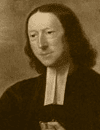
John Wesley emphasizes the profound nature of mercy, drawing from Matthew 5:7, where he reflects on how true mercy is freely given, akin to gentle rain from heaven. He highlights that mercy blesses both the giver and the receiver, and it is a divine attribute that surpasses earthly power and justice

F.B. Meyer emphasizes the divine reversal of fortunes as seen in the story of Mordecai and Haman, illustrating how God honors those who remain humble and faithful. He reflects on the profound truth that while Haman sought to exalt himself, it was Mordecai, the humble Jew, who was ultimately honored
F.B. Meyer emphasizes the impending reversal of power where the current rulers, who oppose God's people, will be overthrown. He draws parallels between the historical plight of the Jews and the present struggles of the Church, assuring that God will ultimately vindicate His saints. Meyer highlights
John Gill emphasizes the immortality of the soul, asserting that while the body may perish, the soul continues to exist eternally, returning to God who created it. He argues that the soul's nature, being spiritual and immaterial, distinguishes it from the body, which is mortal and subject to decay.

Thomas Brooks emphasizes the concept of divine justice, arguing that those who have sinned and deserve punishment should not complain when they face consequences. He uses the analogy of a person deserving a hanging who should not blame the judge for cruelty if they only receive a lesser punishment.
Thomas Brooks emphasizes the concept of divine justice, arguing that those who embody hellish qualities in their speech, hearts, and lives will ultimately face the consequences of having hell within their souls. He warns that the manifestation of wickedness in one's life is a reflection of the inner
Thomas Brooks emphasizes the duality of God's nature, portraying Him as both merciful and just. He illustrates that while God extends mercy to humanity, His justice will prevail if that mercy is rejected. Brooks uses biblical examples of divine judgment to highlight the seriousness of despising God'
Thomas Brooks emphasizes the undeniable connection between sin and punishment, warning that one cannot escape the consequences of their actions. He references Galatians 6:7 to illustrate that what we sow, we will reap, and he reinforces this truth with examples from Exodus and Psalms that highlight

Art Katz explores the profound implications of the principle of 'an eye for an eye, a tooth for a tooth,' emphasizing that this ancient law reflects God's justice and the sacrificial love of Christ. He highlights how Jesus, as the ultimate representative for humanity, bore the weight of sin and fulf
F.B. Meyer explores the profound themes of justice and divine knowledge in the Book of Job, emphasizing the connection between wrongdoing and its consequences. He highlights that while the wicked may seem to prosper temporarily, their ultimate fate is destruction, contrasting this with the eternal s
G. Campbell Morgan expounds on the message of Amos, emphasizing the philosophy, practice, and promises of Divine government. He illustrates how God's judgment is based on the light and privilege given to nations, particularly Israel, who are held to a higher standard due to their unique relationship
G. Campbell Morgan delivers a profound sermon on 'The Message of Nahum,' emphasizing the duality of God's nature--His love and His wrath. He explains that God's anger is a response to human pride and cruelty, and it is always rooted in His love for justice and righteousness. Morgan highlights that G