
Living in love is a fundamental aspect of the Christian faith, emphasizing the importance of demonstrating God's love in everyday life. As expressed in 1 Corinthians 13:13, "And now these three remain: faith, hope and love. But the greatest of these is love," love is considered the greatest virtue, surpassing even faith and hope. The Bible teaches that believers should live in love, just as God loves them, as seen in John 13:34, where Jesus commands his disciples to "love one another as I have loved you," and in Ephesians 5:2, which encourages believers to "live a life of love, just as Christ loved us and gave himself up for us as a fragrant offering and sacrifice to God." By living in love, Christians reflect God's character and fulfill their calling to be his ambassadors on earth.

A.B. Simpson emphasizes the importance of living in an atmosphere of love, contrasting it with other ways of life that focus on thought, animal nature, or duty. He explains that while these other atmospheres may have their merits, they often lack the freedom and joy found in Christ's love. Simpson e

J.R. Miller emphasizes the importance of living a life of love and responsibility as believers await Christ's return, addressing the misconceptions held by the Thessalonian church regarding idleness and the second coming. He highlights that true preparation for Christ involves loving one another and

Leonard Ravenhill emphasizes the profound relationship between Jesus as the true vine and believers as branches, highlighting the necessity of bearing fruit through divine pruning. He reflects on the humility of Peter and John, who, despite being labeled as uneducated, performed notable miracles thr

Omri Jenkins expresses gratitude to the congregation for their support and prayers, emphasizing the loneliness of the pulpit and the importance of the Holy Spirit as a minister's true companion. He reflects on John 15, where Jesus describes Himself as the true vine and believers as branches, urging

Hans R. Waldvogel emphasizes the profound honor and necessity of divine salvation, asserting that true salvation is a work of God alone and not merely an emotional decision. He warns against the false sense of security many Christians have, highlighting the importance of recognizing one's sinful nat
Leonard Ravenhill emphasizes the profound teachings of John 15, focusing on the necessity of abiding in Christ to bear fruit. He critiques modern evangelism for offering mere forgiveness instead of presenting Jesus as Lord and Savior, urging believers to understand that true faith involves a transfo
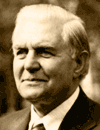
Major Ian Thomas emphasizes the distinction between fruit bearing and fruit producing in the Christian life. He explains that fruit bearing is the natural overflow of Christ's life within us, resulting from faith and leading to eternal good works, while fruit producing is a struggle to live by our o

Mariano Di Gangi emphasizes the importance of a personal and fruitful relationship with Jesus, as depicted in John 15, where Jesus describes himself as the true vine and believers as branches. He warns against a 'cut flower religion' that lacks a living connection to Christ, leading to spiritual dec

Phil Beach Jr. emphasizes the significance of living in the 'secret place' of God, as illustrated in Psalms 18. He describes how David, amidst great distress, discovered the power and protection of God when he called upon Him, leading to a profound relationship characterized by victory and security.
Joseph Carroll emphasizes the necessity of abiding in Christ through the Holy Spirit, highlighting that true blessings and spiritual riches are found only in Him. He explains that the Spirit of God is essential for transformation, moving from chaos to order in our lives, and that we must yield to th