
The concept of "The Body of Christ" is a central theme in Christian theology, referring to the collective community of believers who are united in their faith and relationship with Jesus Christ. According to 1 Corinthians 12:27, believers are considered members of Christ's body, with each individual playing a vital role in the functioning of the whole. As stated in Romans 12:5, Christians are also considered to be part of one body in Christ, with each member connected and interdependent, and as Ephesians 4:16 notes, the body grows and is nourished as each part does its share, emphasizing the importance of unity and mutual support among believers. Through this metaphor, the Bible emphasizes the interconnectedness and shared purpose of all Christians, highlighting their responsibility to work together in harmony to fulfill their mission and serve one another.

Robert Arthur emphasizes the significance of the Church as the body of Christ, highlighting that believers are called into fellowship with Jesus and are part of His divine plan. He discusses the diversity of gifts within the Church, stressing that each member has a unique role and function, all unde
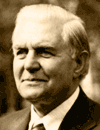
Major Ian Thomas emphasizes that the early church was characterized by joy, fearlessness, and a deep connection to Jesus Christ, who continued His work through them. He argues that the Book of Acts should be seen as the ongoing acts of Jesus through His church, rather than just the apostles' actions
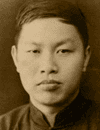
Watchman Nee emphasizes the reality of the body of Christ, asserting that it is not merely an abstract concept but a living experience that believers should actively engage in. He highlights that Christ is the head of the church, and the body of Christ is a vital, life-giving entity that requires a

T. Austin-Sparks emphasizes the unique nature of the Church as 'The Body of Christ,' a concept exclusively articulated by the Apostle Paul. He explains that this designation transcends mere community or congregation, illustrating a profound spiritual union where every local assembly represents the w

K.P. Yohannan emphasizes the vital differences within the Body of Christ, illustrating how each member, regardless of size or visibility, plays an essential role in the overall function and health of the church. He draws parallels between the human body and the church, highlighting that just as ever
T. Austin-Sparks emphasizes that true spiritual enlargement often comes through straitening, highlighting that human efforts can lead to artificial growth devoid of spiritual reality. He argues that God often begins at a point of zero, where human hope is lost, to demonstrate His power and purpose t

A.W. Tozer emphasizes the vital relationship between the church and its members, illustrating that the church is the body of Christ with Jesus as its head. He explains that just as the soul animates the physical body, the Holy Spirit empowers the church, enabling it to function as intended. Each mem

G.W. North emphasizes the profound truth of Christian communion, highlighting that true unity among believers transcends denominational divides and schism, which God condemns. He explains that while believers may be separated into different groups on earth, they are all part of one body in Christ, g
G.W. North emphasizes the profound unity between Christ and His Body, illustrating that believers are baptized into one Spirit and made to drink of that same Spirit, forming one Body. He notes the absence of the word 'head' in the text, suggesting that Christ and His Body are so inseparable that it
T. Austin-Sparks emphasizes the corporate nature of the Church, identifying it as the Body of Christ, where individual members must recognize their role within the whole. He explains that the Church is not merely a collection of individuals but a spiritual entity where each member is vital to the fu
T. Austin-Sparks emphasizes the centrality and supremacy of Christ as the Head of the Church, His Body, highlighting that true unity and victory over division stem from His resurrection. He explains that individual believers must recognize their connection to the Body, as independence contradicts Ch
K.P. Yohannan emphasizes the critical need for unity among Christians, highlighting that while the world seeks peace through force, God calls His people to be of one mind and spirit. He explains that unity is essential because God desires a singular Bride for His Son, formed from diverse backgrounds
G.W. North emphasizes that the Apostle Paul provided the correct forms of Church worship and function, which must be adhered to for a church to be both biblical and spiritual. He asserts that the Church should be a true expression of Christ, guided by the Holy Spirit's outlined order in Scripture. N