
The nature of the church is a fundamental concept in Christian theology, rooted in the Bible's depiction of the community of believers as the body of Christ (1 Corinthians 12:27). According to Scripture, the church is a unified entity, with Christ as its head (Ephesians 5:23), and its members are called to live in harmony with one another, loving and serving each other as they seek to fulfill their mission to spread the gospel (John 13:35). The Bible also emphasizes the importance of spiritual gifts and diverse roles within the church, as seen in Romans 12:4-8, which highlights the variety of gifts and ministries that contribute to the church's overall health and effectiveness. As the church strives to embody its divine nature, it is guided by the principle of loving and serving one another, as commanded by Christ in John 15:12.

Paul Washer emphasizes the urgent need for the church to return to the sufficiency of Scripture and the importance of deep theological understanding. He laments the current state of the church, which he believes has strayed from biblical truth and is filled with ignorance about God, the gospel, and

Zac Poonen emphasizes the ongoing battle against Satan's deception throughout the Bible, illustrating how humility and a genuine pursuit of Christ's revelation protect believers from such deceptions. He highlights that true knowledge of Christ comes not from human intellect but through divine revela

A.W. Tozer emphasizes that the universal Church is the body of Christ and the bride of the Lamb, serving as the habitation of God through the Spirit. He describes the local church as a community of redeemed individuals, a minority group on earth, and a representation of the Invisible God. Tozer warn

T. Austin-Sparks emphasizes that the Church is not a physical building or organization, but rather the living union of believers with Christ. He explains that God intentionally chooses the weak and foolish to demonstrate His power, transcending human limitations and abilities. This union with the ri
A.W. Tozer emphasizes that the church is not merely a building but an assembly of individuals, highlighting the importance of personal responsibility in the health of the church. He warns against the dangers of becoming stagnant, where the church falls into a cycle of rote, rut, and ultimately rot,

F.B. Meyer emphasizes the profound nature of the Church as depicted in Ephesians, portraying it as the mystical body of Christ, where He is the head and believers are the members. He illustrates that the Church is not merely a collection of congregations but a unified entity destined for glory, refl
A.W. Tozer emphasizes the simplicity and beauty of the church as envisioned by Christ and depicted in the New Testament, contrasting it with the complex and unsymmetrical nature of modern churches. He argues that if an angel were to search for the true church today, it might struggle to recognize it
T. Austin-Sparks emphasizes the spiritual battleground between the old humanity and the new humanity as depicted in the letters to the Corinthians. He highlights the necessity of relying on God's power and grace, acknowledging that true spiritual growth comes from conforming to the image of Christ r
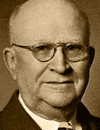
Harry Ironside addresses the debate surrounding the nature of the Church as depicted in the book of Acts, arguing against ultradispensationalist views that suggest a transitional period between the law and grace. He emphasizes that the Church, the Body of Christ, was formed at Pentecost through the
T. Austin-Sparks concludes his series on the Church by emphasizing the pivotal role of Stephen in the New Testament, highlighting how his martyrdom marked a significant turning point for Christianity. Stephen's vision of Jesus at the right hand of God signifies the shift from a Judaistic system to a
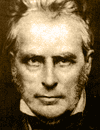
John Nelson Darby emphasizes the profound nature of the Church as Christ's representative on earth, highlighting its role as an 'epistle of Christ' that reveals God's grace and power. He distinguishes between the Church, the Kingdom, and the salvation of souls, asserting that while the Church is a b
T. Austin-Sparks emphasizes the significance of the House of God as depicted in Ezekiel, warning against reducing spiritual truths to mere technical systems that can stifle the life within the Church. He highlights that the House is not a system but a spiritual entity centered on Christ, where God's
T. Austin-Sparks emphasizes the transformation of Christianity from its original spiritual essence to a more formal and institutionalized structure by the end of the apostolic age. He highlights the Apostle Paul's letters to Timothy as a call to recover the true nature of the Church, which is a spir
T. Austin-Sparks emphasizes that the essence of the Church is Christ Himself, arguing that Christianity has strayed from its original simplicity and has become entangled in human systems and control. He highlights the importance of worshiping God in spirit and truth, as Jesus taught, and warns again

William MacDonald emphasizes that the Church is not merely an organization but a living organism, a body of believers united in Christ through the Holy Spirit. He defines the Church using various metaphors such as a flock, God's husbandry, and the body of Christ, illustrating its vital role in worsh
T. Austin-Sparks emphasizes the Church as the cosmic expression of Christ, highlighting its spiritual nature and accountability to God. He discusses the essential elements of life, light, and love as manifestations of Christ within the Church, asserting that true expression comes from the resurrecti

G.W. North emphasizes the unique nature of the Church as it transitions from its Jewish roots to a Gentile fullness, as illustrated by the writings of Luke and Paul. He argues that the Church must adhere to the inspired form of worship and order established in the New Testament, particularly in Paul
T. Austin-Sparks emphasizes that the Church is the body of Christ, designed to fulfill God's eternal purpose by revealing His fullness through a chosen company of believers. He clarifies that this elect group is not merely about salvation but about being called to a divine purpose, transcending deno
John Nelson Darby explores the first epistle to the Corinthians, emphasizing the distinction between being 'sanctified in Christ Jesus' and merely calling on the name of the Lord. He highlights the importance of the local church in Corinth as a representation of the broader Christian community, addr