
The Lamb of God is the name John the Baptist gave to Jesus: the sacrifice God Himself provided, to whom every lamb of the Old Testament pointed, who bears sin and takes it away. The preachers quoted here explain the title, John's witness, what it is to behold the Lamb and follow Him, and the Lamb who was slain and now reigns and is worshipped in heaven.
The Lamb of God is the name John the Baptist gave to Jesus. It means that Jesus is the sacrifice God Himself provided, the one all the lambs of the Old Testament pointed to, who bears sin and takes it away by His death, and who reigns now in heaven as the Lamb who was slain. When John saw Jesus coming toward him, he said, "Look, the Lamb of God, who takes away the sin of the world!" (John 1:29). John Newton wrote, "The paschal lamb, and the lambs which were daily offered, morning and evening, according to the law of Moses, were of God's appointment; but this Lamb was, likewise, of His providing."1
What John saw
John was baptizing in the Jordan when Jesus came to him. He was the son of a priest, and Charles Spurgeon said of him, "But as a priest, he never saw a lamb for sacrifice in a place far off from the consecrated shrine."2 He went on, "Yet John saw, in a place never dedicated in any peculiar manner to the service of God, the one great Sacrifice standing in the midst of the people."2
Alexander Whyte wrote of the way Jesus walked that day, "He walked till all who had waited for Him took knowledge of Him that He must be the Lamb of God."3 He added, "He walked as no one else has ever walked, before or since, for He walked as one who bore on His head the sin of the world."4
Why He is called the Lamb of God
The lambs of the law were brought by men. This Lamb belongs to God. Spurgeon said, "Moreover, our Savior is called the Lamb of God, not only, par excellence, because He is, beyond all others such, but, secondly, because He is the Lamb of God's appointing."5
The God who gave the Lamb is the God who loves sinners. Hugh Binning wrote that to pardon sin without any satisfaction would have been rich grace, and went on, "But truly, to provide the Lamb and sacrifice himself, to find out the ransom, and to exact it of his own Son, in our name, is a testimony of mercy and grace far beyond that."6
God will provide the lamb
On the way up Mount Moriah Isaac said to his father, "where is the lamb for the burnt offering?" (Genesis 22:7). Abraham answered, "God Himself will provide the lamb for the burnt offering, my son." (Genesis 22:8). That day a ram was offered in Isaac's place. Abraham named the place "The LORD Will Provide." (Genesis 22:14). Spurgeon said, "Sing, O Moriah, on whose summit the patriarch drew his knife to slay his son, for the true Isaac has been offered up, God has provided for himself a lamb!"7
The lambs that went before
From the beginning a sacrifice from the flock stood at the way of approach to God. Abel brought an offering from the firstborn of his flock and was accepted. Spurgeon said, "He, being dead, yet speaks, bearing his testimony that there is no way of access to God except by the sacrifice of a lamb."8
At the Passover each household in Israel was to take a lamb, and its blood on the door kept the destroyer away. God said, "when I see the blood, I will pass over you." (Exodus 12:13). Paul says, "For Christ, our Passover lamb, has been sacrificed." (1 Corinthians 5:7). Arthur Pink wrote, "The appointment of the lamb and the efficacy of its sprinkled blood to shelter from the angel of death on the Passover night revealed yet more clearly what is now proclaimed by the Gospel."9 The meaning of that night is opened on the page on the Passover.
The law added a lamb every morning and every evening. "This is what you are to offer regularly on the altar, each day: two lambs that are a year old." (Exodus 29:38). "Offer one lamb in the morning and the other at twilight." (Exodus 29:39). Spurgeon said, "There had been slain before the Lord a lamb every morning, and a lamb every evening, all the year round throughout the centuries of Israel's history."2 In another sermon he said, "The morning and evening lambs did not take away sin, but only mirrored the great blood-shedding of the Lamb of God which takes away the sin of the world!"10
These lambs could not take away sin. Hebrews says, "because it is impossible for the blood of bulls and goats to take away sins." (Hebrews 10:4). Newton wrote, "The blood of slaughtered animals could not take away sin, nor display the righteousness of God in pardoning it."11 Spurgeon said, "He is the Substance of that of which they were but the shadow."5 Edward Payson wrote, "The atonement, which Christ, the Lamb of God, intended to make in the fullness of time, was typically represented by the sacrifice of a lamb without spot or blemish."12 Alexander Maclaren wrote of John's words, "Thus the conceptions of vicarious suffering, and of a death which is a deliverance, and of blood which, sprinkled on the doorposts, guards the house from the destroying angel, are all gathered into these words."13
Led like a lamb to the slaughter
Isaiah had seen the Lamb from far off. He wrote, "He was oppressed and afflicted, yet He did not open His mouth. He was led like a lamb to the slaughter, and as a sheep before her shearers is silent, so He did not open His mouth." (Isaiah 53:7). Spurgeon said of Christ before His judges, "Like a sheep before her shearers He was dumb, submitting Himself without a struggle."14 Horatius Bonar wrote, "It is as the pierced one that we see him in the twenty-second Psalm and in the fifty-third of Isaiah; as such on the cross; as such in heaven, the Lamb slain."15
When an Ethiopian official was reading this passage, he asked of whom the prophet spoke. Scripture says, "Then Philip began with this very Scripture and told him the good news about Jesus." (Acts 8:35). The Lamb of Isaiah and the Lamb of John are one.
Without blemish or spot
The Passover lamb had to be unblemished. Peter writes that we were redeemed "with the precious blood of Christ, a lamb without blemish or spot." (1 Peter 1:19). Spurgeon said, "It is established, beyond all question, that He is the Lamb of God without blemish and without spot."16 F.B. Meyer wrote, "The Lamb was without blemish, and without spot: all else need to wash their robes of some pollution that has left its finger-mark upon them."17 James Denney wrote, "A lamb without blemish and without spot is a sacrificial lamb, and the virtue here ascribed to the blood of Christ is some sort of sacrificial virtue."18
Peter adds, "He was known before the foundation of the world, but was revealed in the last times for your sake." (1 Peter 1:20). Payson said, "He is called the Lamb slain before the foundation of the world; because before the world was created, it was determined and foreseen that he should be slain."19
Who takes away sin
John says that the Lamb takes sin away. Spurgeon noted that the word means both to bear and to bear away. He said, "In order to the bearing away of sin, there must first be the bearing of it."2
The New Testament says the same. "But you know that Christ appeared to take away sins, and in Him there is no sin." (1 John 3:5). Hebrews says that Christ "has appeared once for all at the end of the ages to do away with sin by the sacrifice of Himself." (Hebrews 9:26). Maclaren wrote, "The sacrifices of every land witness to the fact that humanity all over the world, and through all the ages, and under all varieties of culture, has been dimly conscious that its deepest need was that the fact of sin should be dealt with."20
The sin of the world
John looked beyond one nation. Preachers on this site differ on how far the words reach. Some hold that Christ died for every person, though only those who believe receive the benefit. Others hold that He died with the definite purpose of saving those the Father gave Him, and read the world as people of every nation. That question is set out on the page on the atonement, and this page does not decide it.
Both sides preach the Lamb to every sinner, hold that His sacrifice is of infinite worth, and say that no one is forgiven without faith in Him. Spurgeon said, "There is no limit to the value of His great Sacrifice—He takes away the sin of the world."2 He also said, "Christ shall take away no man's sin that does not believe in Him."2
John's witness
John knew that his work was to point away from himself. He said, "This is He of whom I said, 'A man who comes after me has surpassed me because He was before me.'" (John 1:30) and "but the reason I came baptizing with water was that He might be revealed to Israel." (John 1:31). Spurgeon said, "You cannot account for John except by Jesus—the one reason for John's existence is Jesus."2 Payson said, "The great object of John the Baptist, as it will be of all who preach Christ, appears to have been, to give his hearers high and exalted conceptions of the transcendent worth and dignity of his Master."21 He also said, "To exalt Christ and turn the attention of sinners to him, seems to have been the great object which he always kept in view."21 Maclaren wrote of the one John pointed to, "Jesus Christ is something more than a lovely pattern of human conduct, though He is that."22 He added, "Jesus Christ is something more than a great religious genius who set forth the Fatherhood of God as it had never been set forth before."23
Every true preacher has the same task. Maclaren also wrote, "John the Baptist summing up the whole of former revelation which concentrated in Him, pointed a designating finger to Jesus and said, 'That is He!'"24 Spurgeon said, "The stern Baptist, the true Elijah who grappled hard with sin and laid the sword of repentance to its throat, saw that nothing could be done unless he pointed out the Lamb of God, by whom the world's sin is taken away."2 J.C. Ryle warned of churches where "The Lamb of God is not lifted up, and salvation by faith in Him is not freely proclaimed."25
Behold the Lamb
John said, "Look, the Lamb of God!" (John 1:36). To behold is more than to glance. It is to look with attention and trust. A.W. Tozer wrote of faith, "It is lifting the mind to behold the Lamb of God, and never ceasing that beholding for the rest of our lives."26 Maclaren wrote, "And such an exercise of simple trust is well named beholding, because they who believe do see, with a deeper and a truer vision than sense can give."27 Spurgeon said, "You were brought up as children to believe that Jesus is the Lamb of God, but all Revelation in the Book must again be revealed to the heart, or it will not be really known and perceived."2 Pink wrote, "There is only one way of finding peace, and that is through faith in the shed blood of God's Lamb."28
Whyte wrote, "Think you see the Lamb of God in all the situations in which He is set before you in the Gospels, and then come to Him in all those situations."29 He also wrote, "Only direct your eyes sufficiently often, and sufficiently fixedly, and sufficiently long at a time on the Lamb of God, and there is no limit to their increasing clearness and their increasing power."30 He went on, "Look, then, till your heart is affected, and till with your whole heart you come to Him."31 Maclaren wrote in another place, "The vision of the Lamb of God, and it only, will crush in our hearts the serpent's eggs of self-esteem and self-regard."32
The two disciples followed
The first men who heard John's word did more than look. "And when the two disciples heard him say this, they followed Jesus." (John 1:37). Jesus asked what they wanted, and they asked where He was staying. He said, "Come and see," (John 1:39) and "So they went and saw where He was staying, and spent that day with Him." (John 1:39). D.L. Moody wrote, "The two disciples heard him speak; they did not ask him what he meant, but they followed Jesus; went home with Him, and abode with Him that day, and became two of His intimate disciples and friends."33 James Stalker wrote of the first disciples, "This is the rule always; this is the only way to learn; none can be fishers of men who have not first followed Jesus."34
The Lamb on the throne
In the Revelation given to John the Lamb is seen again. An elder told John to look at the Lion of Judah, and he saw instead "a Lamb who appeared to have been slain, standing in the center of the throne" (Revelation 5:6). Spurgeon said, "The teaching of the passage is that the Lord Jesus, in His sacrificial Character, is the most prominent Object in the heavenly world."35 He also said, "The more of a conqueror He is, the more astounding is it that He should win by humiliation and death."35 Arthur Pierson wrote of the Lamb who alone could open the scroll, "The Lamb slain is the only key to unlock the mysteries of inspired poetry and prophecy, sacrifice and symbol."36
The Lamb in glory still bears the marks of His death. Andrew Murray wrote, "A Lamb standing, as it had been slain, on the throne; in the glory He is still the meek and gentle Lamb of God."37 Art Katz wrote, "It is Christ in His humility, in His meekness, as the Lamb of God, who sits upon the throne and who fills the Church with living light."38 John Bunyan wrote, "A slain Lamb, or a Lamb as it had been slain, when it is seen by a supplicant in the midst of the throne, whither he is come for grace, is a blessed sight!"39
Worthy is the Lamb
Heaven worships the Lamb because He was slain. The elders sang, "Worthy are You to take the scroll and open its seals, because You were slain, and by Your blood You purchased for God those from every tribe and tongue and people and nation." (Revelation 5:9). Then the angels said, "Worthy is the Lamb, who was slain, to receive power and riches and wisdom and strength and honor and glory and blessing!" (Revelation 5:12). Payson said, "It is the performance of this work which, in the view of the inhabitants of heaven, renders the Lamb who was slain peculiarly worthy to receive blessing, and glory, and honor, and power."19
Spurgeon said, "Jesus our Lord is worshipped not so much for what benefits He will confer as for Himself."35
Washed in the blood of the Lamb
John saw a great multitude from every nation standing before the throne and before the Lamb. They cried, "Salvation to our God, who sits on the throne, and to the Lamb!" (Revelation 7:10). An elder said of them, "they have washed their robes and made them white in the blood of the Lamb." (Revelation 7:14). Spurgeon said, "There is no blood stain on Manasseh, there is no brand of blasphemy on Saul of Tarsus, now—they have washed their robes and made them white in the blood of the Lamb."40 J.C. Philpot said, "It is not merit, great or little; it is the blood of the Lamb which alone has opened a way for poor lost sinners to draw near to God."41 Thomas Brooks wrote, "There is not the least spot in a Christian's heart that can be washed out but in the blood of the Lamb."42
The Lamb who shepherds
The same chapter says, "For the Lamb in the center of the throne will be their shepherd." (Revelation 7:17). Maclaren wrote, "It is only because He is the 'Lamb that was slain' that He is either the 'Lamb in the midst of the Throne,' or the Shepherd of the flock."43 He also wrote, "It is His continual manhood, all through eternity and its glories, that makes Him the Shepherd of perfected souls."44
Following the Lamb
Of those who stand with the Lamb on Mount Zion John says, "They follow the Lamb wherever He goes." (Revelation 14:4). Spurgeon said, "You must follow Christ everywhere, with no picking and choosing of the road."8 He added, "If you follow the Lamb, you must grow more and more lamb-like—and that means being more gentle, more meek, more self-sacrificing, more ready to submit to the Divine will."8
In another sermon on the same verse Spurgeon said, "The very noblest character to which you could ever reach is to follow the Lamb wherever He goes, in obedience to God, in love to man, in self-sacrifice, in humility, in gentleness, in love!"40 The man who believes in the Lamb will hate the sin that slew Him. Spurgeon said, "The man who believes in the doctrine of the Lamb of God that takes away the sin of the world, will feel that sin is bitter and he will become very intolerant of sin."8 T. Austin-Sparks said, "It is the Lamb, always the Lamb-principle, the way of suffering and sacrifice and self-emptying, that brings us into the knowledge of the Lord."45 Brooks wrote of heaven, "To follow the Lamb whithersoever he goes, to enjoy him fully, and to be always in his presence, is the heaven of heaven, the glory of glory; it is the sparkling diamond in the ring of glory."46
The wrath of the Lamb
The Lamb is gentle, but He is not weak. Spurgeon said, "Though He is like a lamb for tenderness, yet not in timidity."35 Revelation tells of men who call to the mountains to hide them "from the face of the One seated on the throne, and from the wrath of the Lamb." (Revelation 6:16). Maclaren wrote, "There is nothing so terrible as the anger of gentle compassion, and the fiercest and most destructive wrath is 'the wrath of the Lamb.'"47 Leonard Ravenhill said, "There's nothing more beautiful than a little lamb and there's nothing more terrible than the wrath of the Lamb."48 Payson warned the unconverted, "Even the wrath of the Lamb, who is now willing to save, will be hurled against you."49
The Lamb for ever
The Lamb remains at the centre of the age to come. "Blessed are those who are invited to the marriage supper of the Lamb." (Revelation 19:9). John saw no temple in the city, "because the Lord God Almighty and the Lamb are its temple." (Revelation 21:22). He adds, "And the city has no need of sun or moon to shine on it, because the glory of God illuminates the city, and the Lamb is its lamp." (Revelation 21:23). Bonar wrote, "The Lamb in the midst of the throne is the lamp of the new Jerusalem."50 He added, "It is not so much as God, or as the Christ, that He is the lamp of the city, but as the Lamb."50
The word of John the Baptist is still the word to every hearer: "Look, the Lamb of God, who takes away the sin of the world!" (John 1:29).
- John Newton, Messiah Vol 1, "Sermon XVI The Lamb of God, the Great Atonement".
- C.H. Spurgeon, "Behold the Lamb of God" (sermon).
- Alexander Whyte, The Walk, Conversation and Character of Jesus Christ our Lord, "The Lamb of God".
- Alexander Whyte, The Walk, Conversation and Character of Jesus Christ our Lord, "The Lamb of God".
- C.H. Spurgeon, "Behold The Lamb!" (sermon).
- Hugh Binning, The Works Of The Rev Hugh Binning, "Sermon XII. |For what the law could not do, in that it was weak...".
- C.H. Spurgeon, "The Song of Songs" (sermon).
- C.H. Spurgeon, "The Lamb Our Leader" (sermon).
- A.W. Pink, "THE DOCTRINE OF REVELATION Chapter 9 THE HOLY BIBLE IS UNIQUE" (sermon).
- C.H. Spurgeon, "The Priest Ordained by the Oath of God" (sermon).
- John Newton, Messiah Vol 1, "Sermon XVI The Lamb of God, the Great Atonement".
- Edward Payson, Writings of Edward Payson, "S. the way which wicked men have trodden".
- Alexander Maclaren, Expositions Of Holy Scripture I, "The world's sin-bearer".
- C.H. Spurgeon, Spurgeons Sermons Volume 28 1882, "Brought Up from the Horrible Pit".
- Horatius Bonar, Writings of Horatius Bonar - Volume 1, "Looking to the Pierced One".
- C.H. Spurgeon, "A Wonderful Transformation" (sermon).
- F.B. Meyer, Writings of F B Meyer - Volume 1, "Through the Gates".
- James Denney, Writings of James Denney, "Chapter 2 : The Earliest Christian Preaching".
- Edward Payson, "Christ's Joy in the Church Before His Incarnation" (sermon).
- Alexander Maclaren, Expositions Of Holy Scripture I, "The world's sin-bearer".
- Edward Payson, "Christ and His Harbinger Compared and Distinguished" (sermon).
- Alexander Maclaren, Expositions Of Holy Scripture I, "The world's sin-bearer".
- Alexander Maclaren, Expositions Of Holy Scripture I, "The world's sin-bearer".
- Alexander Maclaren, Expositions Of Holy Scripture I, "The world's sin-bearer".
- J.C. Ryle, "The Cross of Christ" (sermon).
- A.W. Tozer, The Pursuit of God, "The Gaze of the Soul".
- Alexander Maclaren, Expositions Of Holy Scripture I, "The world's sin-bearer".
- A.W. Pink, "The Word of Victory" (sermon).
- Alexander Whyte, The Walk, Conversation and Character of Jesus Christ our Lord, "The Lamb of God".
- Alexander Whyte, The Walk, Conversation and Character of Jesus Christ our Lord, "The Lamb of God".
- Alexander Whyte, The Walk, Conversation and Character of Jesus Christ our Lord, "The Lamb of God".
- Alexander Maclaren, Expositions Of Holy Scripture E, "True greatness".
- Dwight L. Moody, Writings of Dwight L Moody - Volume 1, "John the Baptist".
- James Stalker, The Two St. Johns of the New Testament, "St. John At Home".
- C.H. Spurgeon, "The Lamb In Glory" (sermon).
- Arthur T. Pierson, Writings of Arthur T Pierson - Volume 1, "Chapter ix.christ in the old testament".
- Andrew Murray, The Master's Indwelling, "Christ's humility our salvation".
- Art Katz, "(Pdf Book) the Spirit of Truth" (sermon).
- John Bunyan, The Works Of John Bunyan Volumes 1-3, "The saints' privilege and profit;".
- C.H. Spurgeon, "The Followers of the Lamb" (sermon).
- J.C. Philpot, "Zion's Foundations, Windows, Gates and Boarders" (sermon).
- Thomas Brooks, Writings of Thomas Brooks, "Volume 4".
- Alexander Maclaren, Expositions Of Holy Scripture J, "Two shepherds and two flocks".
- Alexander Maclaren, Expositions Of Holy Scripture J, "Two shepherds and two flocks".
- T. Austin-Sparks, "The Government of Love" (sermon).
- Thomas Brooks, Writings of Thomas Brooks, "Volume 5".
- Alexander Maclaren, Expositions Of Holy Scripture B, "The king's farewell".
- Leonard Ravenhill, "Your Day in Court" (sermon).
- Edward Payson, "The Sinners Mistakes Exposed and Reproved" (sermon).
- Horatius Bonar, "Rev. 21:23. the Light of the New Jerusalem" (sermon).
In their own words
Each line below is quoted exactly from a sermon on this site. Follow the link to hear or read it where it was said.
But as a priest, he never saw a lamb for sacrifice in a place far off from the consecrated shrine.
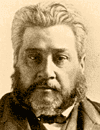 C.H. Spurgeon
in Behold the Lamb of God
Read in context
Yet John saw, in a place never dedicated in any peculiar manner to the service of God, the one great Sacrifice standing in the midst of the people.
C.H. Spurgeon
in Behold the Lamb of God
Read in context
There had been slain before the Lord a lamb every morning, and a lamb every evening, all the year round throughout the centuries of Israel's history.
C.H. Spurgeon
in Behold the Lamb of God
Read in context
In order to the bearing away of sin, there must first be the bearing of it.
C.H. Spurgeon
in Behold the Lamb of God
Read in context
There is no limit to the value of His great Sacrifice—He takes away the sin of the world.
C.H. Spurgeon
in Behold the Lamb of God
Read in context
Christ shall take away no man's sin that does not believe in Him.
C.H. Spurgeon
in Behold the Lamb of God
Read in context
You cannot account for John except by Jesus—the one reason for John's existence is Jesus.
C.H. Spurgeon
in Behold the Lamb of God
Read in context
The stern Baptist, the true Elijah who grappled hard with sin and laid the sword of repentance to its throat, saw that nothing could be done unless he pointed out the Lamb of God, by whom the world's sin is taken away.
C.H. Spurgeon
in Behold the Lamb of God
Read in context
You were brought up as children to believe that Jesus is the Lamb of God, but all Revelation in the Book must again be revealed to the heart, or it will not be really known and perceived.
C.H. Spurgeon
in Behold the Lamb of God
Read in context
Moreover, our Savior is called the Lamb of God, not only, par excellence, because He is, beyond all others such, but, secondly, because He is the Lamb of God's appointing.
C.H. Spurgeon
in Behold The Lamb!
Read in context
He is the Substance of that of which they were but the shadow.
C.H. Spurgeon
in Behold The Lamb!
Read in context
Sing, O Moriah, on whose summit the patriarch drew his knife to slay his son, for the true Isaac has been offered up, God has provided for himself a lamb!
C.H. Spurgeon
in The Song of Songs
Read in context
He, being dead, yet speaks, bearing his testimony that there is no way of access to God except by the sacrifice of a lamb.
C.H. Spurgeon
in The Lamb Our Leader
Read in context
You must follow Christ everywhere, with no picking and choosing of the road.
C.H. Spurgeon
in The Lamb Our Leader
Read in context
If you follow the Lamb, you must grow more and more lamb-like—and that means being more gentle, more meek, more self-sacrificing, more ready to submit to the Divine will.
C.H. Spurgeon
in The Lamb Our Leader
Read in context
The man who believes in the doctrine of the Lamb of God that takes away the sin of the world, will feel that sin is bitter and he will become very intolerant of sin.
C.H. Spurgeon
in The Lamb Our Leader
Read in context
The appointment of the lamb and the efficacy of its sprinkled blood to shelter from the angel of death on the Passover night revealed yet more clearly what is now proclaimed by the Gospel.
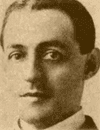 A.W. Pink
in THE DOCTRINE OF REVELATION Chapter 9 THE HOLY BIBLE IS UNIQUE
Read in context
The morning and evening lambs did not take away sin, but only mirrored the great blood-shedding of the Lamb of God which takes away the sin of the world!
C.H. Spurgeon
in The Priest Ordained by the Oath of God
Read in context
It is established, beyond all question, that He is the Lamb of God without blemish and without spot.
C.H. Spurgeon
in A Wonderful Transformation
Read in context
He is called the Lamb slain before the foundation of the world; because before the world was created, it was determined and foreseen that he should be slain.
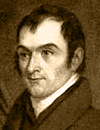 Edward Payson
in Christ's Joy in the Church Before His Incarnation.
Read in context
It is the performance of this work which, in the view of the inhabitants of heaven, renders the Lamb who was slain peculiarly worthy to receive blessing, and glory, and honor, and power.
Edward Payson
in Christ's Joy in the Church Before His Incarnation.
Read in context
The great object of John the Baptist, as it will be of all who preach Christ, appears to have been, to give his hearers high and exalted conceptions of the transcendent worth and dignity of his Master.
Edward Payson
in Christ and His Harbinger Compared and Distinguished.
Read in context
To exalt Christ and turn the attention of sinners to him, seems to have been the great object which he always kept in view.
Edward Payson
in Christ and His Harbinger Compared and Distinguished.
Read in context
The Lamb of God is not lifted up, and salvation by faith in Him is not freely proclaimed.
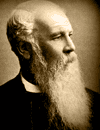 J.C. Ryle
in The Cross of Christ
Read in context
There is only one way of finding peace, and that is through faith in the shed blood of God's Lamb.
A.W. Pink
in The Word of Victory
Read in context
The teaching of the passage is that the Lord Jesus, in His sacrificial Character, is the most prominent Object in the heavenly world.
C.H. Spurgeon
in The Lamb In Glory
Read in context
The more of a conqueror He is, the more astounding is it that He should win by humiliation and death.
C.H. Spurgeon
in The Lamb In Glory
Read in context
Jesus our Lord is worshipped not so much for what benefits He will confer as for Himself.
C.H. Spurgeon
in The Lamb In Glory
Read in context
Though He is like a lamb for tenderness, yet not in timidity.
C.H. Spurgeon
in The Lamb In Glory
Read in context
It is Christ in His humility, in His meekness, as the Lamb of God, who sits upon the throne and who fills the Church with living light.
 Art Katz
in (Pdf Book) the Spirit of Truth
Read in context
There is no blood stain on Manasseh, there is no brand of blasphemy on Saul of Tarsus, now—they have washed their robes and made them white in the blood of the Lamb.
C.H. Spurgeon
in The Followers of the Lamb
Read in context
The very noblest character to which you could ever reach is to follow the Lamb wherever He goes, in obedience to God, in love to man, in self-sacrifice, in humility, in gentleness, in love!
C.H. Spurgeon
in The Followers of the Lamb
Read in context
It is not merit, great or little; it is the blood of the Lamb which alone has opened a way for poor lost sinners to draw near to God.
 J.C. Philpot
in Zion's Foundations, Windows, Gates and Boarders
Read in context
It is the Lamb, always the Lamb-principle, the way of suffering and sacrifice and self-emptying, that brings us into the knowledge of the Lord.
 T. Austin-Sparks
in The Government of Love
Read in context
There's nothing more beautiful than a little lamb and there's nothing more terrible than the wrath of the Lamb.
 Leonard Ravenhill
in Your Day in Court
Read in context
Even the wrath of the Lamb, who is now willing to save, will be hurled against you.
Edward Payson
in The Sinners Mistakes Exposed and Reproved.
Read in context
The Lamb in the midst of the throne is the lamp of the new Jerusalem.
 Horatius Bonar
in Rev. 21:23. the Light of the New Jerusalem
Read in context
It is not so much as God, or as the Christ, that He is the lamp of the city, but as the Lamb.
Horatius Bonar
in Rev. 21:23. the Light of the New Jerusalem
Read in context
What Scripture says
- John 1:29 Look, the Lamb of God, who takes away the sin of the world
- John 1:36 Look, the Lamb of God
- John 1:37 the two disciples heard him say this, and they followed Jesus
- Genesis 22:8 God Himself will provide the lamb
- Isaiah 53:7 He was led like a lamb to the slaughter
- Exodus 12:13 when I see the blood, I will pass over you
- 1 Peter 1:19 the precious blood of Christ, a lamb without blemish or spot
- Revelation 5:6 a Lamb who appeared to have been slain, standing in the center of the throne
- Revelation 5:12 Worthy is the Lamb, who was slain
- Revelation 7:17 the Lamb in the center of the throne will be their shepherd
- Revelation 14:4 they follow the Lamb wherever He goes
How this page is made: the quotes are taken word for word from sermons on SermonIndex and checked against them by program before the page is published. The transcripts of audio and video sermons are machine-made, so follow the link to hear the words as they were spoken. The answer above the quotes is an overview with its sources listed; it is not a statement of doctrine by SermonIndex.