
The Gospel Is A Change Of God
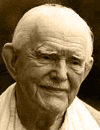
Norman Grubb teaches that the gospel reveals a transformative change from self-centeredness to God-centered love, showing that true personhood and fulfillment come from manifesting God's self-giving love.
In this profound teaching, Norman Grubb explores the nature of God as the one eternal person whose essence is self-giving love. He unpacks the human condition of freedom and choice, explaining how sin arises from turning inward and choosing self-centeredness. Grubb highlights God's redemptive plan through Christ, emphasizing that true salvation is a change of heart from self-love to God’s love. Listeners are encouraged to see beyond outward circumstances to the spiritual realities shaping their lives.
Full Transcript
Thank you, Lord. You're the ever-breathing one. You've been breathing from it everlasting.
Your breath is life. Thank you. You're breathing here as we sing, as we fellowship, as we listen, as we hear your word.
Thank you. And you're the ever-breathing, ever-living person among us this day and in us through Jesus. Amen.
Well, now we'll seek to continue this morning from where we left off last night. Yesterday you were supposed to understand 10 percent. Today, 15 percent.
We started yesterday by refreshing our recognition and understanding of this tremendous fact. The universe is only one person. There is only one person in the universe.
The universe is one person. The I am. Whether in himself or in his forms of manifestation.
Like unto ourselves, we are inner people, spirits. We are also outer people in our souls and bodies. We make a person.
And we're persons. Yet a real person is the within person. In fact, we shall leave this part of us one day and get another one later.
So, he. And so, we refreshed our recognition of this one and we'll never have ourselves, our universe, God, devil, good, anything in the focus until it's focused into one. And it's in some form of derivative and manifestation of the one.
Linked to the fact that one is love and nothing else. He's love and nothing else. So, every single thing he does is some form of self-giving love.
His total interest is his universe. Supremely the persons in the universe. Because the universe is changing, the persons are unchanging.
That's all he is. His self-fulfillment is in being able to fulfill and bring into perfection his universe. Then he's fulfilled when they're fulfilled.
His self-giving love and nothing else. And everything he does, whatever it looks like, is some form of self-giving love. Some form of perfect love.
Everything. We saw that if a spirit, person, is to be manifested, he must have his form of manifestation. As we have in our souls and bodies.
So, this one would be, we may say, unknowable to himself. Incommunicable. Indescribable.
If he's just himself. But he comes out in forms. In his own trinity, he comes out in his own son.
The son in the trinity is the manifestation of the universal one. As we said yesterday, in the end he goes, he gives back into him. The son renders up the kingdom to the father, that God may be all in all.
And through the son come the sons and comes the world, the universe. Forms of manifestation. All of them are he manifesting himself.
So that as our eyes are opened through Jesus to him, it has a kind of reflex action and we come back and find him everywhere in everything. Open our eyes and see through every single thing. It's some minute form of the one.
And so life's permanent worship, permanent glory, permanent thanks. Because we're seeing him in everything. And where it's death, seeing him moving through death to life.
And we saw that that means that if he is to eternity to be a person, express himself as a person, he must have persons by whom he does it. He can't express himself as a person, living, willing, expanding, reproducing person through things. In static forms they all manifest him.
But in a dynamic developing forms, he must have persons to manifest his person. So persons. So ourselves.
And so we saw how having gone down and being lifted up in his own son in the trinity, who made himself one of us and brings us up up to his own level. So he's a firstborn he's the other brother. We with him inherit the universe.
And what you inherit you manage. So our destiny is to manage the universe. If we're to manage the universe, we'd better be like the owner of the universe and the one who manifests himself through the universe.
We need to have his nature. His nature is nothing but love. So we're only fit to manage our universe when we're nothing but love.
So we exist for our universe, not our universe for us. Then we're safe. But then we saw that a person, to be a person, must find he is a person.
A person has a distinct individuality, personality if you like, personality is a wrong word. Personality is the outer, which is the mask. Individuality is the inner, which is the real.
But that doesn't matter. Must be a person, must find himself as a person. Because he himself has to enter into this paradox, this apparent inconsistency in which we're forms of him and yet we're really cells.
We function as perfectly free cells. So we've got to find out how we can be perfectly free cells, know ourselves as perfectly free cells, be perfectly free cells, yet really be manifestations of him. That's the paradox of the fraternity.
So we have to find ourselves. And we saw that a self finds itself because it stands between alternatives. That's how it develops, because it's conscious of a variety, conscious of different things.
And between the variety it has to choose and adapt and so on. So a person is a person who out of infinite variety comes down to alternatives and between alternatives he has to choose. And that, his freedom is his capacity to choose between the alternatives which face him in different forms of life.
And then he becomes an expression of the alternative he chooses. The alternative takes him over and he becomes a person who learns medicine, becomes a doctor. Learns carpentry, becomes a carpenter.
Learns teaching, becomes a teacher. He becomes an expression of that which he chose, which now becomes him, takes him over. And he's free in it because he has free choice.
So ideally he's meant to enjoy his choice. So we come to the history of persons discovering themselves. Persons discovering themselves and then discovering how they can be themselves and yet be eternal manifesters of the One.
This relationship has to be worked out. We even saw how, if we may say those words, God discovered himself, which is he cannot lie. He discovered he stood between ultimate alternatives, if we may say so.
The alternative being a person for himself or a person for others. And how the Bible therefore presents God has fixed himself. He cannot be anything but love.
He cannot be the self-seeking form of love, which is stated there in the form of lie. So now we move on from there. And we find that there has been revealed to us in the Bible a created person.
Everything starts with one. A created person who in his freedom chose the other way around. Revealed to us in the Bible as a perfect person.
That word perfect is used of him. We have two statements concerning him in the Bible. One is in Isaiah 14 and the other is in Ezekiel 28.
In Ezekiel 28 one reveals this one person in his beauty. So he is perfect in beauty. He was called the anointed cherub that covereth.
He is one of Norman's pet angels, I don't know if he's a pet one or not. The highest, perfect, apparently perfect musician. Certain things are said about him.
Perfect as a created person. Now, the basis of a created person, created by him who is love, is to be the means by which the creator can manifest himself in self-giving love. But of course he stands between the alternatives.
And so this one took the alternative. And he's the first one revealed to us who chose to say no. In the Isaiah 14 area it shows how he said I'll be myself.
He said I'll take the place of God. I'll be my own God. I'll run my own life, my own ends.
So he exposed the alternative use of the self. The self stands between alternatives. Conscious.
And these two alternatives. God has become fixed in the one. He's nothing but self-giving love for time and eternity.
This other one became the opposite kind of person. So he misused his self. And he became the revealer of a false form of selfhood.
A selfhood geared to self-seeking, self-satisfying, self-gratifying, what we call the egocentric self. He exposed that. That's what evil is.
Evil is the misuse of a self. When the primary self is fixed. Fixed in self-giving love.
Therefore any self which isn't a form of self-giving love, isn't a manifestation of him who is self-giving love, is self-loving love, he's the opposite kind. And that's what we call evil. It's self-misusing itself for his own ends.
Instead of being a self geared to meeting the needs of others. Um, we use those terms evil and so on. That's all it is.
The uh, or the word sin. The bible expounds sin to us in a statement in one job where it says sin is a transgression of the law. Sin is a transgression of the law.
Now law is the way everything works. It's the common word we use when we find a way everything works. We say it works that way.
We say the law of gravity has certain certain connections. All right, the law of gravity works this way. Therefore if you break law of gravity and drop a cup in the days you had decent cups anyhow it breaks.
Uh, it's been um, law is that's the way it works, doesn't work that way. Law of the right of the road, law of thermodynamics, law of what you like. Law is the way it works, doesn't work any other way.
Now sin's a transgression of the law, means that uh, persons who are functioning uh, in a way opposite uh, to the person who is, who is the fixed person in the universe, who is love, who's working any, the opposite way to him, instead of being self-giving love, self-loving love, that's sin. He's trans, that's a transgression of the law. So we get this person.
Uh, he's called a god because he's an originator. He's called the god of this world. He's, he's still god's creature.
We've got to see as we go on how god utilizes the opposites. They're all his creatures. So the devil's only god's creature.
That's why he never made too much of the devil, because there's somebody handling the devil, and handling it for good purposes. Uh, that's the term we use of him, Satan or the devil and so on. So there he is.
Uh, he found himself, he's found himself, a dynamic self, a power of darkness, a dynamic self, on a certain level. Um, he found himself by this means. Now we get the creation of the human race.
There we find the same thing. Uh, that the creator, uh, had to put the human race where we find ourselves. We find ourselves by salimating opposites.
And one of those opposites was the wrong way. Uh, therefore god deliberately put the, uh, uh, the, uh, Adam and Eve in the creation, uh, in a situation, uh, where he'd be faced with the wrong way, as well as the right way. He, as it were, put him under the nose of the devil.
Therefore god takes responsibility. Uh, it's a wonderful thing that before ever there was a creation of man, god had his redemption fixed up. Uh, he had to find himself, he found himself this way in the fall.
But the bible says this, that, uh, he speaks about our being redeemed, redeemed in one peter, not with silver and gold, uh, but with the precious blood of christ, as of a lamb, without blemish and without spot. The lamb is the one who gives himself for others. Uh, who then he was foreordained before the foundation of the world and manifested in due time.
So that before ever there was a human, a human race had gone wrong, there was a god who would himself pay the price for them to put them right. That's god. That's god.
Before ever there was a human race, it's all right, I take responsibility, I'm making a human race who's going to be my sons and destined to manifest myself in my creation, as it were, through eternity. And so I'm taking responsibility. So I myself am going all the way from the bottom to the top for them and with them, in the person of his own son.
So god had, had, there's been a purpose all the way through. And so we come to, uh, the, um, the wrong choice our forefathers made, I believe, the wrong choice. By that choice they found themselves.
They had to come to it. They had to find they've got a self. They found they got a self by a temptation which came through, uh, the one who was symbolized as a serpent, and through this, the fruit of that tree.
Oh, oh, I've got, I've got desires of my own. I'd like to have that, I'd like to eat that fruit. It, uh, and I'd like to see more, and I see forms of beauty that I haven't seen, uh, this beautiful, I'd like to look, investigate more my way.
I'd like to know more. They found themselves. Now, whether Adam and Eve could have found themselves without getting caught up, uh, into the same, um, uh, way, way of the misuse of self, the fallen way, in which, in which we were caught up through Satan.
Well, it didn't, anyhow. There was the alternative tree. Self in itself, separated, apparently separated from God, can only be self-centered.
It's only as a form of self-giving love of God who's self-giving, not to be self-giving by itself, can only come back to itself and be itself, for itself. So, uh, Adam and Eve couldn't, couldn't resist that temptation. The temptation to be themselves.
But we say this, they could have said this, God, although I want my way, I'd like that fruit, and I'd like to have more wisdom, and so on, I even, I, I, I, I, I, I get caught that way, but I like you even better, and you've been a wonderful loving father to me. Could you save me? Could you, could you, could you, could you rescue me? Because I sure go this way, they should rescue me. That's what salvation is.
You only see what you need. You don't see Jesus until you need him. It never says that Adam and Eve saw that tree of life.
The Bible says the tree of life is planted in the middle of the garden, side by side with the other tree. Tree of knowledge is good or evil, tree of life side by side, never even mentioned the tree of life, the tree didn't want it. You only see what you want in life.
Uh, and, uh, but if, if they had wakened up under the false, uh, enticement, I want to be myself, I, they have to find that out, I'm a self, I have desires, I have, I have, uh, appetites, I have capacities, I want to have developed, sure, God wants developed humans, sure he does. So they find the capacity of development. Now we say they could have said, God, I want this more, I want to be myself.
But, uh, but you've been wonderful, good to me. Uh, and, uh, if I, uh, I, uh, I, I'd like to stick by you. You said I'm not to take that chair, could you, could chair, uh, that tree, could you help me out? And God say, sure, here's the alternative.
The tree of life, tree of life represents, uh, the spirit of love, Christ in us, who'd, who'd, uh, swallow up the other one and, and then self would get developed on the right line, so it developed on the wrong line. That's what salvation is, as we all have to come there. Um, but they didn't.
And so, um, the human race got caught up in this, um, um, under the dominion, under the dominion of the spirit of self-centeredness, got caught up in this. Um, I, I suggest there's a great reality in this. Uh, I say again, uh, I suggest where we got life out of gear is we interpret it on outer, outwardly material lines, instead of inwardly spiritual lines.
So we regard suffering and chaos as an outward thing. Oh, no, it isn't. We think the world's awful.
No, the awfulness is the way we see it, that's all. We think the world's awful, it's awful, the awfulness is the way we see it. See, we've fallen in, fallen into something, and we've got to find something.
You see, we are manifested forms of God, manifested. He's the manifester. And the world is a manifested forms of God.
Now, we, if we're going to manage the universe, we've got to learn how to see through the manifested to the manifester, so that we're not being caught up by the manifested and pushed about by the manifested. We know how to handle the manifested as means by which the manifested is manifesting himself, and in large ways in which he manifests himself. That's what Jesus always did, he saw through the appearance of reality and handled reality.
He didn't see no fish, he saw plenty of fishes. He didn't see bread for five loaves, he saw five thousand loaves. He'd always see through the manifested to the manifester, and the supply the manifester could bring in, the enlarged supplies he could bring in.
He saw through death to life. Now, we are to be, we're destined to be people who handle a manifested universe. Ourselves, sorry, we're manifested.
Now, we've got to understand ourselves how to handle ourselves, how to handle our universe, so that we're not caught up by it. So it's just a means to an end, a means of revealing the manifester, the eternal one in these eternal, endless resources of self-development, self-revelation. So I've suggested we have to go through a phase where we can bang up against the manifested, bang our heads against it, and find the misuse of the manifested, that we may find the right use of the manifested.
The manifested is you and me, and the world. And so we've come up now, through the fall, into a misuse of the manifested. Actually, isn't it right to say all the falls come from within? The fall didn't come from a fruit, it came through Adam and Eve's desire.
They wanted their way, that's the fall. The fruit's only a symbol. Self-love is to want your way.
The moment you want your way, oh, I'm jealous of you, and I'm greedy for that, and I'll fight you for that, and I'll cheat you for that, and I'll grab that, and I produce the chaos. And I hate, then I produce claws in lions and so on. The Bible says one day the lions had no claws, they'd eat straw like an ox.
All animals have love now, you can make a friend of a serpent, of course you know that. Everything's made of love, it's only we frighten it into fear, that's all, and then he shows his claws. And the whole point is whether the whole distorted world hasn't come diseased and everything else as a product of my wrong believings.
I'll have what I want, and then out I begin my fighting, and my jealousies, and my self-acquisitiveness, and my wars, and all the rest of it. So I'm saying to you, all suffering is really inward, not outward. And the whole purpose of outward suffering, no, it's not the real suffering.
There are precious people in our midst here, who are physical sufferers, the glory of God is in them. I see the glory of God in them. I don't see a suffering person, I see glory coming through.
This is it. People who have, in our midst, have physical sufferings, yet they've begun to learn this lesson for eternity, how God's glory, and God's will, and God's beauty, and God's patience, and God's love can come through a broken body. Beautiful, beautiful.
They've begun to find. Suffering is the way you take a thing. If you say, to hell with this business, then you have hell inside you.
And you make the thing worse all the time. You fight it all the time. Our sufferings are not outward.
The purpose of the distortions of the outer world is to force me to inner suffering, to inner suffering. Oh, I can't stand this. Now that prepares me to find the release from suffering, which is in Christ.
So I've got to have the, I can't stand level, to find the level where I can stand, in Christ. It's a tremendously important lesson, because this gives us, I'll destroy you all, how can God be so dreadful, there could be wounds, and massacres, and diseases. Oh no, no, no.
That's not the real suffering. The real suffering is the way you take a thing, to teach us the right way to take it, not the wrong way to take it. So I was just saying, we have to find the wrong way to find the right way.
And that there's a deep meaning here. You see, we so like the positives, we slur over the negatives, and forget all we can. Jesus said that.
Jesus said, a woman is in pain, in travail. But when the child is born, she forgets all about the pain, and the joy the child is born. You forget the travail, and the joy.
But there was the example of John 16. In other words, you see, we are meant to be joy havers, joy enjoyers. So we tend to slur over the way we get to the joy.
Slur over the negative to get to the positive. Which, and I'm saying it can't be done. For instance, well anybody, as I said, when you achieve your position in life, in a profession, you forget to a large extent the painful ways by which you learn that profession.
But you've got to learn the negative first. A carpenter can't use his hammer right, and he's quite sure of the wrong ways of using it. When he's hit his own thumb enough, carpenters are too expert to do that kind of thing, he'll learn to hit the nail instead.
And all through life, you've got to be a thumb hitter before you're a nail hitter. And you never know anything in life, until you say, it isn't that button you turn, it's that button. If you want to get that, that's the button, not that.
You've learned the knots before you learn the that. And people who cook, you say you don't cook at that temperature. If you do get a burned up thing, you cook at that temperature.
You've got to learn the way, the temperature you don't cook at, before you learn the temperature you do cook at. Now, because we're such joy lovers, we flour over the negative, which is the basis of life. You say yes, supposing you made a good decision.
You say, oh no, that isn't just yes. If you make a vital decision, you've had five alternatives. You said no to four, before you said yes to one.
And your yes only has strength because you said no to four. Because you thought I said no, not that, therefore it's that. And you only have strength in the positive, because it's conquered the negative.
Because you know the negative, faced it out, messed about with it, been hurt by it, and then they'd be swallowed up by the positive. That's what life is. Now, we're in a stage of learning the misuses, so we shan't be fooled again.
God won't be fooled again. The devil fooled us once, let's make sure he doesn't fool us again. And so Paul says, we're not ignorant of his devices.
So you've been a well-fooled person, so have I. And we've drunk the bitter draught, that we may drink the sweet draught. If you've drunk the bitter, you say, I don't like that one again. I'm going to stick some sugar in next time.
And not that one. And you find you're a firm person. You can't be kidded.
You can't be mugged around. See what I mean? Now that's the fall. That's the fall.
But you see, we get the thing wrong if we say, oh, the misery, oh, the wars, oh, the poverty, oh, the ghetto. No, no, no, no. The Bible never said that.
Look what the Bible says about slavery. How deep the Bible goes. Well, we are horrified, rightly, because our social levels develop much slower than individual levels.
We find an individual relationship with God quicker than a social associate is corporate. And it includes many people who can't always see it once. So that takes longer for society to change than it does for individuals to change.
So, I mean, we are horrified at making differences in colour. Rightly, we are. But it's still more horrifying than slavery.
Do you know the Bible coolly accepts slavery? It never said one word of protest against slavery. And Paul says this in 1 Corinthians 7. He says, look here, he says, if you speak into slaves, Roman slaves, and they're pretty masterly controlled, you know, bought and sold and all that stuff. He says, if you can be free, sure, be free.
But if you are a slave, all right, be a slave. Because if you've got Christ, you're the Lord's free man. Because outer slavery isn't slavery.
Inner slavery is slavery. And if you get an outer slave who has Christ and his love in them, he's free to love when he's a slave and he's a free man. Because loving is freedom.
Whereas you get the outer free person, full of self, he's the slave, because he's trying to feed himself, can't get what he wants. Isn't that a twist round? So, the Bible says, the point is to get rid of outer slavery, but inner slavery, and turn your inner, turn your outer slavery into a form of glory, into a form of loving service. And be a minister of Christ as a slave.
Marvellous. This is the gospel. This is the gospel.
And sometimes it's Christ through a broken body. And people can see more. One of you said to me yesterday, some mother or mother-in-law you have who is in great pain.
And yet, everybody who comes here, she's ministering to them, loving them, serving them. That's made a permanent mark on that person all through life. I've got people who have permanent marks on my life.
And that suffering mother is being reproduced. Again, if it's a daughter or daughter-in-law, forget. It's going to be reproduced in that one.
All through life, she'd be reproduced. She's caught love through this person who could love inner suffering. Now, you see what I'm getting at? A new view on life, which is there's a purpose in negative reactions around us.
There's a purpose in a tough world, and a poverty world, and a distorted world that hurts me. And until I know right in the hurt self, I can get rid of that, thank God. I've got to learn how.
We haven't discussed that yet, as purpose. Because I've got to find materializations are real. We are materializations of God.
Everything, of course, is a spirit. Slow down, have a look at it. The whole universe is one who's spirit.
Slow down, and he's taking forms. The spirit's taking forms by which he can see them. And we've got to learn to recognize the forms, handle the forms, find why they're there, and yet move into the area when they're only incidental shadows of the whole reality.
And when we come up against these, the forms of life around us, instead of being bowled over by it and say, uh-huh, it's come like that, now let's see what good thing God can get out of this. You watch God get a bigger thing out of this. So we're learning to see through the temporary matter of ourselves and our reactions, and life, to the ultimate of which we belong, which is a form of God, in Christ, in the eternal.
And we begin to operate down here from the eternal level, the Bible, of course, operates with the heavenlies. So I suggest we go through a much a good education. Long, painful if you call it painful, fun if you call it fun, depends how you see it.
On through to make us masters, masters, masters, we can be masters. And we can start finding how to be inner masters, and then pass on rather feebly how to master our situations. We haven't learned to walk on water too well yet, or how to rise from the dead, and a few other things we haven't learned yet.
We're getting on, though, we're getting on. Until we become masters, masters, a master universe, a master in love, master for its sake, not for our sake, master that it may have its fulfillment down here, at the cost of my dying, that they may live. That's the full form of love down here, we die, they may live.
This is the full form down here. Up there, I don't know what our dying will be, I haven't got there yet to find out. So I don't know.
So this is the form. So, as I say, I must say that there had to be a form, because of that alternative. And there's one person who did come full-fronted to the implications of the negative and never took it, and that was Jesus.
He came full-fronted with the possibility of running his own show to his own ends and wouldn't take it. So he tasted, and on our behalf, of course, tasted right at the bottom, tasted death for every man. Yeah, he never took it in his inner spirit.
And that glorious person said, the prince of this world cometh hath nothing in me. Wow, that's the way to treat him. Nothing, puffer, nothing.
Learned that trick, great trick. That's the one. So I mustn't say, because he did it, but he had to become a man, he had to go face it square, the alternatives, evil and good, yes to God or yes to self, which alternatives, and go through and take it all up with us, take him up with us, of course, take us up with him and me.
So here's the form. I'd like to say one other thing about it. It's got to fit in, I suggest.
It turns out a little later, a little more important. I ought to say, I'm afraid, this session too, maybe partly in the next one, we're still rather on the theoretical level. We'll become practical by about Friday.
So we're trying to put a few foundations in, that's all. But I suggest it's very important. See, the manifested, us, things, are a means of the manifestation of the manifester, God, the one manifesting himself through.
Now that means that all, all things less than God himself are the negative, and he's the positive. All things less than God are the negative, through which the positive manifests. A positive cannot manifest except through a negative.
He's got to have the other end. Light is invisible until it has some non-light to reflect through. Light is invisible up there.
If there wasn't a non-light moon, I hear they're there now. I haven't followed the papers since that time today. I hope they've got here safely.
But now, to us, the moon isn't a dead object, it's a globe, ball of light, at our distance. Light would be unmanifested if it didn't have a non-light object to reflect back, and you simply see light. That's exactly where we live here.
There'd be no light known here, would there? If there wasn't a non-light world, a non-light atmosphere, through which light reflects. And we live in this reflection. All this colour is a reflection of light.
We don't live in light direct, we live in reflection, because everything is a unity between positive and negative, united, makes a manifestation. As I said before, you can't say yes without a conquering no. Every positive is only a positive as sweet as swallowed up bitter, soft as swallowed up hard, light as swallowed up darkness, rough as swallowed up smooth as one swallowed up rough.
All through life, a thing is only positive because it's swallowed up as negative. And that's one of the reasons why you've had to find the negative, that we may understand how the positive swallows it up. Now I'm saying here, therefore, the recognition that everything we get out of people are the means by which God manifests Himself.
Therefore all the words used about the human are negative. Now we're called vessels. Very important, vessels.
Now a vessel is not that which it contains. The vessel is a means of containing something, that's all it is. It's a necessary cup or receptacle which can contain a liquid for certain purposes.
That's all. The vessel doesn't become liquid. It's a necessary means of containing that liquid may function as it should.
We're called branches. A branch is a means by which the vine expresses itself. It's a negative.
The positive is the vine, expresses itself through the branch. It's the incidental but necessary form by which the vine produces its fruit for the world and so on. We're called bodies.
The body of Christ, a body is the means through which the head expresses itself. Always negative. The head manifests through the body.
We're called temples. All these are Bible terms. A temple is that through whom the glory of God, that God may manifest Himself in His glory.
Now why I'm saying that is this. I'm suggesting that we, we'll come back to it more practically as I say this later on. We don't get ourselves into focus until we understand that we're vessels that contain a God.
We're vessels that contain a God. We're the containers, not that which it contains. We're the vessels, we're the negative vessels.
Now the Bible says every human being is a vessel because the Bible says all human beings are the vessels of wrath or vessels of mercy. That's in Romans 9. Either way. Now a vessel of wrath of course is a vessel which contains the God through whom wrath comes.
Wrath isn't something in God. Wrath is the inevitable consequence of us misusing things. That's all.
There are certain things which are. If you misuse them, you get the wrong, you get the wrong effect on you. That's if you switch the light on the right way, you get light.
That's a blessing. If you stick your fingers into the works, you get a shock. That's a wrath.
That's a wrath. Wrath is what you get through your wrong context, your wrong using of things, using yourself. That's wrath.
It's real. So that's our hate and our fears and our disturbances and that's an ultimate wrath too. The weights don't continue to go this way.
Now a vessel of wrath. A vessel of wrath are humans who contain the spirit of self-centeredness through which wrath comes. Vessels of mercy are humans who contain the Lord Jesus Christ through mercy comes.
Now my point therefore is every human is a vessel who contains a God. And the Bible says that. It's a missing secret to the unredeemed.
The Bible says we're so blind, we're so ignorant. Those are scriptural terms we don't know ourselves. And so it's very rare for an unredeemed person to know they're being, they're indwelt by the spirit of error.
They think it's just themselves. The spirit of error is the spirit of self-centeredness, egocentricity. That's the one who indwells humanity and we spontaneously marry places of egocentricity.
Just the same as when the spirit of Christ was in us, we become manifest as the spirit of self-centered love. But we're vessels that contain a God. So it says in 1 John 4, it speaks of the redeemed.
It says there's a he in you, greater is he that's in you. That's Christ or the Holy Spirit, we know that, we're redeemed. Then he is in the world.
So there's a he in the redeemed, there's a he in the unredeemed. And then he gives them their title. It says, here by me know we the spirit of truth in the redeemed, the spirit of error in the unredeemed.
The Bible invitation is true. It speaks of us all in our unredeemed condition, walking in the court, according to the course of this world, according to the prince of the power of the air, the spirit that works in the children of his beings. There he is.
Jesus said, very strikingly, Jesus, we may say knew a thing or two, Jesus said to the Pharisees who he would if he could, but they're opposing him. And that includes all of us in our old days of opposition. He said, ye are of your father the devil, the lusts of your father ye will do.
We think we do our own lusts. No, we're doing the lusts of the indwelling spirit of egocentricity is manifesting itself through us. We're expressing a God, whether we're in the unredeemed life or the unredeemed life.
Now, the simple importance of that, it may seem to you, is this. All the gospel is a change of God's. What we call the gospel, all it is a change of God's.
The human doesn't change. The vessel doesn't change. We have vessels made not by the devil, made by God.
No one made that airplane. The devil just misused us, stole us. We were created by God.
And so the vessel doesn't change, but what has to change in us is the one who's inwardly joined himself to us and is motivating us and expecting himself by us. So the gospel is a change of God's. Change from the spirit of error to the spirit of truth.
That's all. Now, the importance of that will come up a little later on, when we find habits of self-reliance and so on, which we picked up through the fall, through this satanic God who's made himself a God. He filled his vessel with himself.
He's a self-fulfillment. How he caught us up with that same attitude. And so many of our difficulties in our Christian life are through not recognizing what it is just to be a vessel, first of all.
But we'll have to get on that a little later. So I'm just saying this to, I'm suggesting to, the human situation is simple as that. We are naturally, spontaneously, in our underdeeming conditions, being motivated by the spirit of self-certainty.
So we're all egocentric. Norm used that day to go, but he talks about those people, he was a worker among there, who just compulsively were secure in themselves. Yes, they were all like that.
Now the, what we call the gospel, we'll just touch briefly on it, because it's important, is the way in which this exchange can take place between humans indwelt by the spirit of error, and humans indwelt and united to the spirit of truth. The satanic spirit and the holy spirit. Satan, Lord Jesus Christ.
How the exchange can take place. Of course we know, but in such a wonderful way, it shuts us up again to God only. The process of redemption shuts us up to God only.
Why? Because we are caught up, we're slaves. The Bible calls us children of the devil. How can we escape? How can we change ourselves? We are a whole family, and we have compulsively one form of nature, which is egocentricity, self-seeking, self-gratifying, self-loving, self-loathing.
It may include doing a few kind things to other people, but the motivation remains the same. That's our fault. How can we escape? We're slaves.
Members of a family, the Bible says. Now how can we escape? We can only escape if there's somebody who can do something on behalf of the whole human family, which can deliver us from this false satanic spirit which occupies us through the fall, and replace him by the spirit of God, the holy spirit. Only if there's... Now who can do that? Only one person.
The creator of the human family, that's all. And the only one who can represent the whole human family. I can't represent you, you can't represent me.
There's one who can represent the whole human family, that's the creator of it, Lord Jesus Christ, the Son of God, to whom we equate it. Now, if it's possible that this one who represents the whole human family could equate it, can go through some process which can cut us off from this false indweller, and replace him by the true indweller, all right, there we are, change of God. Now that's the revelation of the gospel through God, which I manifest in the flesh, the incarnation, crucifixion, resurrection, ascension.
Immediately we come to this. We come to a gospel which is put beyond reason, and that's very clever of God to do that. A gospel which is put beyond reason.
The incarnation is an absurdity. No human reason could accept it that God would become a little baby. It's fantastic, it's ridiculous.
Because it's got to be beyond the realm of reason. Why? Reason is master. What we can reason we handle.
Everything in this world we're master of because it handles it. We've reasoned through how to make this, make this, make this. What you can handle through your reason, you're master of.
Reason, when reason can handle a thing, it's master of it. Now, if reason could handle an incarnation, it's master of it. It cannot handle an incarnation.
It's beyond reason. That's why there's never any good arguing with people who who laugh at the reality of God. You better say, go on, go enjoy your own God while you can get an enjoyment out of it.
One day you'll find you need a better God than you've got already. If atheism is a good God, you go and be an atheist and enjoy it, until you find it doesn't work too well. Then come around the other way.
So I'm saying that the gospel revelation is put beyond reason. You never find Christ by reason. You find it by desperation.
You've got to come to a place in yourself where you've suffered enough. And when you've suffered enough, you can prepare to find the release of suffering by taking Jesus Christ as his own terms, as revealed to us by the Bible. I ought to say it's a dent, as I get up there, by the way, I touch again the suffering business.
It's an interesting fact that all God told that we should get at the fall is self-suffering, sorrow. God never judged us because God doesn't judge, he loves. So when Adam and Eve fell, it wasn't God that hid himself from Adam, it was Adam who hid himself from God.
See, as Norman said, we project on God the idea that he's guilty, frowning, punishing. We reject that because it's a projection from our guilt. And the immediate realization that Adam and Eve had dissipated made them hide.
God didn't hide from them. God was there. He said, where are you? Well, I'm hiding.
Come out, you silly fellow. I haven't changed. It's you who changed.
I haven't changed. Come out. And then God didn't change.
God never judged them. God just said, all right, you'll learn a few lessons by your sorrow. And all God told they get from the fall is sorrow.
You read it. Men who get sorrow one way, women get sorrow another way. Sorrow is part of the suffering.
Good. Sorrow means things are wrong. Suffering means you've got life on the wrong foot.
Thank God it's on the wrong foot. Thank God, because we come out of the being of God, we know we're on the wrong foot. It's impossible for any human being to be happy or satisfied outside God, because we're forms of God.
And so when we're apart from being forms of God and self-giving love, we can never find an answer. I can never be satisfied. So however a person tries to fool us by thinking they're happy, they never can be.
You cannot be. Because down at our basis, we've come out of the being of God. The being of God is love, self-giving love.
While we're self-loving love, we're out of gear with the heart of the universe. So it could never work. And so as all God says, you have sorrow.
And this sorrow will drive you to find the answer. So suffering, I told you yesterday, our biggest blessing. Suffering on a different level.
We're talking about the suffering we get through the things that happen to us for which we have no answer. And the suffering is not having an answer. Suffering is not the thing.
The answer is, suffering is our rebellion, our having no answer, our not being able to handle it. Thank God, thank God that prepares us to find the way to handle it. That is Jesus Christ.
So I'm saying now, here's a tremendous fact. This is what our basis, that God's love is such that he exists to meet need however deep that need is. This is how we love our enemies, isn't it? You see, an enemy is a person who deliberately hurts you.
If I'm your enemy, from my inner center, I mean to hurt you. So I do. Now, I hurt you outwardly.
I'm hurt inwardly. If I'm your enemy, I hurt your body. I hurt your reputation.
I hurt your good. I've got a hurting, hating spirit inside. Now, who's the hurt? You or me? It's the hurt who is hurt, not the hurt.
If your love, if your former God, now this is this that we have to go through, this is how we are learning. If your former God, you say, well, I'm hurt. That's not the point.
I'm just outwardly hurt. I'm wounded a bit, this way, that. That person is hellishly hurt.
That person has a hellish period of hate in them. If there's any means which I can rescue them from the real hurt, which is having the hellish period of hate, let me show how to do it. That's saying the other chief.
So you're occupied not in comforting your hurt, but you're trying to deliver him of his hurt. That's how you love your enemy. You can forgive your enemy, but not love him.
You'll love him if you see a misused person. Everybody is just a misused self. And what we've got to help people become a right self.
There's no wrong self, that's all. This is what God is. So here is a perfect illustration.
We are a world which rejected God. It kicked him out. We stole his universe.
We say this is the real thing. We laugh him to scorn. We utilize things our own way and reject him.
Now, if God was an ordinary person, he'd say, good, let him go. I'll make another world. People say there are other worlds.
I don't know. I'm good enough with this one at the moment. All right, make another world.
Because he's love, he can't. You see, love exists to meet need. When we're lovers, we're in permanent debt.
Our riches is to be permanent in debt. Need is our creditor. Need is the creditor.
We're the debtor. I remember I got that scripture when I read about being a missionary. And I read that Paul said, I'm a debtor to the, going out to preach the gospel.
I'm a debtor to the Greeks and the Barbarians and the wise and the unwise. I said, why debtor? Debtor is a tough word. If he'd said, I'm by privilege, all right.
Or if he'd said, maybe I owe it to Jesus Christ, I'll pay my debt here. He didn't say I'm debtor, then why? Because need's a creditor, love's a debtor, through all eternity. Need has a hole on love.
Love exists to meet need. So love's a debtor, need's a creditor. Where there's need, we know it ourselves.
There's something coming to our lives, isn't there, which we can't help ourselves. We feel we have to go out where there's need, we have to meet. Exactly.
We're debtor to the creditor which is need. And that's what God is. And so it wasn't a question that God could bypass it.
He can't. Love can't bypass need. And so God had to come and do what was necessary to deliver us.
And when it was only to be done by himself, it had to be done by himself. So there we come down, as we're stopping now at the moment, um, to the means by which he delivers us, which is himself coming as one of us, representing humanity. And first of all, refusing to become a vessel to Satan.
He remained a vessel containing his father. You always know that Jesus was the perfect negative. He was the perfect negative.
Jesus always said, I can do nothing. This most dynamic person who ever lived, and this freest person who ever lived, was the one who basically knew he had nothing. That's how we find, come into our true freedom.
He says, I could do nothing by myself. I have nothing by myself. I do what I see the father do.
I speak what I see the father say. So see, Jesus had a deep recognition. He was a vessel containing his own father.
His own father manifesting himself through the self of Jesus. This is a perfect man. And so he never, never became a vessel to Satan.
And he remained a vessel of God. Because he was a vessel of God, he had eternal life. Death is joined on to sin.
Law of sin and death. So Jesus never needed to die. So the death of Jesus is something quite different than any other death.
Because it's eternal life giving itself. He said, no man takes my life from me. I lay it down on myself.
So it was a voluntary offer to go through a death on our behalf. Because our death cuts us off from God. Because if we die, we remain in the condition of the spirit of self-censorship.
We go to the realm of self-censorship. Jesus Christ took it upon himself. And he voluntarily took that death upon himself, an eternal life dying on our behalf, to deliver us.
And he fulfilled two forms of deliverance. I can't go into them in much detail now. One deliverance was, through his blood, to take away, to give us a forgiveness.
See, we're consciously done wrong. If you're an enlightened person, you know you deserve to go to hell, not to heaven. You know you're deserved for hell.
You know you're a person who's done wrong. You're guilty. Now, how can I get rid of that? Forgiveness isn't good enough.
A person can forgive me, and then you don't forget what's done. But the blood of Jesus Christ and the death of Jesus Christ meant more than forgiveness. It meant he took our place, and he took upon himself, voluntarily, a death, which to us would mean a permanent separation from God.
He took it upon himself, my God, my God, why have you forsaken me? Then he was raised again, and the Bible says, raised for our justification, means that that's the evidence that God took that sacrifice in our place. That means God never sees us in again. We're far more than forgiven.
We are as if we never sinned. That's our freedom. It's as if we never sinned.
I think in Jesus Christ it's gone out of sight, and we're in Jesus Christ as if it never had been in sin. So it's more than forgiveness, it's justification. That's that first step in our salvation, in the blood of Christ, his life poured out on our behalf.
The life is the blood. The second half, we must look at again, far more important, far more important than that. On the cross, he represented us.
We were there. We were there, like his body. That's why it says we're one body, where he represented us.
Now he said he was made sin. Now that's more than dying for our sin, taking away the guilt and the judgment and the destiny. In God's sight, he was like a whole human family, sin is the character of the sin spirit, the character of self-centeredness, as I said, the spirit of self-centeredness.
He was like a human race, which had the spirit of self-centeredness. And that was he dying, and we were there. It says we were dying, we were crucified with him.
In our spirit, we were there. He represented the whole human family. Now what happened to death? Death is separation between body and spirit.
And so at that tremendous moment, this person represented the human race. The Bible's term is he has died to sin, not only died for our sin, died to sin. Means, in his head, he was cut off from this false spirit of self-centeredness, which occupied the humanity of the human whole.
That's the cut off. At that moment, this vessel, the human vessel, becomes free from the wrong God, which he got into the vessel, based on our freedom. I haven't discussed any more on freedom, based on our free choice.
Now, a dead body has no spirit in it. So the Bible very plainly presents to us that Jesus Christ is a really dead body. We were buried within the Bible, it says.
That body represents us. We were buried there. A dead body has no spirit.
Why? Because it makes room for a new spirit. If a dead body with no spirit can become a new spirit, that's the spirit of Christ coming back into the human race who received him, and joining himself to them in the face of the the vessel that contains the Lord Jesus Christ, so the vessel that contains this satanic spirit. Now, I must stop now.
I must just attempt to take it up again next time we meet, and follow through on a little of how I operate in my own life as a consequence. This is the background. Thank you.
Sermon Outline
-
I
- The universe is one person: God as the eternal I AM
- God's nature is pure self-giving love
- Manifestation of God through persons and creation
-
II
- The paradox of personhood: freedom and choice
- The created being who chose self-centeredness
- The origin of sin as misuse of self
-
III
- The fall of humanity and the choice of self over God
- God's foreordained plan of redemption through Christ
- Salvation as turning back to self-giving love
-
IV
- Seeing through the manifested to the manifester
- Handling the universe and ourselves as expressions of God
- The inward nature of suffering and the call to spiritual perspective
Key Quotes
“The universe is only one person. There is only one person in the universe.” — Norman Grubb
“His nature is nothing but love. So we're only fit to manage our universe when we're nothing but love.” — Norman Grubb
“Sin is a transgression of the law, means that persons who are functioning in a way opposite to the person who is fixed in the universe, who is love, are misusing themselves.” — Norman Grubb
Application Points
- Recognize that true fulfillment comes from living a life of self-giving love modeled after God.
- Understand that sin is a misuse of the self and choose daily to align with God's love rather than self-centeredness.
- Learn to see beyond outward appearances to the spiritual reality of God's presence and purpose in all things.