
Atonement in the Bible refers to the process by which reconciliation and forgiveness are achieved between God and humanity, often through the offering of sacrifices. The Hebrew term for atonement, "kaphar," means "to cover," indicating the covering of sin. This concept is prominently featured in the Old Testament, particularly in the sacrificial system established in Leviticus, where animals were offered as sacrifices to atone for the sins of the people (Leviticus 16:30). The Day of Atonement (Yom Kippur) is a significant occasion in the Jewish calendar when the high priest would make atonement for the sins of the entire nation by sacrificing a goat and sending another into the wilderness, symbolically carrying away the sins of the people (Leviticus 16:10).In the New Testament, the idea of atonement is fulfilled in the person of Jesus Christ. His sacrificial death is viewed as the ultimate atonement for sin, providing a means for humanity to be reconciled with God (Romans 5:10-11). Hebrews 9:22 emphasizes that "without the shedding of blood, there is no forgiveness," highlighting that Jesus' sacrifice was necessary for atonement. Consequently, the New Testament presents atonement not just as a covering for sin, but as a complete cleansing and reconciliation, offering believers a direct relationship with God through faith in Christ (2 Corinthians 5:18-19). Thus, atonement encapsulates both the Old Testament sacrificial practices and the New Testament fulfillment in Christ's redemptive work.

In this sermon, the speaker emphasizes the importance of walking in the light and maintaining fellowship with God. He uses the analogy of a father disciplining his son to illustrate how God may withdraw fellowship when we sin, but still cares for us. The speaker highlights the need for confession an

C.H. Spurgeon delivers a powerful sermon titled 'Justice Satisfied,' emphasizing the profound truth that God's justice, which once stood as a barrier to salvation, has been fully satisfied through the atoning sacrifice of Jesus Christ. He explains that while the sinner is right to fear God's justice

In this sermon, the preacher discusses the concept of sin and its consequences. He emphasizes the need for salvation and restoration of the unity between God and man. The preacher warns against the misconception that salvation guarantees a ticket to heaven regardless of one's actions. He also mentio

In this sermon, the preacher begins with a vivid illustration of a person returning home to find their family brutally murdered and the murderer being pardoned by a loving judge. The preacher then reflects on the burden of preaching the gospel, acknowledging the difficulty of fully conveying its gre
In this sermon, Brother Denny emphasizes the importance of having a positive attitude in our study of God's word. He mentions that a brother realized that his attitude plays a significant role in his learning. Brother Denny also discusses the complexity of defining atonement, as it encompasses vario

In this sermon, the preacher emphasizes the importance of having a personal relationship with God and maintaining a life free from sin. He highlights the role of Jesus as our advocate and propitiation, who intercedes for us with the Father when we fail and sin. The preacher encourages Christians to

In this sermon, the speaker reflects on the tragedy that occurred in one of the leading families of the Israelites right at the beginning of their journey as a nation of priests. The sermon emphasizes the importance of learning how to gather to God and make Him the focus of our lives. The Gospel is

In this sermon, the preacher emphasizes the identity of Jesus Christ as the man who came to save humanity. He highlights how Jesus willingly took on the form of a servant and sacrificed himself on the cross to redeem mankind. The preacher also mentions the importance of singing and praising God, urg

In this sermon, the speaker emphasizes the importance of the church understanding the reality of sin, wrath, judgment, and atonement. He questions what message the church is communicating to sinners if it has lost this understanding. The speaker highlights God's provision against man's self-rational

In this sermon, the preacher emphasizes the true and faithful word of God. He highlights the grief and suffering that Jesus endured for the sins of humanity, with even his friends abandoning him. The sermon emphasizes the price of sin and the sacrifice appointed by God, Jesus, the Son of Man and Son

In this sermon, Pastor Chuck Smith discusses the significance of the Day of Atonement, also known as Yom Kippur, in the Old Testament. He explains the ritual of the scapegoat, where a goat would be released into the wilderness to symbolize the removal of the people's sins. The priest would wave to o

In this sermon, the speaker emphasizes the importance of not weakening the gospel by leaving out the sacrificial work of Christ on the cross and the giving of his blood. The sermon focuses on the superiority of Jesus Christ, both as the Son of God and as the Son of Man. It highlights the three quote

In this sermon, the speaker emphasizes that humans do not have control over the universe in which they live. The author of the Bible acknowledges this and states that not all things are yet under human control. However, there is hope for mankind to regain their dominion over creation through the rep
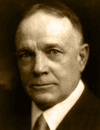
Billy Sunday emphasizes the significance of the atoning blood of Jesus Christ, arguing that it surpasses the old sacrificial system of animals and is central to redemption. He illustrates the necessity of Christ's sacrifice for the cleansing of sin and the restoration of a sinner's relationship with
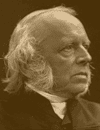
Andrew Bonar emphasizes the significance of the mercy-seat as the place where sinners can find atonement through the blood of Christ. He urges listeners to come to God as they are, burdened by sin, and to lay their sins upon the mercy-seat, where God's grace meets their need for salvation. Bonar rea

John Gill expounds on the concepts of propitiation, atonement, and reconciliation as they relate to Christ, emphasizing that while the term 'satisfaction' is not explicitly used in Scripture, its essence is captured in these terms. He explains that Christ serves as the propitiation for our sins, sat

William Booth emphasizes the profound meaning of redemption, explaining that it involves delivering souls from bondage through the sacrifice of Christ's blood. He articulates God's intention to restore humanity to a state even better than that lost through Adam's sin, achieved through Jesus' life, d

A.W. Pink examines 1 John 2:2, arguing against the interpretation that Christ's propitiation is universal for all humanity. He emphasizes that the verse is specifically addressing believers, particularly Jewish believers, and that the term 'whole world' refers to Gentile believers as well. Pink asse
William Booth emphasizes the significance of the Atonement of Jesus Christ, explaining it as the reconciliation between God and humanity achieved through Christ's sacrificial death on the Cross. He addresses various misconceptions about the Atonement, particularly rejecting the ideas of limited salv

J.C. Ryle emphasizes the paramount importance of the doctrine of Christ crucified, asserting that it is the foundation of Christian faith and the key to understanding God's love and atonement for sin. He argues that this doctrine is essential for personal peace, church prosperity, and missionary suc
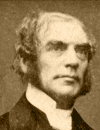
Octavius Winslow emphasizes the profound significance of the blood of Jesus in his sermon 'It Is the Blood That Saves.' He explains that the blood represents the new covenant and is essential for atonement, offering forgiveness and healing to sinners. Winslow highlights that faith is necessary to ac
Andrew Bonar expounds on the significance of the scapegoat in the Day of Atonement, illustrating how it represents both God's satisfaction with the sacrifice for sin and the removal of guilt from the sinner's conscience. He emphasizes that the first goat symbolizes God's acceptance of a substitute,

F.B. Meyer discusses the grave sin of Saul in slaying the Gibeonites, who were under a sacred covenant with Israel, emphasizing that the violation of such an oath demanded atonement through blood. He draws a parallel to the covenant established between God and humanity through Jesus Christ, highligh

John Nelson Darby emphasizes the significance of atonement in his sermon, asserting that the atonement is rooted in the cross of Christ and His sacrificial blood, which is essential for the remission of sins. He argues that rejecting the divine nature of Christ undermines the glory of His atonement

Watchman Nee emphasizes the unique role of the red heifer in the sacrificial system of Israel, highlighting that while other sacrifices addressed immediate needs, the red heifer was intended for future cleansing. The ashes of the heifer, mixed with water, provided a means of purification for the unc

A.W. Tozer emphasizes the essential nature of God's justice, asserting that it is not merely an attribute but the very essence of God Himself. He explains that God's justice is perfectly aligned with His righteousness, and that there is no external principle compelling God to act justly; rather, He

Andrew Murray emphasizes the unparalleled power of the blood of Jesus, rooted in the understanding that the life of the flesh is in the blood, as stated in Leviticus. He explains that the blood of Jesus carries the eternal life of the Son of God, making it infinitely valuable and powerful for redemp
John Gill emphasizes the doctrine of Christ's satisfaction, asserting its critical role in the Christian faith as it relates to redemption and the necessity of atonement for sin. He explains that without Christ's satisfaction, there can be no salvation, as it fulfills the demands of God's justice an
John Gill preaches on the necessity of Christ's satisfaction for sin, emphasizing that it was essential for the salvation of sinners and the fulfillment of God's justice. He explains that Christ, being made lower than the angels, suffered and died to make atonement for humanity's sins, which was nec

Charles Finney emphasizes the profound significance of Christ's atonement, explaining that Jesus died for our sins to demonstrate God's righteousness and love. He argues that the atonement is essential for understanding God's justice and mercy, as it allows for the forgiveness of sins while upholdin
C.H. Spurgeon emphasizes the timeless message of the gospel, focusing on the atonement of Christ as the cornerstone of faith. He passionately defends the doctrine of substitutionary atonement, asserting that Christ died for the ungodly, fulfilling God's justice and offering peace to troubled conscie
Octavius Winslow emphasizes the profound nature of Christ's Atonement, asserting that true understanding of this doctrine requires a spiritually renewed mind. He explains that the Atonement is not merely a theoretical concept but a heartfelt truth that reveals the depth of human sin and the necessit
C.H. Spurgeon explores the profound mystery of how a just God can justify guilty men, emphasizing that justification comes solely through faith in Jesus Christ. He reflects on his own experience of grappling with the justice of God and the burden of sin, ultimately finding solace in the doctrine of
John Gill expounds on 1 Peter 2:24, emphasizing that Christ bore our sins in His own body, fulfilling the role of the high priest and the scape goat as foretold in Scripture. He explains that Christ's suffering was not for His own sins but for the sins of many, including both Jews and Gentiles, and
John Gill defends the Supralapsarian doctrine against an anonymous pamphlet that critiques its foundational principles. He emphasizes the importance of scripture as the ultimate authority for examining doctrines, arguing that the pamphlet's author misrepresents the Supralapsarian view on election an
Andrew Bonar emphasizes the necessity of trials and tribulations in life, using the metaphor of Christ calming the storm on the Lake of Galilee to illustrate how His atoning blood brings peace to troubled consciences. He points out that Christ required a guilty sinner to demonstrate the transformati
Charles Finney's sermon 'Substitution' emphasizes the profound theological concept that Christ was made sin for humanity, representing all sins while remaining sinless Himself. He explains that this act was necessary for God's moral government, allowing for the possibility of forgiveness without com
C.H. Spurgeon emphasizes the profound truth that Jesus, the Messiah, was cut off not for Himself but for the sins of humanity, highlighting His innocence and the unjust nature of His death. He explains that no sin could be found in Christ, yet He willingly bore the punishment for our transgressions,
C.H. Spurgeon reflects on the agony and suffering of Jesus as He is led away to be crucified, emphasizing the weight of our sins that He bears on the cross. He draws a parallel between Jesus and the scapegoat from the Old Testament, illustrating how Jesus, like the scapegoat, carries away the sins o

Horatius Bonar emphasizes the significance of the incarnation of Jesus Christ, reminding us that His coming was not merely to teach or deliver but to serve as our Substitute through His sacrificial death. He argues that true salvation comes not from Christ's life alone but from His bloodshed, which
Chuck Smith explores the significance of Yom Kippur and its connection to the atonement made by Jesus Christ as our High Priest. He emphasizes that while the High Priest performed the atonement alone, Jesus also labored alone for our sins, humbling Himself and sacrificing His life without assistance

G.W. North emphasizes the distinction between redemption and atonement in his sermon, explaining that while redemption is foundational to both the Old and New Testaments, atonement is specific to the Old Testament and the Law given to Israel. He clarifies that atonement, which involved various sacri
G.W. North emphasizes the critical distinction between the Old and New Covenants, arguing that many Christians misuse Biblical phrases related to the Blood of Christ due to a lack of understanding. He warns against superstitious practices that treat the Blood as a magical covering, asserting that tr

R.A. Torrey emphasizes the significance of the Lord's Supper as instituted by Jesus during the Passover, highlighting its role as a memorial of Christ's sacrifice and a proclamation of His death. He discusses the preparation for the Passover, the divine knowledge of Jesus in orchestrating the events
C.H. Spurgeon emphasizes the significance of Jesus as the completed sacrifice, drawing a parallel between the Old Testament practice of laying hands on the burnt offering for atonement and the act of faith in accepting Christ. He asserts that just as a bullock could be accepted for atonement, Jesus
C.H. Spurgeon expounds on the significance of the Day of Atonement, illustrating how it foreshadows the ultimate sacrifice of Jesus Christ for humanity's sins. He emphasizes that this annual event, marked by the high priest's unique role and the sacrificial system, symbolizes Christ's singular and p
A.W. Tozer emphasizes God's profound willingness to forgive sin, addressing the common questions about why and how God forgives. He explains that the atonement of Christ serves as God's remedy for believers who struggle with sin, highlighting that God desires to remove the barrier of sin that separa
C.H. Spurgeon emphasizes the profound significance of Jesus being made 'sin for us' through the symbolic act of transferring sin to the burnt offering. He explains that the act of laying hands on the sacrifice represents a deep, burdensome faith that leans heavily on Christ as our Substitute. Each b
C.H. Spurgeon emphasizes the distinction between the true 'Righteous Father' and the misguided notion of universal fatherhood that lacks justice and accountability for sin. He argues that the world often trivializes sin and its consequences, failing to recognize that a just God must also be a loving
Art Katz emphasizes the critical nature of atonement in the Jewish faith, arguing that true forgiveness cannot be achieved through human deeds or rituals, as highlighted in Isaiah 53 and Leviticus 17:11. He challenges the assumption that God is satisfied with current religious practices that neglect
John Gill addresses the interpretation of various scripture passages that appear to support the concept of universal redemption. He categorizes these texts into three groups: those using 'all' and 'every', those mentioning 'world', and those suggesting Christ died for some who may perish. Gill empha
John Gill expounds on 1 John 2:2, emphasizing that Jesus is the propitiation for the sins of believers, Old Testament saints, and Gentiles, thus highlighting the universal scope of Christ's atonement. He clarifies that the term 'whole world' does not imply universal redemption for every individual b

Hans R. Waldvogel emphasizes the story of Rizpah as a powerful illustration of atonement and the necessity of communion with God. He draws parallels between Rizpah's mourning for her sons and the sacrificial death of Jesus, highlighting that true repentance and expectation of God's blessing are esse

David Wilkerson preaches about the significance of Jesus as our High Priest, drawing parallels between the Old Testament practices of atonement and Christ's ultimate sacrifice. He explains how the high priest's annual entry into the Holy of Holies, with the blood of a bullock, symbolizes Jesus' deat

Erlo Stegen emphasizes the significance of Jesus' circumcision as a symbol of the removal of sinful flesh and the beginning of His sacrificial journey for humanity. He explains that Jesus, born under the law, took on our sinful nature to save us from our sins, highlighting the contrast between our w
G.W. North emphasizes the limitations of the Old Covenant regarding atonement, explaining that it merely covered sin rather than removing it. He contrasts this with the New Covenant, where Jesus' sacrifice provides true and eternal atonement, removing sin completely. North critiques the modern churc
J.C. Ryle emphasizes the profound significance of Christ's death, marking it as the moment when atonement for sin was completed and access to God was granted to all believers. He highlights the miraculous events surrounding the crucifixion, such as the darkness that symbolized the gravity of sin and
John Nelson Darby explores the significance of the sacrifices outlined in Leviticus 1-3, emphasizing the importance of the tabernacle as the place of divine presence and the means of approaching God. He categorizes the sacrifices into those that are a sweet savor to God, such as the burnt-offering,
John Nelson Darby expounds on the Day of Atonement as described in Leviticus 16, emphasizing the dual role of Aaron's sacrifices: the bullock for sin and the scapegoat for transgressions. He illustrates how these offerings represent Christ's atoning work, highlighting the necessity of both meeting G
John Nelson Darby expounds on the significance of the Day of Atonement as described in Leviticus 16, emphasizing the dual aspects of atonement: maintaining the relationship between God and His people despite their sins, and the foreshadowing of Christ's ultimate sacrifice. He illustrates how the hig