
Protestant theology is rooted in the belief of salvation by grace through faith, as articulated in Ephesians 2:8-9, which emphasizes that it is not by our works but through faith in Jesus Christ that we are saved. Central to this theological framework is the authority of Scripture, encapsulated in 2 Timothy 3:16-17, where Paul affirms that all Scripture is God-breathed and useful for teaching, rebuking, correcting, and training in righteousness. This conviction leads to the doctrine of the priesthood of all believers, highlighted in 1 Peter 2:9, which asserts that every believer has direct access to God and a role in the ministry of the church. Furthermore, the Protestant emphasis on justification by faith alone is powerfully illustrated in Romans 5:1, where Paul declares that we are justified through faith and have peace with God. The Protestant Reformation, ignited by figures like Martin Luther, sought to return to these biblical truths, challenging the traditions that obscured the gospel message. As believers engage with these foundational principles, they are reminded of the transformative power of God's grace, which calls them to live out their faith actively, as seen in James 2:17, where faith without works is deemed dead.
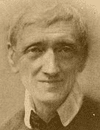
J.H. Newman discusses the dangers inherent in every system of theology, including the tendency towards evil that arises from human corruption and external influences. He highlights how Protestantism, while discarding the authority of the Church for Scripture, has led to a cautious and discriminative