
Nahum 1:3
Nahum 1:3 in Multiple Translations
The LORD is slow to anger and great in power; the LORD will by no means leave the guilty unpunished. His path is in the whirlwind and storm, and clouds are the dust beneath His feet.
The LORD is slow to anger, and great in power, and will not at all acquit the wicked: the LORD hath his way in the whirlwind and in the storm, and the clouds are the dust of his feet.
Jehovah is slow to anger, and great in power, and will by no means clear the guilty: Jehovah hath his way in the whirlwind and in the storm, and the clouds are the dust of his feet.
The Lord is slow to get angry and great in power, and will not let the sinner go without punishment: the way of the Lord is in the wind and the storm, and the clouds are the dust of his feet.
The Lord is slow to become angry, has great power, and will not leave the guilty unpunished. He walks among the whirlwind and the storm; the clouds are like dust beneath his feet.
The Lord is slow to anger, but he is great in power, and will not surely cleare the wicked: the Lord hath his way in ye whirlewind, and in the storme, and the cloudes are the dust of his feete.
Jehovah [is] slow to anger, and great in power, And Jehovah doth not entirely acquit, In a hurricane and in a tempest [is] His way, And a cloud [is] the dust of His feet.
The LORD is slow to anger, and great in power, and will by no means leave the guilty unpunished. The LORD has his way in the whirlwind and in the storm, and the clouds are the dust of his feet.
The LORD is slow to anger, and great in power, and will not at all acquit the wicked : the LORD hath his way in the whirlwind and in the storm, and the clouds are the dust of his feet.
The Lord is patient, and great in power, and will not cleanse and acquit the guilty. The Lord’s ways are in a tempest, and a whirlwind, and clouds are the dust of his feet.
Yahweh does not quickly become angry; but he is very powerful, and he will certainly punish [LIT] those who have done evil things [MTY]. He shows his power by sending whirlwinds and storms, and clouds are like [MET] the dust stirred up by his feet.
Berean Standard Amplified — Nahum 1:3
BSA
Word Study
Hover over any word to see its amplified meaning. Click a word to explore its full definition and translation comparisons.
Amplified text is generated using scripting to tie together English translations for comparison. Always refer to the core BSB translation and original Hebrew/Greek text for accuracy. Anomalies may occur.
Nahum 1:3 Interlinear (Deep Study)
BIB
HEB
יְהֹוָ֗ה
אֶ֤רֶךְ
אַפַּ֨יִם֙
ו/גדול
וּ/גְדָל
כֹּ֔חַ
וְ/נַקֵּ֖ה
לֹ֣א
יְנַקֶּ֑ה
יְהוָ֗ה
בְּ/סוּפָ֤ה
וּ/בִ/שְׂעָרָה֙
דַּרְכּ֔/וֹ
וְ/עָנָ֖ן
אֲבַ֥ק
רַגְלָֽי/ו
יְהֹוָ֗ה
Yᵉhôvâh
H3068
The Lord
N-proper
אֶ֤רֶךְ
ʼârêk
H750
slow
Adj
אַפַּ֨יִם֙
ʼaph
H639
face
N-md
ו/גדול
gâdôwl
H1419
Great (Sea)
Conj | Adj
וּ/גְדָל
gâdôwl
H1419
Great (Sea)
Conj | Adj
כֹּ֔חַ
kôach
H3581
reptile
N-ms
וְ/נַקֵּ֖ה
nâqâh
H5352
to clear
Conj | V-Piel-Ptc
לֹ֣א
lôʼ
H3808
not
Part
יְנַקֶּ֑ה
nâqâh
H5352
to clear
V-Piel-Imperf-3ms
יְהוָ֗ה
Yᵉhôvâh
H3068
The Lord
N-proper
בְּ/סוּפָ֤ה
çûwphâh
H5492
whirlwind
Prep | N-fs
וּ/בִ/שְׂעָרָה֙
sᵉʻârâh
H8183
storm
Conj | Prep | N-fs
דַּרְכּ֔/וֹ
derek
H1870
way
N-cs | Suff
וְ/עָנָ֖ן
ʻânân
H6051
cloud
Conj | N-ms
אֲבַ֥ק
ʼâbâq
H80
dust
N-ms
רַגְלָֽי/ו
regel
H7272
foot
N-fd | Suff
Hebrew Word Study
Select any word above to explore its original meaning, root, and usage across Scripture.
Use ← → arrow keys to navigate between words.
Hebrew Word Reference — Nahum 1:3
יְהֹוָ֗ה
Yᵉhôvâh
H3068
"The Lord"
N-proper
Yehovah is another name for God, often translated as 'the Lord'. It is a national name for God in the Jewish faith. This name is used throughout the Old Testament.
Definition: Another name of ye.ru.sha.laim (יְרוּשָׁלִַ֫ם, יְרוּשְׁלֵם "Jerusalem" H3389)
Usage: Occurs in 5522 OT verses. KJV: Jehovah, the Lord. Compare H3050 (יָהּ), H3069 (יְהֹוִה). See also: Genesis 2:4; Genesis 24:42; Exodus 8:8.
אֶ֤רֶךְ
ʼârêk
H750
"slow"
Adj
This word describes something or someone as long or patient, often referring to God's slow anger. It is used to describe long pinions or being patient. The KJV translates it as long-suffering or patient.
Definition: 1) long (pinions) 2) patient, slow to anger
Usage: Occurs in 15 OT verses. KJV: long(-suffering, -winged), patient, slow (to anger). See also: Exodus 34:6; Proverbs 15:18; Psalms 86:15.
אַפַּ֨יִם֙
ʼaph
H639
"face"
N-md
This Hebrew word can mean face, but also anger or nose. It is used to describe someone's countenance or emotions, like anger or patience. In the Bible, it appears in various contexts, including descriptions of God's emotions.
Definition: : face 1) nostril, nose, face 2) anger
Usage: Occurs in 269 OT verses. KJV: anger(-gry), [phrase] before, countenance, face, [phrase] forebearing, forehead, [phrase] (long-) suffering, nose, nostril, snout, [idiom] worthy, wrath. See also: Genesis 2:7; Nehemiah 8:6; Psalms 2:5.
ו/גדול
gâdôwl
H1419
"Great (Sea)"
Conj | Adj
In the Bible, this Hebrew word means something or someone great, whether in size, age, or importance. It appears in descriptions of the Great Sea and the Philistines. The word is used to convey a sense of magnitude or grandeur.
Definition: adj great Also named: pe.lish.ti (פְּלִשְׁתִּי "(Sea of the )Philistines" H6430I)
Usage: Occurs in 499 OT verses. KJV: [phrase] aloud, elder(-est), [phrase] exceeding(-ly), [phrase] far, (man of) great (man, matter, thing,-er,-ness), high, long, loud, mighty, more, much, noble, proud thing, [idiom] sore, ([idiom]) very. See also: Genesis 1:16; Joshua 7:26; 1 Kings 20:13.
וּ/גְדָל
gâdôwl
H1419
"Great (Sea)"
Conj | Adj
In the Bible, this Hebrew word means something or someone great, whether in size, age, or importance. It appears in descriptions of the Great Sea and the Philistines. The word is used to convey a sense of magnitude or grandeur.
Definition: adj great Also named: pe.lish.ti (פְּלִשְׁתִּי "(Sea of the )Philistines" H6430I)
Usage: Occurs in 499 OT verses. KJV: [phrase] aloud, elder(-est), [phrase] exceeding(-ly), [phrase] far, (man of) great (man, matter, thing,-er,-ness), high, long, loud, mighty, more, much, noble, proud thing, [idiom] sore, ([idiom]) very. See also: Genesis 1:16; Joshua 7:26; 1 Kings 20:13.
כֹּ֔חַ
kôach
H3581
"reptile"
N-ms
Koach means strength or power, referring to human, angelic, or God's might. It can also describe the strength of animals or the produce of soil.
Definition: 1) a small reptile, probably a kind of lizard, which is unclean 1a) perhaps an extinct animal, exact meaning is unknown
Usage: Occurs in 121 OT verses. KJV: ability, able, chameleon, force, fruits, might, power(-ful), strength, substance, wealth. See also: Genesis 4:12; Job 36:5; Psalms 22:16.
וְ/נַקֵּ֖ה
nâqâh
H5352
"to clear"
Conj | V-Piel-Ptc
To be or make clean, either physically or morally, as seen in the book of Psalms where David asks God to cleanse him. This word is also used to describe being free from guilt or punishment. It appears in various forms throughout the Old Testament.
Definition: 1) to be empty, be clear, be pure, be free, be innocent, be desolate, be cut off 1a) (Qal) to be empty, be clean, be pure 1b) (Niphal) 1b1) to be cleaned out, be purged out 1b2) to be clean, be free from guilt, be innocent 1b3) to be free, be exempt from punishment 1b4) to be free, be exempt from obligation 1c) (Piel) 1c1) to hold innocent, acquit 1c2) to leave unpunished
Usage: Occurs in 33 OT verses. KJV: acquit [idiom] at all, [idiom] altogether, be blameless, cleanse, (be) clear(-ing), cut off, be desolate, be free, be (hold) guiltless, be (hold) innocent, [idiom] by no means, be quit, be (leave) unpunished, [idiom] utterly, [idiom] wholly. See also: Genesis 24:8; Psalms 19:14; Psalms 19:13.
לֹ֣א
lôʼ
H3808
"not"
Part
The Hebrew word for not or no is used to indicate absence or negation, as when God says no to the Israelites' requests, or when they disobey His commands.
Definition: 1) not, no 1a) not (with verb-absolute prohibition) 1b) not (with modifier-negation) 1c) nothing (subst) 1d) without (with particle) 1e) before (of time) Aramaic equivalent: la (לָא "not" H3809)
Usage: Occurs in 3967 OT verses. KJV: [idiom] before, [phrase] or else, ere, [phrase] except, ig(-norant), much, less, nay, neither, never, no((-ne), -r, (-thing)), ([idiom] as though...,(can-), for) not (out of), of nought, otherwise, out of, [phrase] surely, [phrase] as truly as, [phrase] of a truth, [phrase] verily, for want, [phrase] whether, without. See also: Genesis 2:5; Genesis 31:15; Exodus 4:9.
יְנַקֶּ֑ה
nâqâh
H5352
"to clear"
V-Piel-Imperf-3ms
To be or make clean, either physically or morally, as seen in the book of Psalms where David asks God to cleanse him. This word is also used to describe being free from guilt or punishment. It appears in various forms throughout the Old Testament.
Definition: 1) to be empty, be clear, be pure, be free, be innocent, be desolate, be cut off 1a) (Qal) to be empty, be clean, be pure 1b) (Niphal) 1b1) to be cleaned out, be purged out 1b2) to be clean, be free from guilt, be innocent 1b3) to be free, be exempt from punishment 1b4) to be free, be exempt from obligation 1c) (Piel) 1c1) to hold innocent, acquit 1c2) to leave unpunished
Usage: Occurs in 33 OT verses. KJV: acquit [idiom] at all, [idiom] altogether, be blameless, cleanse, (be) clear(-ing), cut off, be desolate, be free, be (hold) guiltless, be (hold) innocent, [idiom] by no means, be quit, be (leave) unpunished, [idiom] utterly, [idiom] wholly. See also: Genesis 24:8; Psalms 19:14; Psalms 19:13.
יְהוָ֗ה
Yᵉhôvâh
H3068
"The Lord"
N-proper
Yehovah is another name for God, often translated as 'the Lord'. It is a national name for God in the Jewish faith. This name is used throughout the Old Testament.
Definition: Another name of ye.ru.sha.laim (יְרוּשָׁלִַ֫ם, יְרוּשְׁלֵם "Jerusalem" H3389)
Usage: Occurs in 5522 OT verses. KJV: Jehovah, the Lord. Compare H3050 (יָהּ), H3069 (יְהֹוִה). See also: Genesis 2:4; Genesis 24:42; Exodus 8:8.
בְּ/סוּפָ֤ה
çûwphâh
H5492
"whirlwind"
Prep | N-fs
Suphah refers to a hurricane or storm, and is also the name of a place east of the Jordan, translated as Red Sea in the KJV. It is derived from the idea of overflowing. In the Bible, it is used to describe powerful natural events, such as storms and whirlwinds.
Definition: storm-wind
Usage: Occurs in 16 OT verses. KJV: Red Sea, storm, tempest, whirlwind, Red sea. See also: Numbers 21:14; Isaiah 17:13; Psalms 83:16.
וּ/בִ/שְׂעָרָה֙
sᵉʻârâh
H8183
"storm"
Conj | Prep | N-fs
This Hebrew word means a strong storm or hurricane, like the ones that hit Israel in biblical times. It's used to describe powerful weather events. In the Bible, storms often symbolize God's power.
Definition: storm
Usage: Occurs in 2 OT verses. KJV: storm, tempest. See also: Job 9:17; Nahum 1:3.
דַּרְכּ֔/וֹ
derek
H1870
"way"
N-cs | Suff
Derek refers to a road or path, and can also mean a way of life or manner of action. It is often used to describe a journey or direction, and can be used figuratively to describe a person's character or moral path.
Definition: : road/route 1) way, road, distance, journey, manner 1a) road, way, path 1b) journey 1c) direction 1d) manner, habit, way 1e) of course of life (fig.) 1f) of moral character (fig.)
Usage: Occurs in 626 OT verses. KJV: along, away, because of, [phrase] by, conversation, custom, (east-) ward, journey, manner, passenger, through, toward, (high-) (path-) way(-side), whither(-soever). See also: Genesis 3:24; Deuteronomy 28:29; 1 Kings 15:34.
וְ/עָנָ֖ן
ʻânân
H6051
"cloud"
Conj | N-ms
This Hebrew word means a cloud or cloudy, and is used to describe the cloud that God uses to appear to his people. It appears in the Bible to describe God's presence, and is translated as cloud in the KJV.
Definition: 1) cloud, cloudy, cloud-mass 1a) cloud-mass (of theophanic cloud) 1b) cloud Aramaic equivalent: a.nan (עֲנָן "cloud" H6050)
Usage: Occurs in 80 OT verses. KJV: cloud(-y). See also: Genesis 9:13; Deuteronomy 1:33; Psalms 78:14.
אֲבַ֥ק
ʼâbâq
H80
"dust"
N-ms
This word refers to dust or small particles that are easily blown away, like powder or clouds. It's used in the Bible to describe the ground or a cloudy sky.
Definition: 1) dust 1a) on ground 1b) clouds (fig.)
Usage: Occurs in 6 OT verses. KJV: (small) dust, powder. See also: Exodus 9:9; Isaiah 29:5; Isaiah 5:24.
רַגְלָֽי/ו
regel
H7272
"foot"
N-fd | Suff
This word also means a foot, like when God says he will tread on the wicked in Malachi 4:3. It's used to describe human and animal feet, as well as the base of objects like tables or idols.
Definition: 1) foot 1a) foot, leg 1b) of God (anthropomorphic) 1c) of seraphim, cherubim, idols, animals, table 1d) according to the pace of (with prep) 1e) three times (feet, paces) Aramaic equivalent: re.gal (רְגַל "foot" H7271)
Usage: Occurs in 232 OT verses. KJV: [idiom] be able to endure, [idiom] according as, [idiom] after, [idiom] coming, [idiom] follow, (broken-)foot(-ed, -stool), [idiom] great toe, [idiom] haunt, [idiom] journey, leg, [phrase] piss, [phrase] possession, time. See also: Genesis 8:9; 2 Samuel 22:39; Psalms 8:7.
Study Notes — Nahum 1:3
Show Verse Quote Highlights
Context — The Burden against Nineveh
1This is the burden against Nineveh, the book of the vision of Nahum the Elkoshite:
2The LORD is a jealous and avenging God; the LORD is avenging and full of wrath. The LORD takes vengeance on His foes and reserves wrath for His enemies.
3The LORD is slow to anger and great in power; the LORD will by no means leave the guilty unpunished. His path is in the whirlwind and storm, and clouds are the dust beneath His feet.
4He rebukes the sea and dries it up; He makes all the rivers run dry. Bashan and Carmel wither, and the flower of Lebanon wilts. 5The mountains quake before Him, and the hills melt away; the earth trembles at His presence— the world and all its dwellers.Cross References
| Reference | Text (BSB) | |
|---|---|---|
| 1 | Psalms 147:5 | Great is our Lord, and mighty in power; His understanding has no limit. |
| 2 | Exodus 34:6–7 | Then the LORD passed in front of Moses and called out: “The LORD, the LORD God, is compassionate and gracious, slow to anger, abounding in loving devotion and faithfulness, maintaining loving devotion to a thousand generations, forgiving iniquity, transgression, and sin. Yet He will by no means leave the guilty unpunished; He will visit the iniquity of the fathers on their children and grandchildren to the third and fourth generations.” |
| 3 | Nehemiah 9:17 | They refused to listen and failed to remember the wonders You performed among them. They stiffened their necks and appointed a leader to return them to their bondage in Egypt. But You are a forgiving God, gracious and compassionate, slow to anger and rich in loving devotion, and You did not forsake them. |
| 4 | Psalms 103:8 | The LORD is compassionate and gracious, slow to anger, abounding in loving devotion. |
| 5 | Psalms 104:3 | laying the beams of His chambers in the waters above, making the clouds His chariot, walking on the wings of the wind. |
| 6 | Psalms 145:8 | The LORD is gracious and compassionate, slow to anger and abounding in loving devotion. |
| 7 | James 1:19 | My beloved brothers, understand this: Everyone should be quick to listen, slow to speak, and slow to anger, |
| 8 | Psalms 97:2–5 | Clouds and darkness surround Him; righteousness and justice are His throne’s foundation. Fire goes before Him and consumes His foes on every side. His lightning illuminates the world; the earth sees and trembles. The mountains melt like wax at the presence of the LORD, before the Lord of all the earth. |
| 9 | Zechariah 9:14 | Then the LORD will appear over them, and His arrow will go forth like lightning. The Lord GOD will sound the ram’s horn and advance in the whirlwinds of the south. |
| 10 | Job 9:4 | God is wise in heart and mighty in strength. Who has resisted Him and prospered? |
Sermons on Nahum 1:3
| Sermon | Description | |
|---|---|---|

|
Mercy, Omnipotence, and Justice by C.H. Spurgeon | In this sermon, the preacher emphasizes the urgency of recognizing the reality of death and the need for salvation through Christ. He highlights the role of Satan as a destructive |

|
Attributes of God - Grace, Mercy, Longsuffering and Goodness by William MacDonald | In this sermon, the speaker emphasizes the smallness of the earth in the vast universe, highlighting the insignificance of humanity in comparison. However, despite our sinful state |

|
Not All Storms Are Bad by Warren Wiersbe | Warren Wiersbe preaches on the powerful imagery in Psalms 18:7-15, illustrating how God works when He comes to the aid of His children. These verses depict God as the Creator and D |
|
|
The Lord Is Slow to Anger, and Great in Power by C.H. Spurgeon | C.H. Spurgeon emphasizes that the Lord is 'slow to anger' and 'great in power,' illustrating how God's mercy swiftly reaches out to humanity while His wrath is restrained. He expla |

|
Commentary Notes - Nahum by Walter Beuttler | Walter Beuttler preaches on the book of Nahum, a complement to Jonah, focusing on the destruction of Nineveh due to their relapse into sin and defiance of God's sovereignty. Nahum, |
|
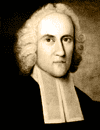
The Future Punishment of the Wicked Unavoidable and Intolerable by Jonathan Edwards | Jonathan Edwards preaches a powerful sermon on the future punishment of the wicked, emphasizing the unavoidable, intolerable, and inescapable nature of God's wrath upon impenitent |
|
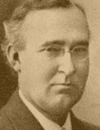
The Fruit Comes Afterward by Charles E. Cowman | Charles E. Cowman preaches about finding beauty and growth in the midst of life's storms, drawing inspiration from Nahum 1:3. He shares a personal childhood experience of witnessin |