
The preachers quoted here say that to be poor in spirit is to know before God that we have nothing and need everything from Him. They distinguish it from outward poverty and from self-contempt, show why it stands first among the beatitudes, and explain the promise that the kingdom of heaven belongs to such people.
To be poor in spirit is to know before God that we have nothing of our own to offer Him and that we need everything from Him. It is the first thing Jesus called blessed: "Blessed are the poor in spirit, for theirs is the kingdom of heaven." (Matthew 5:3). Thomas Watson wrote, "Poor in spirit, then signifies those who are brought to the sense of their sins, and seeing no goodness in themselves, despair in themselves and sue wholly to the mercy of God in Christ."1 A.W. Pink wrote, "To be poor in spirit is to realize that I have nothing, am nothing, and can do nothing, and have need of all things."2
Not poverty of purse
The blessing is not on those who lack money. Martin Luther wrote, "No one is blessed, therefore, because he is a beggar and has nowhere anything of his own; but the expression is, spiritually poor."3 He added, "Thus Christian faith moves straight forward; it regards neither poverty nor riches; it asks only how the heart stands."4 A king may be poor in spirit. Richard Sibbes wrote that "Josiah was not poor in respect of the world, for he was a king"5, and that he was poor in spirit because he saw an emptiness in himself. Nor is the blessing gained by giving up possessions. Watson wrote, "He does not pronounce them blessed who make themselves poor, leaving their estates and callings, but such as are evangelically poor."6 Albert Barnes wrote, "God knows no distinctions of men in conferring his favours; and wherever there is a poor, contrite, and humble spirit -- be it clothed in rags or in purple -- be it on a throne or a dunghill -- there he confers the blessings of salvation."7 James does speak of the poor of this world: "Has not God chosen the poor of this world to be rich in faith and to inherit the kingdom He promised those who love Him?" (James 2:5). The riches he names are riches of faith, and the poverty Christ blesses is poverty of spirit.
Not a mean or self-despising temper
Poverty of spirit is not weakness of character, and it is not the habit of speaking badly of oneself. F.B. Meyer distinguished it from self-depreciation. He wrote, "There are people, most objectionable, as I think, who are always saying, I am nothing and nobody."8 J.R. Miller wrote of such talk, "Too often it is pride, not humility--which prompts such self-condemning."9 Miller gave the true meaning: "To be poor in spirit is to stand before God in penitence, with nothing of our own to commend us, saved by grace alone."9 Pink wrote, "Poverty of spirit is evident in a person when he is brought into the dust before God to acknowledge his utter helplessness."2
All are poor, but few know it
Every person is spiritually poor. To be poor in spirit is to know it. Watson made the distinction: "He who is without grace is spiritually poor, but he is not poor in spirit; he does not know his own beggary."10 The church at Laodicea is the example. The Lord told them, "you do not realize that you are wretched, pitiful, poor, blind, and naked" (Revelation 3:17). C.H. Spurgeon said, "One would think that so penniless a beggar must be aware of his penury, but he is not and never will be unless the eternal God shall convince him of it!"11 He would not let this poverty be thought a mere misfortune. He said, "A poor man may be none the less worthy of esteem because of the meanness of his apparel and the scantiness of his provision, but spiritual poverty means fault, blameworthiness, shame and sin."11
A beggar before God
The poor in spirit come to God as those who must ask for everything. David prayed, "But I am poor and needy; may the Lord think of me. You are my helper and deliverer; O my God, do not delay." (Psalm 40:17). Jonathan Edwards wrote, "For a person to be poor in spirit, is to be in his own sense and apprehension poor, as to what is in him, and to be of an answerable disposition."12 He added, "A man that is very poor is a beggar; so is he that is poor in spirit."13 Spurgeon prayed that this sense might govern conduct: "God grant that from a sense of being beggars and nothing but beggars, daily receiving alms at the gate of Mercy, we may be led to behave ourselves in His Presence and among our fellow men with all lowliness of spirit."14 Paul asks, "What do you have that you did not receive?" (1 Corinthians 4:7).
How a person is brought to it
No one becomes poor in spirit by nature. The law shows a person what he is. "For the law merely brings awareness of sin." (Romans 3:20). Spurgeon said, "The utmost the Law can accomplish for our fallen humanity is to lay bare our spiritual poverty and convince us of it."11 He said of the work that is needed, "An Omnipotent hand created us out of nothing and the same Omnipotence is needed to bring us to feel that we are nothing!"11 J.C. Philpot said of God's people, "It is the work of grace upon their hearts that makes them poor; it is the stripping hand of the Spirit of God in their conscience that reduces them to poverty and ruin before the throne of mercy."15 Charles Finney said, "It is a great work to make men feel themselves hopeless, to humble them, to tear away their self-dependence and self-righteousness, and the notion of resources in themselves for any thing good."16 A sight of God does it. Isaiah cried, "Woe is me, for I am ruined, because I am a man of unclean lips" (Isaiah 6:5). Job said, "Therefore I retract my words, and I repent in dust and ashes." (Job 42:5-6). Richard Owen Roberts wrote, "Who are the poor in spirit but these who know how far they still have to go, those who, having seen God in His infinite majesty and holiness, realize how truly unlike God they are."17
Felt, and not only held as a doctrine
Many agree that they are sinners and are not poor in spirit. Finney said of our helplessness, "It is one thing to hold this in theory, and another thing to be heartily sensible of the humbling fact."16 John Wesley wrote, "Poverty of spirit then, as it implies the first step we take in running the race which is set before us, is a just sense of our inward and outward sins, and of our guilt and helplessness."18 Paul wrote from experience, "I know that nothing good lives in me, that is, in my flesh; for I have the desire to do what is good, but I cannot carry it out." (Romans 7:18). Thomas Brooks wrote, "The poor in spirit are those who are lowly, being truly conscious of their own unworthiness."19 He added, "They see nothing in themselves upon which they dare venture their everlasting estates--and therefore fly to the free, rich, sovereign, and glorious grace of God in Christ, as to their sure and only sanctuary!"19
The tax collector and the Pharisee
Jesus set the two tempers side by side in a parable. The Pharisee thanked God for what he was. Of the other man Jesus said, "the tax collector stood at a distance, unwilling even to lift up his eyes to heaven" (Luke 18:13). He went home justified. Watson compared the hypocrite and the child of God: "The one is glad he is so good, the other grieves he is so bad."20 J.C. Ryle wrote, "What we all want is a conversion from pride to humility, from high thoughts about ourselves to lowly thoughts about ourselves, from self-conceit to self-abasement, from the mind of the Pharisee to the mind of the publican."21 Zac Poonen saw the same contrast in the two sons of Luke 15. The younger came to see his need. Poonen wrote, "The elder son however, never came to such poverty of spirit, because he never saw his own need."22 Thomas Boston wrote of those who trust in their prayers and religious duties, "They were never made poor in spirit, and brought empty-handed to Christ, to lay the stress of all on his atoning blood."23
Why it comes first
This beatitude stands first because nothing else can come before it. Miller wrote, "It is significant that this beatitude of poverty of spirit comes first in our Lord's chart of life."9 He gave the reason: "Poverty of spirit comes first--because it must be first."9 He added, "It is the foundation on which alone the fabric of spiritual character can rise!"9 Watson wrote, "Poverty of spirit is the foundation stone on which God lays the superstructure of glory."24 Spurgeon said, "No man ever mourns before God until he is poor in spirit!"11 Alexander Maclaren traced the third beatitude back to the first: "The true meekness is not mere natural disposition, but the direct outcome of poverty of spirit and the consequent sorrow."25 Ryle wrote, "A sense of sin, guilt, and poverty of soul, is the first stone laid by the Holy Ghost, when He builds a spiritual temple."26 Jesus said the same of entrance into His kingdom: "unless you change and become like little children, you will never enter the kingdom of heaven" (Matthew 18:3).
Emptied before filled
God fills only what is empty. Mary sang, "He has filled the hungry with good things, but has sent the rich away empty." (Luke 1:53). Watson wrote, "God first empties a man of himself, before he pours in the precious wine of his grace."27 Pink wrote of poverty of spirit, "It is the work of the Spirit emptying the heart of self, that Christ may fill it."28 Finney said, "To know Christ, you must know yourself; to have Christ come in, you must be emptied of yourself."16 In another sermon he said, "The Christian is emptied of self-reliance ere he can be filled of Christ."29 A.B. Simpson wrote, "The heart must be emptied of self and the world before it can be filled with Jesus and the Holy Ghost."30 Miller wrote of spiritual longing, "It is the empty hand stretched up to God, to receive the gifts of grace."9
It makes Christ precious
A person who thinks himself rich sees no need of a Saviour. Watson wrote, "Before we see our own wants, we never see Christ's worth."31 Spurgeon said, "Christ is never precious till we are poor in spirit—we must see our own needs before we can perceive His wealth."11 Paul is the example. He had much to boast of and gave it up. He wrote, "I consider them rubbish, that I may gain Christ and be found in Him, not having my own righteousness from the law" (Philippians 3:8-9). Spurgeon said, "He that is bankrupt and beggared of all consciousness of creature merit, and of all human hope, is the man to whom the riches of the covenant of grace most surely belong."32 Maclaren wrote, "Good news is preached to all the poor in spirit, and whosoever knows himself to be in need of all things may claim all things as his own in Christ."33
Poverty of spirit, humility and self-denial
These three are near to one another, and the older writers took care to distinguish them. Edwards joined the first two: "A truly humble person, having such a mean opinion of his righteousness and holiness, is poor in spirit."34 Watson thought that one produces the other. He wrote, "I rather think poverty of spirit is the cause of humility, for when a man sees his want of Christ, and how he lives on the alms of free grace, this makes him humble."35 He also compared the poor in spirit with the self-denier: "The self-denier parts with the world for Christ, the poor in spirit parts with himself for Christ, i.e. his own righteousness."36 Poverty of spirit is first a matter between the soul and God. Humility towards others and the denial of self follow from it.
Its opposite
The opposite of poverty of spirit is self-sufficiency. The Pharisee in the parable had it, and so had Laodicea. Spurgeon said, "The strait gate is not wide enough to allow that man to enter who is great in his own esteem."11 He went on, "It is easier for a camel to go through the eye of a needle than for a man conceited of his own spiritual riches to enter into the Kingdom of Heaven."11 Pink wrote of poverty of spirit, "It is the opposite of that haughty, self-assertive, and self-sufficient disposition that the world so much admires and praises."2 James gives the principle: "God opposes the proud, but gives grace to the humble." (James 4:6). Jesus told His disciples, "I am the vine and you are the branches. The one who remains in Me, and I in him, will bear much fruit. For apart from Me you can do nothing." (John 15:5).
How the poor in spirit can be known
Watson gave several marks. One is that grace makes a person lower in his own eyes. He wrote, "The more grace he has, the more humble he is, because he now sees himself a greater debtor to God."37 Watson named thankfulness as another: "They who are poor in spirit, bless God for the least crumb that falls from the table of free grace."38 Roberts wrote, "While appreciative of every mercy received and every grace practiced, the poor in spirit are ever aware that the graces they lack are far more numerous than the graces they enjoy, and the mercy they show is nothing in comparison with the mercy they themselves experience."17 Miller wrote, "The man who is poor in spirit is not himself aware of the shining of his own life, the splendor of his deeds, or the power of his words and ministries."9 Poonen wrote, "The poor in spirit are those who are conscious of their human insufficiency and who therefore submit to the will of God completely."39 Edwards added a test: "It is in vain for any to pretend that they are humble, and as little children before God, when they are haughty, assuming, and impudent in their behavior amongst men."40 Poverty of spirit before God that is real will show itself in lowliness among people.
A lasting temper
Poverty of spirit is the first step, and it is also to remain. Wesley wrote, "It is undoubtedly true, that both poverty of spirit, and every other temper which is here mentioned, are at all times found, in a greater or less degree, in every real Christian."41 William Law wrote, "If poverty of spirit be necessary, it must be the spirit and temper of every day of our lives."42 Finney said, "It is healthful to be laid in the dust, to be emptied, and stripped, and made naked and bare; to be laid in the dust and kept there."16 Andrew Murray wrote, "Faith in Jesus bows in lowly stillness and poverty of spirit, to realize that self has nothing, and that Another, the unseen Spirit, has now come in to be its leader, its strength, and its life."43 Paul learned it through weakness. He wrote, "I will boast all the more gladly in my weaknesses, so that the power of Christ may rest on me." (2 Corinthians 12:9). He also wrote, "Not that we are competent in ourselves to claim that anything comes from us, but our competence comes from God." (2 Corinthians 3:5).
Possessing nothing
A.W. Tozer applied the beatitude to the things we cling to. He wrote, "There is within the human heart a tough fibrous root of fallen life whose nature is to possess, always to possess."44 He wrote of the way forward, "The way to deeper knowledge of God is through the lonely valleys of soul poverty and abnegation of all things."45 He added, "The blessed ones who possess the kingdom are they who have repudiated every external thing and have rooted from their hearts all sense of possessing."46 The poor in spirit hold God's gifts with an open hand, because they know that all they have was given.
God's regard for the poor in spirit
God says, "This is the one I will esteem: he who is humble and contrite in spirit, who trembles at My word." (Isaiah 66:2). David wrote, "The LORD is near to the brokenhearted; He saves the contrite in spirit." (Psalm 34:18). He also wrote, "The sacrifices of God are a broken spirit; a broken and a contrite heart, O God, You will not despise." (Psalm 51:17). And God says through Isaiah, "I dwell in a high and holy place, and with the oppressed and humble in spirit, to restore the spirit of the lowly and revive the heart of the contrite." (Isaiah 57:15). Watson wrote, "He that is vile in his own eyes is precious in God's eyes."47
Theirs is the kingdom of heaven
The promise is in the present tense. The kingdom is theirs now. Miller wrote, "The form of blessing for the poor in spirit, is that theirs is the kingdom of heaven."9 He explained, "The kingdom of heaven is wherever the laws of the heavenly life rule in men's hearts."9 Spurgeon said, "The poor in spirit are lifted from the dunghill and set, not among hired servants in the field, but among princes in the Kingdom of God!"11 He added, "To the poor in spirit belong all the security, honor and happiness which the Gospel Kingdom is calculated to give upon earth!"11 He also said, "The highest grade of outward religiousness is not blessed, but the very lowest form of spiritual Grace is endowed with the Kingdom of Heaven!"11 G. Campbell Morgan wrote, "Those who are poor in spirit, and who therefore enter into the Kingdom He has brought nigh, entering in are not there on sufferance."48 Meyer wrote of the way into it, "We must descend if we would reign, stoop if we would rise, gird ourselves to wash the feet of the disciples as a common slave in order to share the royalty of our Divine Master."49 Watson looked to the end of the road: "The poor in spirit, who have lain all their lives at the gate of mercy and have lived upon the alms of free grace, have died rich in faith, heirs to a kingdom."50
- Thomas Watson, The Beatitudes: An Exposition of Matthew 5:1-12, "Blessed are the poor in spirit".
- A.W. Pink, "The Beatitudes the First Beatitude" (sermon).
- Martin Luther, Writings of Martin Luther - Volume 1, "A.02. Matthew 5".
- Martin Luther, Writings of Martin Luther - Volume 1, "A.02. Matthew 5".
- Richard Sibbes, Josiah's Reformation, "The art of self-humbling".
- Thomas Watson, The Beatitudes: An Exposition of Matthew 5:1-12, "Blessed are the poor in spirit".
- Albert Barnes , Barnes New Testament Notes, "THE GOSPEL ACCORDING TO MARK - Chapter 12 - Verse 37".
- F.B. Meyer, Writings of F B Meyer - Volume 1, "The Key to the Kingdom".
- J.R. Miller, "A Devotional Study of the Beatitudes" (sermon).
- Thomas Watson, The Beatitudes: An Exposition of Matthew 5:1-12, "Blessed are the poor in spirit".
- C.H. Spurgeon, "The First Beatitude" (sermon).
- Jonathan Edwards, Religious Affections, "VI. Gracious affections are attended with evangelical humiliation".
- Jonathan Edwards, Religious Affections, "VI. Gracious affections are attended with evangelical humiliation".
- C.H. Spurgeon, "A Catechism for the Proud" (sermon).
- J.C. Philpot, "The Afflicted Remnant and Their Confiding Trust" (sermon).
- Charles Finney, "Blessed Are the Poor in Spirit" (sermon).
- Richard Owen Roberts, "Backsliding" (sermon).
- John Wesley, Upon Our Lord's Sermon on the Mount, "Discourse 01".
- Thomas Brooks, "Blessed Are the Poor in Spirit" (sermon).
- Thomas Watson, The Beatitudes: An Exposition of Matthew 5:1-12, "Blessed are the poor in spirit".
- J.C. Ryle, Expository Thoughts On Matthew, "Matthew 18:1-14".
- Zac Poonen, "(The Full Gospel) 15. What a Happy Year It Will Be" (sermon).
- Thomas Boston, Human Nature, "The Corruption of the Will, Mind and".
- Thomas Watson, The Beatitudes: An Exposition of Matthew 5:1-12, "Blessed are the poor in spirit".
- Alexander Maclaren, Expositions Of Holy Scripture A, "The new sinai".
- J.C. Ryle, The Upper Room Being A Few Truths For The Times, "CHAPTER VII John 7:37-38. |LET ANY MAN COME.|".
- Thomas Watson, The Beatitudes: An Exposition of Matthew 5:1-12, "Blessed are the poor in spirit".
- A.W. Pink, "The Beatitudes Introduction" (sermon).
- Charles Finney, "Living by Faith" (sermon).
- A.B. Simpson, "Filled With the Spirit" (sermon).
- Thomas Watson, The Beatitudes: An Exposition of Matthew 5:1-12, "Blessed are the poor in spirit".
- C.H. Spurgeon, Only a Prayer Meeting, "Chapter Thirty-Four: A Full Christ For Empty Sinners and Saints".
- Alexander Maclaren, Expositions Of Holy Scripture B, "John's doubts of jesus, and jesus' praise of john".
- Jonathan Edwards, Religious Affections, "VI. Gracious affections are attended with evangelical humiliation".
- Thomas Watson, The Beatitudes: An Exposition of Matthew 5:1-12, "Blessed are the poor in spirit".
- Thomas Watson, The Beatitudes: An Exposition of Matthew 5:1-12, "Blessed are the poor in spirit".
- Thomas Watson, The Beatitudes: An Exposition of Matthew 5:1-12, "Blessed are the poor in spirit".
- Thomas Watson, The Beatitudes: An Exposition of Matthew 5:1-12, "Blessed are the poor in spirit".
- Zac Poonen, "Living in the Will of God" (sermon).
- Jonathan Edwards, Religious Affections, "VI. Gracious affections are attended with evangelical humiliation".
- John Wesley, Upon Our Lord's Sermon on the Mount, "Discourse 01".
- William Law, "Concerning the Nature and Extent of Christian Devotion" (sermon).
- Andrew Murray, "The Glorified Jesus" (sermon).
- A.W. Tozer, The Pursuit of God, "The Blessedness of Possessing Nothing".
- A.W. Tozer, The Pursuit of God, "The Blessedness of Possessing Nothing".
- A.W. Tozer, The Pursuit of God, "The Blessedness of Possessing Nothing".
- Thomas Watson, The Beatitudes: An Exposition of Matthew 5:1-12, "Blessed are the poor in spirit".
- G. Campbell Morgan, "Different Phases of the One Fact" (sermon).
- F.B. Meyer, Writings of F B Meyer - Volume 1, "The Key to the Kingdom".
- Thomas Watson, The Beatitudes: An Exposition of Matthew 5:1-12, "Blessed are the poor in spirit".
In their own words
Each line below is quoted exactly from a sermon on this site. Follow the link to hear or read it where it was said.
To be poor in spirit is to realize that I have nothing, am nothing, and can do nothing, and have need of all things.
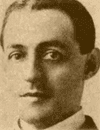 A.W. Pink
in The Beatitudes the First Beatitude
Read in context
Poverty of spirit is evident in a person when he is brought into the dust before God to acknowledge his utter helplessness.
A.W. Pink
in The Beatitudes the First Beatitude
Read in context
It is the opposite of that haughty, self-assertive, and self-sufficient disposition that the world so much admires and praises.
A.W. Pink
in The Beatitudes the First Beatitude
Read in context
Too often it is pride, not humility--which prompts such self-condemning.
 J.R. Miller
in A Devotional Study of the Beatitudes
Read in context
To be poor in spirit is to stand before God in penitence, with nothing of our own to commend us, saved by grace alone.
J.R. Miller
in A Devotional Study of the Beatitudes
Read in context
It is significant that this beatitude of poverty of spirit comes first in our Lord's chart of life.
J.R. Miller
in A Devotional Study of the Beatitudes
Read in context
Poverty of spirit comes first--because it must be first.
J.R. Miller
in A Devotional Study of the Beatitudes
Read in context
It is the foundation on which alone the fabric of spiritual character can rise!
J.R. Miller
in A Devotional Study of the Beatitudes
Read in context
It is the empty hand stretched up to God, to receive the gifts of grace.
J.R. Miller
in A Devotional Study of the Beatitudes
Read in context
The man who is poor in spirit is not himself aware of the shining of his own life, the splendor of his deeds, or the power of his words and ministries.
J.R. Miller
in A Devotional Study of the Beatitudes
Read in context
The form of blessing for the poor in spirit, is that theirs is the kingdom of heaven.
J.R. Miller
in A Devotional Study of the Beatitudes
Read in context
The kingdom of heaven is wherever the laws of the heavenly life rule in men's hearts.
J.R. Miller
in A Devotional Study of the Beatitudes
Read in context
One would think that so penniless a beggar must be aware of his penury, but he is not and never will be unless the eternal God shall convince him of it!
 C.H. Spurgeon
in The First Beatitude
Read in context
A poor man may be none the less worthy of esteem because of the meanness of his apparel and the scantiness of his provision, but spiritual poverty means fault, blameworthiness, shame and sin.
C.H. Spurgeon
in The First Beatitude
Read in context
The utmost the Law can accomplish for our fallen humanity is to lay bare our spiritual poverty and convince us of it.
C.H. Spurgeon
in The First Beatitude
Read in context
An Omnipotent hand created us out of nothing and the same Omnipotence is needed to bring us to feel that we are nothing!
C.H. Spurgeon
in The First Beatitude
Read in context
No man ever mourns before God until he is poor in spirit!
C.H. Spurgeon
in The First Beatitude
Read in context
Christ is never precious till we are poor in spirit—we must see our own needs before we can perceive His wealth.
C.H. Spurgeon
in The First Beatitude
Read in context
The strait gate is not wide enough to allow that man to enter who is great in his own esteem.
C.H. Spurgeon
in The First Beatitude
Read in context
It is easier for a camel to go through the eye of a needle than for a man conceited of his own spiritual riches to enter into the Kingdom of Heaven.
C.H. Spurgeon
in The First Beatitude
Read in context
The poor in spirit are lifted from the dunghill and set, not among hired servants in the field, but among princes in the Kingdom of God!
C.H. Spurgeon
in The First Beatitude
Read in context
To the poor in spirit belong all the security, honor and happiness which the Gospel Kingdom is calculated to give upon earth!
C.H. Spurgeon
in The First Beatitude
Read in context
The highest grade of outward religiousness is not blessed, but the very lowest form of spiritual Grace is endowed with the Kingdom of Heaven!
C.H. Spurgeon
in The First Beatitude
Read in context
God grant that from a sense of being beggars and nothing but beggars, daily receiving alms at the gate of Mercy, we may be led to behave ourselves in His Presence and among our fellow men with all lowliness of spirit.
C.H. Spurgeon
in A Catechism for the Proud
Read in context
It is the work of grace upon their hearts that makes them poor; it is the stripping hand of the Spirit of God in their conscience that reduces them to poverty and ruin before the throne of mercy.
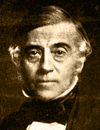 J.C. Philpot
in The Afflicted Remnant and Their Confiding Trust
Read in context
It is a great work to make men feel themselves hopeless, to humble them, to tear away their self-dependence and self-righteousness, and the notion of resources in themselves for any thing good.
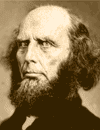 Charles Finney
in Blessed Are the Poor in Spirit
Read in context
It is one thing to hold this in theory, and another thing to be heartily sensible of the humbling fact.
Charles Finney
in Blessed Are the Poor in Spirit
Read in context
To know Christ, you must know yourself; to have Christ come in, you must be emptied of yourself.
Charles Finney
in Blessed Are the Poor in Spirit
Read in context
It is healthful to be laid in the dust, to be emptied, and stripped, and made naked and bare; to be laid in the dust and kept there.
Charles Finney
in Blessed Are the Poor in Spirit
Read in context
Who are the poor in spirit but these who know how far they still have to go, those who, having seen God in His infinite majesty and holiness, realize how truly unlike God they are.
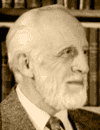 Richard Owen Roberts
in Backsliding
Read in context
While appreciative of every mercy received and every grace practiced, the poor in spirit are ever aware that the graces they lack are far more numerous than the graces they enjoy, and the mercy they show is nothing in comparison with the mercy they themselves experience.
Richard Owen Roberts
in Backsliding
Read in context
The poor in spirit are those who are lowly, being truly conscious of their own unworthiness.
 Thomas Brooks
in Blessed Are the Poor in Spirit
Read in context
They see nothing in themselves upon which they dare venture their everlasting estates--and therefore fly to the free, rich, sovereign, and glorious grace of God in Christ, as to their sure and only sanctuary!
Thomas Brooks
in Blessed Are the Poor in Spirit
Read in context
The elder son however, never came to such poverty of spirit, because he never saw his own need.
 Zac Poonen
in (The Full Gospel) 15. What a Happy Year It Will Be
Read in context
It is the work of the Spirit emptying the heart of self, that Christ may fill it.
A.W. Pink
in The Beatitudes Introduction
Read in context
The Christian is emptied of self-reliance ere he can be filled of Christ.
Charles Finney
in Living by Faith
Read in context
The heart must be emptied of self and the world before it can be filled with Jesus and the Holy Ghost.
 A.B. Simpson
in Filled With the Spirit
Read in context
The poor in spirit are those who are conscious of their human insufficiency and who therefore submit to the will of God completely.
Zac Poonen
in Living in the Will of God
Read in context
If poverty of spirit be necessary, it must be the spirit and temper of every day of our lives.
 William Law
in Concerning the Nature and Extent of Christian Devotion
Read in context
Faith in Jesus bows in lowly stillness and poverty of spirit, to realize that self has nothing, and that Another, the unseen Spirit, has now come in to be its leader, its strength, and its life.
 Andrew Murray
in The Glorified Jesus
Read in context
Those who are poor in spirit, and who therefore enter into the Kingdom He has brought nigh, entering in are not there on sufferance.
 G. Campbell Morgan
in Different Phases of the One Fact
Read in context
What Scripture says
- Matthew 5:3 the poor in spirit are blessed, and the kingdom is theirs
- Isaiah 66:2 God esteems the humble and contrite in spirit
- Isaiah 57:15 the High and Holy One dwells with the lowly
- Luke 18:13-14 the tax collector who asked only for mercy went home justified
- Revelation 3:17 Laodicea was poor and did not know it
- Psalm 40:17 I am poor and needy
- Luke 1:53 the hungry filled, the rich sent away empty
- Philippians 3:7-9 Paul counted his own righteousness as loss to gain Christ
- Psalm 34:18 the LORD is near to the contrite in spirit
- John 15:5 apart from Me you can do nothing
- James 4:6 grace is given to the humble
How this page is made: the quotes are taken word for word from sermons on SermonIndex and checked against them by program before the page is published. The transcripts of audio and video sermons are machine-made, so follow the link to hear the words as they were spoken. The answer above the quotes is an overview with its sources listed; it is not a statement of doctrine by SermonIndex.