
The preachers quoted here walk through Matthew 5 to 7 in order: the Beatitudes, salt and light, Christ and the law, secret giving and prayer, the Lord's Prayer, treasure, anxiety, judging, the Golden Rule, the two ways and the two builders. They show that the Sermon reaches the heart, rests on the authority of Christ, and can only be lived by those He has made new.
The Sermon on the Mount is the teaching of the Lord Jesus recorded in Matthew chapters 5 to 7. In it He describes the character of those who belong to the kingdom of heaven, shows what the law of God requires of the heart, and calls His hearers to do what He says. It ends with this test: "Therefore everyone who hears these words of Mine and acts on them is like a wise man who built his house on the rock." (Matthew 7:24). J.R. Miller called it "a summary of duty in the kingdom of heaven"1. Charles Spurgeon said, "Turn here, then, and learn that the Christ of God is the Preacher of the Sermon on the Mount!"2
The setting
Matthew tells us where and to whom it was spoken. "When Jesus saw the crowds, He went up on the mountain and sat down. His disciples came to Him, and He began to teach them" (Matthew 5:1-2). The disciples were nearest to Him, and the crowds listened. Spurgeon wrote, "The King is anointed, comes among the people to show his power, and afterwards acts as a Legislator, and sets forth his statutes."3 Alexander Maclaren wrote, "An unnamed mountain somewhere on the Sea of Galilee is the Sinai of the new covenant."4 John Wesley said, "Let us observe, who it is that is here speaking, that we may take heed how we hear."5
The Beatitudes
The Sermon opens with a series of blessings. The first is, "Blessed are the poor in spirit, for theirs is the kingdom of heaven." (Matthew 5:3). The last is, "Blessed are those who are persecuted because of righteousness, for theirs is the kingdom of heaven." (Matthew 5:10). They describe a character before they give any command. Miller said, "This sermon begins with the beatitudes which tell us who are the blessed or happy ones."6 Thomas Manton wrote, "It is notable that all the beatitudes are affixed to unlikely conditions, Mat. v., to show that the judgment of the word and the judgment of the world are contrary."7 A.W. Tozer wrote, "For the exact opposite of the virtues in the Beatitudes are the very qualities which distinguish human life and conduct."8 Maclaren wrote, "The promises attached to the Beatitudes are in each case the results which flow from the quality, rather than the rewards arbitrarily given for it."9 J.C. Ryle said, "Those whom the great High Priest blesses are blessed indeed!"10
Salt and light
The people described in the Beatitudes are then told what they are to the world. "You are the salt of the earth. But if the salt loses its savor, how can it be made salty again? It is no longer good for anything, except to be thrown out and trampled by men." (Matthew 5:13). And again, "You are the light of the world. A city on a hill cannot be hidden." (Matthew 5:14). Ryle said, "Surely, if words mean anything, we are meant to learn from these two figures that there must be something marked, distinct, and peculiar about our character, if we are true Christians."11 Maclaren wrote of the salt, "The chief one is that of our power, and therefore our obligation, to arrest the corruption round us, by our own purity."12 Of the light he wrote, "Christian men individually, and the Christian Church as a whole, shine by derived light."13 The aim is the honour of God. "In the same way, let your light shine before men, that they may see your good deeds and glorify your Father in heaven." (Matthew 5:16). Spurgeon wrote, "The light is ours, but the glorification is for our Father in heaven."14
Christ and the law
Jesus then states His relation to the Old Testament. "Do not think that I have come to abolish the Law or the Prophets. I have not come to abolish them, but to fulfill them." (Matthew 5:17). Spurgeon wrote, "He is himself the fulfilment and substance of the types, and prophecies, and commands of the law."15 A.W. Pink wrote of "the sermon on the mount, where we hear our Lord enunciating no absolutely new law, setting up no different standard of conduct, but renewing the Decalogue, freed from the glosses and corruptions of the rabbis and Pharisees."16 Then comes a hard saying. "For I tell you that unless your righteousness exceeds that of the scribes and Pharisees, you will never enter the kingdom of heaven." (Matthew 5:20). Maclaren wrote, "The scribes and Pharisees are not here regarded as hypocrites, but taken as types of the highest conformity with the law which the old dispensation afforded."17
The law carried into the heart
Jesus then sets what was said of old beside His own word, one command after another. He takes each command behind the act to the thought and desire. Of murder He says, "But I tell you that anyone who is angry with his brother will be subject to judgment." (Matthew 5:22). Of adultery He says, "But I tell you that anyone who looks at a woman to lust after her has already committed adultery with her in his heart." (Matthew 5:28). Spurgeon wrote, "God takes cognizance of the emotions from which acts of hate may spring, and calls us to account as much for the angry feeling as for the murderous deed."18 Manton wrote, "The Pharisees did not think the law broken but by outward gross acts and actual defilement; but Christ showeth that a wanton look is adultery; an envious look murders; the heart consenteth to sin though the body acts it not."19 Miller said, "The Sermon on the Mount teaches us that no merely external or general observance of the law of God is enough."20 A.T. Pierson wrote, "The sermon on the Mount dissects the very soul of man: it is both an exponent and an expositor of the secret life."21
Love for enemies
The last of these sayings goes furthest. "But I tell you, love your enemies and pray for those who persecute you, that you may be sons of your Father in heaven. He causes His sun to rise on the evil and the good, and sends rain on the righteous and the unrighteous." (Matthew 5:44-45). Maclaren wrote, "The last of the five instances of our Lord's extending and deepening and spiritualising the old law is also the climax of them."22 Of turning the other cheek he wrote, "The disciple is to meet evil with a manifestation, not of anger, hatred, or intent to inflict retribution, but of readiness to submit to more."23 Spurgeon wrote, "Love is now the universal law; and our King, who has commanded it, is himself the Pattern of it."24 John Murray wrote, "The disciples are to love their enemies in order that they may be the sons of their Father; they must imitate their Father."25 The chapter ends, "Be perfect, therefore, as your heavenly Father is perfect." (Matthew 5:48).
Giving, praying and fasting in secret
Chapter 6 turns from the commands to the motive. "Be careful not to perform your righteous acts before men to be seen by them. If you do, you will have no reward from your Father in heaven." (Matthew 6:1). Jesus applies this to giving, to prayer and to fasting. Of prayer He says, "But when you pray, go into your inner room, shut your door, and pray to your Father, who is unseen. And your Father, who sees what is done in secret, will reward you." (Matthew 6:6). Ryle said of the opening verses of the chapter that "the Lord Jesus gives us instruction on two subjects: one is that of giving alms; the other is that of prayer."26 He said of private prayer, "It is not enough to join in the prayers of the congregation on Sundays, or attend the prayers of a family on week days: there must be private prayer also."26 Spurgeon wrote, "To stand with a penny in one hand and a trumpet in the other is the posture of hypocrisy."27 Maclaren wrote, "The mingling of regard for man's approbation with apparently righteous acts absolutely disqualifies them for receiving God's reward, for it changes their whole character, and they are no longer what they seem."28 Wesley said, "Prayer is the lifting up of the heart to God: All words of prayer, without this, are mere hypocrisy."29
The Lord's Prayer
In the middle of the Sermon Jesus gives a pattern for prayer. It begins, "Our Father in heaven, hallowed be Your name. Your kingdom come, Your will be done, on earth as it is in heaven." (Matthew 6:9-10). Wesley said, "There is nothing which we have need to ask of God, nothing which we can ask without offending him, which is not included, either directly or indirectly, in this comprehensive form."29 Andrew Murray called it "A form of prayer that becomes the model and inspiration for all other prayer"30. Miller said, "Whatever use our Lord meant us to make of the Lord's Prayer as a form of prayer, the order of its petitions is certainly intended to guide us in our approaches to our Father, telling us what to put first."6
Treasure and the two masters
Jesus next speaks of what the heart is set on. "But store up for yourselves treasures in heaven, where moth and rust do not destroy, and where thieves do not break in and steal." (Matthew 6:20). He gives the reason: "For where your treasure is, there your heart will be also." (Matthew 6:21). Maclaren wrote, "Every earthly possession has its own foes, every earthly joy has its own destructive opposite; but nothing touches this treasure in heaven."31 Edward Payson said, "The more concerned he feels to lay up treasure on earth, the less concerned he must be to lay up treasure in heaven."32 Then Jesus says, "No one can serve two masters: Either he will hate the one and love the other, or he will be devoted to the one and despise the other. You cannot serve both God and money." (Matthew 6:24). Wesley said, "The contrariety between the most opposite things on earth, between fire and water, darkness and light, vanishes into nothing when compared to the contrariety between God and mammon."33 F.B. Meyer said, "The endeavor to serve God and mammon, to stand well with both worlds, to lay up treasures on earth and at the same time be rich toward God, is a spiritual squint."34 Spurgeon wrote, "God and the world will never agree, and however much we may attempt it, we shall never be able to serve both."35
Do not worry
From money Jesus turns to anxiety about food and clothing. "Therefore I tell you, do not worry about your life, what you will eat or drink; or about your body, what you will wear. Is not life more than food, and the body more than clothes?" (Matthew 6:25). He points to the birds. "Look at the birds of the air: They do not sow or reap or gather into barns—and yet your heavenly Father feeds them. Are you not much more valuable than they?" (Matthew 6:26). Miller said, "He taught, too, plainly and forcefully, that worrying is not only useless, but sinful."36 Thomas Watson wrote, "Faith believes that God will provide; that He who feeds the birds will feed His children; that He who clothes the lilies will clothe His lambs; and thus faith overcomes the world."37 Spurgeon wrote, "To think the Lord who clothes lilies will leave his own children naked is shameful."38 The cure is a greater aim. "But seek first the kingdom of God and His righteousness, and all these things will be added unto you." (Matthew 6:33). Maclaren wrote, "You must fill the heart with a supreme and transcendent desire after the one supreme object, and then there will be no room or leisure left for anxious care after the lesser."39 Of the last verse of the chapter Spurgeon wrote, "To import the possible sorrows of to-morrow into the thoughts of today is a superfluity of unbelief."40
Judging others
Chapter 7 begins with our dealings with other people. "Do not judge, or you will be judged." (Matthew 7:1). Ryle said, "What our Lord means to condemn is a censorious and fault-finding spirit."41 He explained, "A readiness to blame others for trifling offences or matters of indifference, a habit of passing rash and hasty judgments, a disposition to magnify the errors and infirmities of our neighbours, and make the worst of them, this is what our Lord forbids."41 Meyer said, "Human nature is fond of climbing up into the judgment seat and proclaiming its decisions, without hearing both sides or calling witnesses."42 Spurgeon wrote, "Our tendency is to spy out splinters in other men's eyes, and not to see the beam in our own."43
Ask, seek, knock, and the Golden Rule
Jesus then encourages prayer. "Ask, and it will be given to you; seek, and you will find; knock, and the door will be opened to you." (Matthew 7:7). He rests the promise on the Father's goodness. "So if you who are evil know how to give good gifts to your children, how much more will your Father in heaven give good things to those who ask Him!" (Matthew 7:11). Maclaren wrote, "To ask is obviously to apply to a person who can give, and that is prayer."44 Then follows the rule that sums up our duty to others. "In everything, then, do to others as you would have them do to you. For this is the essence of the Law and the Prophets." (Matthew 7:12). Ryle said, "We are to deal with others as we would like others to deal with us: this is real Christianity."45 Spurgeon wrote, "This is a right royal rule, a precept always at hand, always applicable, always right."46 Miller wrote, "The application of this Golden Rule would put a stop to all injustice and wrong"47.
The two ways
The Sermon closes with a series of warnings. The first is about two gates and two roads. "Enter through the narrow gate. For wide is the gate and broad is the way that leads to destruction, and many enter through it. But small is the gate and narrow the way that leads to life, and only a few find it." (Matthew 7:13-14). Ryle said, "It is not enough to think as others think, and do as others do."45 Wesley said, "The way to hell has nothing singular in it; but the way to heaven is singularity all over."48 George Whitefield said, "The broad way, in which so many go, can never be that strait and narrow way which leads to life."49 Maclaren wrote, "The gate is in view here merely as a means of access to the road, and the metaphor simply comes to this, that it is more difficult to be a Christian man than not to be one, and therefore you ought to be one."50 Pink said, "The reason why so few will enter Life is because the multitudes are not seeking it in the way of God's appointing: none seek it aright save those who pass through the Narrow Gate, and who, despite many discouragements and falls, continue to press forward along the Narrow Way."51
False prophets and false profession
The second warning is about teachers. "Beware of false prophets. They come to you in sheep's clothing, but inwardly they are ravenous wolves." (Matthew 7:15). The test is given: "So then, by their fruit you will recognize them." (Matthew 7:20). Ryle said, "Their teaching must be weighed in the balance of Holy Scripture: they are to be followed and believed, so long as their doctrine agrees with the Bible, but not a minute longer."45 Maclaren wrote of the two trees, "by which our Lord would teach us that conduct is the outcome and revelation of character, and the test of being a follower of His."52 The third warning is about those who use His name. Jesus says that not everyone who calls Him Lord will enter the kingdom, "but only he who does the will of My Father in heaven" (Matthew 7:21). Ryle said, "The hopes of many, who were thought great Christians while they lived, will be utterly confounded."53 Spurgeon wrote, "An orthodox creed will not save if it stands alone, neither will it be sure to do so if accompanied by official position and service."54
The two builders
The last picture is of two men building. The second is described in these words: "But everyone who hears these words of Mine and does not act on them is like a foolish man who built his house on sand." (Matthew 7:26). When the storm came, his house fell. Ryle said, "The Lord Jesus Christ winds up the Sermon on the Mount by a passage of heart-piercing application."53 He said of the two men, "Those who hear and do nothing, and those who hear and do as well as hear, are both placed before us, and their histories traced to their respective ends."53 Miller wrote, "The man who built on the rock is the man who has true faith in Christ, confirmed by living obedience."55 Maclaren wrote, "There is nothing that lasts but God and Christ, and the people that build their lives upon them."56 Charles Finney said, "The man, therefore, who hears the truth, and approves it, and does not practice it, deceiveth himself."57 James gives the same rule. "Be doers of the word, and not hearers only. Otherwise, you are deceiving yourselves." (James 1:22).
The authority of the Teacher
Matthew records the effect on the hearers. "When Jesus had finished saying these things, the crowds were astonished at His teaching, because He taught as one who had authority, and not as their scribes." (Matthew 7:28-29). Spurgeon wrote, "But their main astonishment was at his manner: there was a certainty, a power, a weight about it, such as they had never seen in the ordinary professional instructors."58 Maclaren wrote, "He as certainly claims to speak with incomparably higher authority than Moses did, for the latter never professed to give precepts of his own."59 W.H. Griffith Thomas said, "It is an utterly illogical and impossible position for anyone to accept the Sermon on the Mount without recognizing the full claims of Christ as Master and Judge which He made in that discourse."60 G. Campbell Morgan said, "The Manifesto is less than the King; all truth is not in the Sermon on the Mount; but it is in the One Who uttered it."61
Who can live it
The Sermon asks for more than outward obedience, and the preachers quoted here say plainly that it cannot be kept without a new heart. Oswald Chambers said, "The miracle of regeneration is necessary before we can live the Sermon on the Mount."62 He also said, "The Sermon on the Mount is quite unlike the Ten Commandments in the sense of its being absolutely unworkable unless Jesus Christ can re-make us."62 He gave the motive: "The motive at the back of the precepts of the Sermon on the Mount is love for God."62 Maclaren wrote of the Sermon taken by itself as a law, "There is no power in it, or raying from it, to make a man obey any one of its commandments."63 Spurgeon wrote, "The most overpowering authority produces no obedience unless the Holy Ghost subdue the hearer's heart."64 T. Austin-Sparks said, "It is sheer nonsense to call upon unsaved men to live up to the Sermon on the Mount."65 God promised this inward work long before. "And I will put My Spirit within you and cause you to walk in My statutes and to carefully observe My ordinances." (Ezekiel 36:27).
Where preachers differ
Preachers on this site do not all agree about the first application of the Sermon. Some hold that it applies directly to the kingdom Christ will establish on earth at His return, while its moral principles hold good in every age. William Pettingill wrote, "The Sermon on the Mount applies directly to the Kingdom age rather than to this one."66 He added, "But it is true that even in the New Testament Epistles all the principles of the moral Law are reiterated and insisted upon."67 John F. Walvoord said, "The Sermon on the Mount accordingly contained timeless truths always applicable, some truths that were immediately applicable to Christ's day on earth, and some truths that were to have their fulfillment in the millennial kingdom."68 Others take the Sermon as the present rule of life for every disciple. Ryle said that genuine sanctification shows itself in living by Christ's practical precepts, and added, "These precepts are to be found scattered everywhere throughout the four Gospels, and especially in the sermon on the mount."69 Chambers, who taught that the Sermon is to be worked out in the actual life of the disciple, said, "To treat the Sermon on the Mount as merely an ideal is misleading."70 This page sets the two views side by side and does not decide between them.
- J.R. Miller, "Garden of the Heart - Part 1" (sermon).
- C.H. Spurgeon, "The Beatitudes" (sermon).
- C.H. Spurgeon, Gospel of the Kingdom, "Matthew 5:1-16".
- Alexander Maclaren, Expositions Of Holy Scripture A, "The new sinai".
- John Wesley, "Sermon on the Mount, 1" (sermon).
- J.R. Miller, "The Golden Gate of Prayer" (sermon).
- Thomas Manton, The Complete Works of Thomas Manton, D.D. Vol. IV, "CHAPTER V: VER. 1. Go to now, ye rich men, weep and howl for the...".
- A.W. Tozer, The Pursuit of God, "Meekness and Rest".
- Alexander Maclaren, Expositions Of Holy Scripture A, "The new sinai".
- J.C. Ryle, "Expository Thoughts On Matthew - Matthew 5:1-12" (sermon).
- J.C. Ryle, "Expository Thoughts On Matthew - Matthew 5:13-20" (sermon).
- Alexander Maclaren, Expositions Of Holy Scripture A, "Salt without savour".
- Alexander Maclaren, Expositions Of Holy Scripture A, "The lamp and the bushel".
- C.H. Spurgeon, Gospel of the Kingdom, "Matthew 5:1-16".
- C.H. Spurgeon, Gospel of the Kingdom, "Matthew 5:17-20".
- A.W. Pink, Writings of A W Pink - Volume 1, "Chapter 17".
- Alexander Maclaren, Expositions Of Holy Scripture A, "The new form of the old law".
- C.H. Spurgeon, Gospel of the Kingdom, "Matthew 5:21-48".
- Thomas Manton, The Works of Thomas Manton, D.D. Vol. VI, "Sermon xlii".
- J.R. Miller, "The Virtue of Dependableness" (sermon).
- Arthur T. Pierson, Writings of Arthur T Pierson - Volume 1, "Chapter xiv. the power of christ's teaching".
- Alexander Maclaren, Expositions Of Holy Scripture A, "The law of love".
- Alexander Maclaren, Expositions Of Holy Scripture A, "Non-resistance".
- C.H. Spurgeon, Gospel of the Kingdom, "Matthew 5:21-48".
- John Murray, Writings of John Murray, "S. The Free Offer of the Gospel".
- J.C. Ryle, "Expository Thoughts On Matthew - Matthew 6:1-8" (sermon).
- C.H. Spurgeon, Gospel of the Kingdom, "Matthe 6:1-18".
- Alexander Maclaren, Expositions Of Holy Scripture A, "Trumpets and street corners".
- John Wesley, "Sermon on the Mount, 6" (sermon).
- Andrew Murray, With Christ in the School of Prayer, "Lesson 4".
- Alexander Maclaren, Expositions Of Holy Scripture A, "Two kinds of treasure".
- Edward Payson, "A Dissuasive From Ambition" (sermon).
- John Wesley, "Sermon on the Mount, 9" (sermon).
- F.B. Meyer, "What to Seek and Whom to Serve" (sermon).
- C.H. Spurgeon, Gospel of the Kingdom, "Matthew 6:19-34".
- J.R. Miller, "Is Worrying a Christian Duty?" (sermon).
- Thomas Watson, "The Ten Commandments" (sermon).
- C.H. Spurgeon, Gospel of the Kingdom, "Matthew 6:19-34".
- Alexander Maclaren, Expositions Of Holy Scripture A, "Anxious care".
- C.H. Spurgeon, Gospel of the Kingdom, "Matthew 6:19-34".
- J.C. Ryle, "Expository Thoughts On Matthew - Matthew 7:1-11" (sermon).
- F.B. Meyer, "Judging Self Asking God Serving Others" (sermon).
- C.H. Spurgeon, Gospel of the Kingdom, "Matthew 7:1-12".
- Alexander Maclaren, Expositions Of Holy Scripture A, "Our knocking".
- J.C. Ryle, "Expository Thoughts On Matthew - Matthew 7:12-20" (sermon).
- C.H. Spurgeon, Gospel of the Kingdom, "Matthew 7:1-12".
- James R. Miller, Writings of James R Miller - Volume 1, "May".
- John Wesley, "Sermon on the Mount, 11" (sermon).
- George Whitefield, "The Conversion of Zaccheus. (Luke 19:9-10)" (sermon).
- Alexander Maclaren, Expositions Of Holy Scripture A, "The two paths".
- A.W. Pink, "The Narrow Way" (sermon).
- Alexander Maclaren, Expositions Of Holy Scripture A, "The two houses".
- J.C. Ryle, "Expository Thoughts On Matthew - Matthew 7:21-29" (sermon).
- C.H. Spurgeon, Gospel of the Kingdom, "Matthew 7:13-23".
- James R. Miller, Writings of James R Miller - Volume 1, "Volume 5".
- Alexander Maclaren, Expositions Of Holy Scripture A, "The two houses".
- Charles Finney, "Self Deceivers" (sermon).
- C.H. Spurgeon, Gospel of the Kingdom, "Matthew 7:24-29".
- Alexander Maclaren, Expositions Of Holy Scripture A, "The christ of the sermon on the mount".
- W.H. Griffith Thomas, "The Teaching of Christ" (sermon).
- G. Campbell Morgan, "Concerning Sanctity" (sermon).
- Oswald Chambers, "Studies in the Sermon on the Mount - Part 1" (sermon).
- Alexander Maclaren, Expositions Of Holy Scripture A, "The two houses".
- C.H. Spurgeon, Gospel of the Kingdom, "Matthew 7:24-29".
- T. Austin-Sparks, "The Priority of the Kingdom" (sermon).
- William Pettingill, (900) Bible Questions Answered, "The Sabbath".
- William Pettingill, (900) Bible Questions Answered, "The Sabbath".
- John F. Walvoord, "The Mysteries of the Kingdom" (sermon).
- J.C. Ryle, "Sanctification" (sermon).
- Oswald Chambers, "Studies in the Sermon on the Mount - Part 2" (sermon).
In their own words
Each line below is quoted exactly from a sermon on this site. Follow the link to hear or read it where it was said.
Turn here, then, and learn that the Christ of God is the Preacher of the Sermon on the Mount!
 C.H. Spurgeon
in The Beatitudes
Read in context
Let us observe, who it is that is here speaking, that we may take heed how we hear.
 John Wesley
in Sermon on the Mount, 1
Read in context
This sermon begins with the beatitudes which tell us who are the blessed or happy ones.
 J.R. Miller
in The Golden Gate of Prayer
Read in context
Whatever use our Lord meant us to make of the Lord's Prayer as a form of prayer, the order of its petitions is certainly intended to guide us in our approaches to our Father, telling us what to put first.
J.R. Miller
in The Golden Gate of Prayer
Read in context
Those whom the great High Priest blesses are blessed indeed!
 J.C. Ryle
in Expository Thoughts On Matthew - Matthew 5:1-12
Read in context
Surely, if words mean anything, we are meant to learn from these two figures that there must be something marked, distinct, and peculiar about our character, if we are true Christians.
J.C. Ryle
in Expository Thoughts On Matthew - Matthew 5:13-20
Read in context
The Sermon on the Mount teaches us that no merely external or general observance of the law of God is enough.
J.R. Miller
in The Virtue of Dependableness
Read in context
It is not enough to join in the prayers of the congregation on Sundays, or attend the prayers of a family on week days: there must be private prayer also.
J.C. Ryle
in Expository Thoughts On Matthew - Matthew 6:1-8
Read in context
Prayer is the lifting up of the heart to God: All words of prayer, without this, are mere hypocrisy.
John Wesley
in Sermon on the Mount, 6
Read in context
There is nothing which we have need to ask of God, nothing which we can ask without offending him, which is not included, either directly or indirectly, in this comprehensive form.
John Wesley
in Sermon on the Mount, 6
Read in context
The more concerned he feels to lay up treasure on earth, the less concerned he must be to lay up treasure in heaven.
 Edward Payson
in A Dissuasive From Ambition.
Read in context
The contrariety between the most opposite things on earth, between fire and water, darkness and light, vanishes into nothing when compared to the contrariety between God and mammon.
John Wesley
in Sermon on the Mount, 9
Read in context
The endeavor to serve God and mammon, to stand well with both worlds, to lay up treasures on earth and at the same time be rich toward God, is a spiritual squint.
 F.B. Meyer
in What to Seek and Whom to Serve
Read in context
He taught, too, plainly and forcefully, that worrying is not only useless, but sinful.
J.R. Miller
in Is Worrying a Christian Duty?
Read in context
Faith believes that God will provide; that He who feeds the birds will feed His children; that He who clothes the lilies will clothe His lambs; and thus faith overcomes the world.
 Thomas Watson
in The Ten Commandments
Read in context
What our Lord means to condemn is a censorious and fault-finding spirit.
J.C. Ryle
in Expository Thoughts On Matthew - Matthew 7:1-11
Read in context
A readiness to blame others for trifling offences or matters of indifference, a habit of passing rash and hasty judgments, a disposition to magnify the errors and infirmities of our neighbours, and make the worst of them, this is what our Lord forbids.
J.C. Ryle
in Expository Thoughts On Matthew - Matthew 7:1-11
Read in context
Human nature is fond of climbing up into the judgment seat and proclaiming its decisions, without hearing both sides or calling witnesses.
F.B. Meyer
in Judging Self Asking God Serving Others
Read in context
We are to deal with others as we would like others to deal with us: this is real Christianity.
J.C. Ryle
in Expository Thoughts On Matthew - Matthew 7:12-20
Read in context
It is not enough to think as others think, and do as others do.
J.C. Ryle
in Expository Thoughts On Matthew - Matthew 7:12-20
Read in context
Their teaching must be weighed in the balance of Holy Scripture: they are to be followed and believed, so long as their doctrine agrees with the Bible, but not a minute longer.
J.C. Ryle
in Expository Thoughts On Matthew - Matthew 7:12-20
Read in context
The way to hell has nothing singular in it; but the way to heaven is singularity all over.
John Wesley
in Sermon on the Mount, 11
Read in context
The broad way, in which so many go, can never be that strait and narrow way which leads to life.
 George Whitefield
in The Conversion of Zaccheus. (Luke 19:9-10)
Read in context
The reason why so few will enter Life is because the multitudes are not seeking it in the way of God's appointing: none seek it aright save those who pass through the Narrow Gate, and who, despite many discouragements and falls, continue to press forward along the Narrow Way.
 A.W. Pink
in The Narrow Way
Read in context
The hopes of many, who were thought great Christians while they lived, will be utterly confounded.
J.C. Ryle
in Expository Thoughts On Matthew - Matthew 7:21-29
Read in context
The Lord Jesus Christ winds up the Sermon on the Mount by a passage of heart-piercing application.
J.C. Ryle
in Expository Thoughts On Matthew - Matthew 7:21-29
Read in context
Those who hear and do nothing, and those who hear and do as well as hear, are both placed before us, and their histories traced to their respective ends.
J.C. Ryle
in Expository Thoughts On Matthew - Matthew 7:21-29
Read in context
The man, therefore, who hears the truth, and approves it, and does not practice it, deceiveth himself.
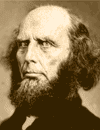 Charles Finney
in Self Deceivers
Read in context
It is an utterly illogical and impossible position for anyone to accept the Sermon on the Mount without recognizing the full claims of Christ as Master and Judge which He made in that discourse.
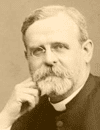 W.H. Griffith Thomas
in The Teaching of Christ
Read in context
The Manifesto is less than the King; all truth is not in the Sermon on the Mount; but it is in the One Who uttered it.
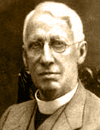 G. Campbell Morgan
in Concerning Sanctity
Read in context
The miracle of regeneration is necessary before we can live the Sermon on the Mount.
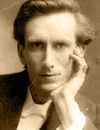 Oswald Chambers
in Studies in the Sermon on the Mount - Part 1
Read in context
The Sermon on the Mount is quite unlike the Ten Commandments in the sense of its being absolutely unworkable unless Jesus Christ can re-make us.
Oswald Chambers
in Studies in the Sermon on the Mount - Part 1
Read in context
The motive at the back of the precepts of the Sermon on the Mount is love for God.
Oswald Chambers
in Studies in the Sermon on the Mount - Part 1
Read in context
It is sheer nonsense to call upon unsaved men to live up to the Sermon on the Mount.
 T. Austin-Sparks
in The Priority of the Kingdom
Read in context
The Sermon on the Mount accordingly contained timeless truths always applicable, some truths that were immediately applicable to Christ's day on earth, and some truths that were to have their fulfillment in the millennial kingdom.
 John F. Walvoord
in The Mysteries of the Kingdom
Read in context
These precepts are to be found scattered everywhere throughout the four Gospels, and especially in the sermon on the mount.
J.C. Ryle
in Sanctification
Read in context
To treat the Sermon on the Mount as merely an ideal is misleading.
Oswald Chambers
in Studies in the Sermon on the Mount - Part 2
Read in context
What Scripture says
- Matthew 5:3 the first Beatitude: the kingdom belongs to the poor in spirit
- Matthew 5:16 let your light shine so that men glorify your Father
- Matthew 5:17 Christ came to fulfil the Law and the Prophets
- Matthew 5:20 a righteousness that exceeds that of the scribes and Pharisees
- Matthew 5:44-45 love your enemies, that you may be sons of your Father
- Matthew 6:6 pray to your Father in secret
- Matthew 6:33 seek first the kingdom of God and His righteousness
- Matthew 7:12 do to others as you would have them do to you
- Matthew 7:13-14 the narrow gate and the way that leads to life
- Matthew 7:24 the wise man hears these words and acts on them
- Matthew 7:28-29 He taught as one who had authority
How this page is made: the quotes are taken word for word from sermons on SermonIndex and checked against them by program before the page is published. The transcripts of audio and video sermons are machine-made, so follow the link to hear the words as they were spoken. The answer above the quotes is an overview with its sources listed; it is not a statement of doctrine by SermonIndex.