
In Ezekiel 37 God shows the prophet a valley of dry bones, raises them to life through His word and His breath, and tells him that the bones are the house of Israel, whom He will bring up from their graves and settle in their land. The preachers quoted here draw out what the vision says to Israel and how they apply it to the new birth, to revival and to preaching in dependence on the Spirit.
The valley of dry bones teaches that God can give life where there is no hope of it. Ezekiel saw a valley of bones brought together and raised to life when he spoke God's word and the breath of God entered them, and God told him that the bones were the house of Israel, whom He would raise up and bring home. God's promise was, "This is what the Lord GOD says to these bones: I will cause breath to enter you, and you will come to life." (Ezekiel 37:5). Alexander Maclaren wrote, "Faith has the prerogative of seeing possibilities of life in what looks to sense hopeless death."1
The valley
The vision begins with Ezekiel carried by God's Spirit. "The hand of the LORD was upon me, and He brought me out by His Spirit and set me down in the middle of the valley, and it was full of bones." (Ezekiel 37:1). He was made to look closely. "He led me all around among them, and I saw a great many bones on the floor of the valley, and indeed, they were very dry." (Ezekiel 37:2). A.B. Simpson wrote, "It is the scene of some ancient battle, where he beholds around him the skeletons of the fallen army, and, lo! they are very many, and, lo! they are very dry."2 Charles Spurgeon said, "A bone is dried when every particle of marrow is gone out of it; when it looks as if it never could have been covered with flesh, or have been part of a living body."3
The bones were many and very dry. Nothing in the scene suggested that life was near.
These bones are the house of Israel
God Himself explains the vision, and the first meaning is plain. He told Ezekiel, "Son of man, these bones are the whole house of Israel." (Ezekiel 37:11). Ezekiel was among the exiles, and his people believed the nation was finished. Their own words were, "Our bones are dried up, and our hope has perished; we are cut off." (Ezekiel 37:11).
Maclaren wrote, "The only sense in which living men could say that their bones were dried up, and they cut off, is a figurative one, and obviously it is the national existence which they regarded as irretrievably ended."4 He went on, "The saying gives us a glimpse into the despair which had settled down on the exiles, and against which Ezekiel had to contend, as he had also to contend against its apparently opposite and yet kindred feeling of presumptuous, misplaced hope."5 He wrote of Ezekiel's answer to that despair, "As far as outward resources are concerned, despair was rational, and hope as absurd as it would have been to expect that men, dead so long that their bones had been bleached by years of exposure to the weather, should live again."6 He added, "But while Ezekiel saw the facts of Israel's powerlessness as plainly as the most despondent, he did not therefore despair."7
God's promise to them was specific. "O My people, I will open your graves and bring you up from them, and I will bring you back to the land of Israel." (Ezekiel 37:12). He says, "I will put My Spirit in you and you will live, and I will settle you in your own land." (Ezekiel 37:14). Maclaren wrote that "the proper scope of the vision is to assure despairing Israelites that God would quicken the apparently slain national life, and replace them in the land."8
Preachers differ on how and when this promise to Israel is fulfilled, whether in the return from Babylon or also in a restoration still to come. That belongs to the study of the last things, and this page does not take it up. It keeps to what the text says, and to the ways preachers have used it.
Can these bones live?
God asked Ezekiel a question before He gave a command. "Son of man, can these bones come to life?" (Ezekiel 37:3). Ezekiel did not say yes, and he did not say no. He left it with God: "only You know." (Ezekiel 37:3).
Maclaren wrote, "The question which rose in his mind was God's question, and the very raising it let a gleam of hope in."9 A.C. Dixon said, "Now there is no process known to science by which a dry bone can be suddenly changed into a living organism."10 He also said, "To the man whose faith is in God alone the hopeless becomes hopeful."10 Paul says the same of Abraham's faith: he believed "the God who gives life to the dead and calls into being what does not yet exist." (Romans 4:17).
Prophesy to the bones
Then came the command. God told Ezekiel to speak to the bones: "Dry bones, hear the word of the LORD!" (Ezekiel 37:4). Spurgeon said, "To tell dry bones to live is a very unreasonable sort of thing when tried by rules of logic."11 Dixon said, "It is foolish to speak to a deaf man, more foolish to speak to a dead man, and it is the climax of folly to speak to a bone so lifeless and formless as not to be classified as man at all."10 He said of the prophet, "The prophet spoke to the bones exactly what God told him."10
Ezekiel obeyed. "So I prophesied as I had been commanded. And as I prophesied, there was suddenly a noise, a rattling, and the bones came together, bone to bone." (Ezekiel 37:7). Maclaren wrote, "The prophet's part was to prophesy to the bones first; and his word, in a sense, brought about the effect which it foretold, since his ministry was the most potent means of rekindling dying hopes, and bringing the disjecta membra of the nation together again."12
A body with no breath
The bones came together, and more followed. "As I looked on, tendons appeared on them, flesh grew, and skin covered them; but there was no breath in them." (Ezekiel 37:8). There were bodies now, but they were still dead. Maclaren saw a warning here. He wrote, "Creeds may be articulated most correctly, every bone in its place, and yet have no vitality in them."13 He added, "Religion must have a body, but often the body is not so much the organ as the sepulchre of the spirit."14 Simpson said of formal religion, "It is all like the vision of the valley of dry bones: the forms of men, but there is no life in them."15
Robert Murray M'Cheyne applied the same picture to hearers who are moved for a time and then forget. He said to his congregation, "You are somewhat impressed, and we hope that your heart is touched; but your impressions are like impressions on the sand when the tide is out, and the very next tide of the world effaces all."16
Prophesy to the breath
God gave a second command. "Prophesy to the breath; prophesy, son of man, and tell the breath that this is what the Lord GOD says: Come from the four winds, O breath, and breathe into these slain, so that they may live!" (Ezekiel 37:9). Ezekiel had spoken to the bones. Now he was to call on God for what he could not give.
Spurgeon said, "It is the Spirit that quickens—neither the letter of the word nor the energy of our manner can give life!"17 He went on, "Therefore we feel that when we have prophesied to the dry bones we must also prophesy to the Wind, for unless the Divine Breath shall come, the dry bones will never live."17 In another sermon he said, "God the Holy Spirit must be with us, or else we might as well go and stand on the tops of the hills of Scotland and shout to the east wind!"11 Dixon said, "The prophet was commanded to call upon the breath of God to breathe upon the valley of bones, and, while he spoke God's word, God's invisible power moved upon the valley."10
Breath, wind and Spirit
The passage moves between breath, wind and spirit. God promises "I will put breath within you so that you will come to life" (Ezekiel 37:6), and then says, "I will put My Spirit in you and you will live" (Ezekiel 37:14). The picture goes back to the making of man: "Then the LORD God formed man from the dust of the ground and breathed the breath of life into his nostrils, and the man became a living being." (Genesis 2:7). The Lord Jesus used the same picture of the new birth: "The wind blows where it wishes. You hear its sound, but you do not know where it comes from or where it is going. So it is with everyone born of the Spirit." (John 3:8).
Maclaren wrote that the details of the vision "are shaped after the pattern of the creation of Adam, but the essential point is that what the world needs is the impartation from God of His Spirit."18 Spurgeon said, "The first work of the Spirit in the heart is a work during which the Spirit is compared to the wind."19 In another sermon he said, "The Holy Spirit, like the wind, blows where He wishes and the order of His working is with the Lord, alone."20
They lived and stood up
The second word was answered as the first had been. "So I prophesied as He had commanded me, and the breath entered them, and they came to life and stood on their feet—a vast army." (Ezekiel 37:10). Maclaren wrote, "The second stage is the quickening of these bodies with life, and here again Ezekiel, as God's messenger, has power to bring about what he announces; for, at his command, the breath, or wind, or spirit, comes, and the stiff corpses spring to their feet, a mighty army."21 Simpson wrote, "The effect of the Holy Spirit's work is not a mere reformation, but a transformation."22
Then you will know that I am the LORD
God says what the vision is for. They will know that He is the LORD when He opens their graves. Giving life shows who He is. Maclaren wrote, "God makes Himself known in His divinest glory when He quickens dead souls."23 He went on, "The world may learn what He is therefrom, but they who have experienced the change, and have, as it were, been raised from the grave to new life, have personal experience of His power and faithfulness so sure and sweet that henceforward they cannot doubt Him nor forget His grace."24 God ends with His own word: "Then you will know that I, the LORD, have spoken, and I will do it" (Ezekiel 37:14).
Applied to the new birth
Preachers have long taken the vision as a picture of what God does in a sinner's heart. Maclaren was careful to say that this is an application and not Ezekiel's own meaning. He wrote, "We may extend the application of the vision to the condition of humanity and the divine intervention which communicates life to a dead world, but must remember that no such meaning was in Ezekiel's thoughts."25 He went on, "The valley full of dry bones is but too correct a description of the aspect which a world 'dead in trespasses and sins' bears, when seen from the mountain-top by pure and heavenly eyes."26 Paul writes, "And you were dead in your trespasses and sins," (Ephesians 2:1) and adds that God "made us alive with Christ even when we were dead in our trespasses." (Ephesians 2:5).
Spurgeon said, "We may, with equal accuracy, see in it, a vivid representation of the work of Grace upon the hearts of all those who are quickened into spiritual life by the power of Divine Grace."3 He said, "The putting of spiritual life into a natural man is a marvel of marvels and should excite as much wonder as the raising of Lazarus, or of Jairus' daughter, or of the young man at the gates of Nain."3 He told his hearers, "You were like the dry bones of Ezekiel's valley, without even the form or the moisture of life!"27 Simpson wrote, "The condition of human souls is like the bones in the valley of vision, very many and very dry."28 Dixon said, "It is the lack of the knowledge of God that makes them dry, and nothing but the knowledge of God can restore them to life."10 In another sermon Spurgeon said, "The might which brought Christ from the dead and took Him to Heaven is such a tremendous power that it surely can bring the drunkard, the harlot, the blasphemer to Christ."29
M'Cheyne pressed the picture on the unconverted. He said of them, "If we tell them of the wrath of God that is coming upon them, they are not moved to flee; dry bones cannot run."16 He compared the world to Egypt on the night of the Passover and said, "Oh! it is more dismal far; for in every house there are many dead souls, and yet there is no cry."16 These are the preachers' words. Preachers differ on how the sinner's inability and the call to believe fit together, and this page does not take that up.
Applied to revival
Preachers have also used the vision for the reviving of the church. The psalmist prays, "Will You not revive us again, that Your people may rejoice in You?" (Psalm 85:6) and God promises through Isaiah, "I will pour water on the thirsty land, and currents on the dry ground. I will pour out My Spirit on your descendants" (Isaiah 44:3). Spurgeon preached on that promise in Isaiah as a promise of revival. He said, "The certain result of the outpouring of the Spirit is the springing up of spiritual life."17 He said, "It is upon the thirsty land, upon the heart which laments its barrenness and confesses its own unworthiness, that the Spirit of God shall come!"17 He said, "Even thus, let the Spirit of God come upon any Church, and He is all that it needs to make it living and fruitful!"17
Andrew Bonar said, "Revivals begin with God's own people; the Holy Spirit touches their heart anew, and gives them new fervour and compassion, and zeal, new light and life, and when He has thus come to you, He next goes forth to the valley of dry bones."30 David Wilkerson said, "We are instructed in this passage to call upon the Holy Spirit to come and breathe!"31 Samuel Rutherford wrote in a letter about the church in Scotland, "The dry olive-tree shall bud again, and dry dead bones shall live; for the Lord will prophesy to the dry bones, and the Spirit shall come upon them, and we shall live."32
Applied to preaching
The vision has two commands, one to speak to the bones and one to speak to the breath. Preachers have seen in that order the work of every minister of the word. Paul says, "My message and my preaching were not with persuasive words of wisdom, but with a demonstration of the Spirit's power," (1 Corinthians 2:4). He also says, "the letter kills, but the Spirit gives life." (2 Corinthians 3:6). God told Zerubbabel, "Not by might nor by power, but by My Spirit, says the LORD of Hosts." (Zechariah 4:6).
Spurgeon said, "It is not my power, or my experience, or my mode of thought which will bring men from death to life—it is the Holy Spirit who will do it—and He only!"11 He said, "We must preach by faith as much as Noah built the ark by faith and, just as the walls of Jericho were brought down by faith—men's hearts are to be broken by faithful preaching, that is, preaching full of faith!"11 In another sermon he said, "We cannot turn the dry bones into living men, but we can prophesy to them, and, blessed be God, we can also prophesy to the four winds and so, by our means, the dead may live!"33 Dixon said of every worker in the valley of bones, "He must keep right with God and speak the word of God, while he trusts the Spirit of God."10
The preacher in the valley
Ezekiel was not allowed to look at the bones from a distance. He was set down "in the middle of the valley" (Ezekiel 37:1) and led "all around among them" (Ezekiel 37:2). Maclaren wrote, "The sorrowful sense of the widespread deadness must enter into a man's spirit, and be ever present to him, in order to fit him for his work."34 Dixon said, "The temptation is for us to seek the garden with its flowers rather than the valley with its bones."10 He said, "Dwelling with the bones is more trying than just going to them on a temporary mission."10 He went on, "But unless we are ready to respond to the hand of God which would lead us to the bones and make us dwell among them, we are not prepared for the work of raising them to life."10
Hope for the hopeless
The people said their hope had perished. God answered them with a promise. Spurgeon said to those who feel themselves dry and dead, "When your bones are dried, then will God come in as the Resurrection and the Life and make these dry bones live!"3 God's word to them was, "Then you, My people, will know that I am the LORD, when I open your graves and bring you up from them." (Ezekiel 37:13).
And the resurrection?
The vision is about a nation, but it uses the picture of the dead raised. Maclaren wrote, "The vision is so entirely figurative, that it cannot be employed as evidence that the idea of the resurrection of the dead was part of the Jewish beliefs at this date."35 He added, "It does, however, seem most natural to suppose that the exiles were familiar with the idea, though the vision cannot be taken as a revelation of a literal resurrection of dead men."36 Simpson wrote, "While this passage is not a literal vision of the resurrection from the dead, at the same time it assumes it and takes it for granted."37 Spurgeon said, "It is not, however, a mere figure—it is a parable based upon a remarkable representation of the resurrection of the dead."3 Paul says of those in whom the Spirit lives, "And if the Spirit of Him who raised Jesus from the dead is living in you, He who raised Christ Jesus from the dead will also give life to your mortal bodies through His Spirit, who lives in you." (Romans 8:11).
What the vision asks of us
The valley of dry bones leaves no room for despair and no room for self-reliance. It calls for honest sight of how dead things are, for faithful speaking of God's word, and for prayer to the Spirit who alone gives life. Maclaren wrote, "We know more than Ezekiel did as to the way by which that Spirit is given to men, and as to the kind of life which it imparts, and as to the connection between that life and holiness."38 The Lord Jesus said, "The Spirit gives life; the flesh profits nothing." (John 6:63). And again, "Truly, truly, I tell you, the hour is coming and has now come when the dead will hear the voice of the Son of God, and those who hear will live." (John 5:25).
- Alexander Maclaren, Expositions Of Holy Scripture A, "The dry bones and the spirit of life".
- A.B. Simpson, The Holy Spirit, "THE SPIRIT OF THE RESURRECTION -- Ezekiel 37: 8".
- C.H. Spurgeon, "Despair Denounced and Grace Glorified" (sermon).
- Alexander Maclaren, Expositions Of Holy Scripture A, "The dry bones and the spirit of life".
- Alexander Maclaren, Expositions Of Holy Scripture A, "The dry bones and the spirit of life".
- Alexander Maclaren, Expositions Of Holy Scripture A, "The dry bones and the spirit of life".
- Alexander Maclaren, Expositions Of Holy Scripture A, "The dry bones and the spirit of life".
- Alexander Maclaren, Expositions Of Holy Scripture A, "The dry bones and the spirit of life".
- Alexander Maclaren, Expositions Of Holy Scripture A, "The dry bones and the spirit of life".
- Amzi Clarence Dixon, "Raising Dry Bones" (sermon).
- C.H. Spurgeon, "Come From the Four Winds, O Breath!" (sermon).
- Alexander Maclaren, Expositions Of Holy Scripture A, "The dry bones and the spirit of life".
- Alexander Maclaren, Expositions Of Holy Scripture A, "The dry bones and the spirit of life".
- Alexander Maclaren, Expositions Of Holy Scripture A, "The dry bones and the spirit of life".
- A.B. Simpson, "Isaiah Chapter 24 the Right and Wrong Way of Living" (sermon).
- Robert Murray M'Cheyne, "The Vision of Dry Bones" (sermon).
- C.H. Spurgeon, "A Revival Promise" (sermon).
- Alexander Maclaren, Expositions Of Holy Scripture A, "The dry bones and the spirit of life".
- C.H. Spurgeon, "The Holy Spirit and the One Church" (sermon).
- C.H. Spurgeon, "The Drought of Nature, the Rain of Grace and the Lesson Therefrom" (sermon).
- Alexander Maclaren, Expositions Of Holy Scripture A, "The dry bones and the spirit of life".
- A.B. Simpson, The Holy Spirit, "THE SPIRIT OF THE RESURRECTION -- Ezekiel 37: 8".
- Alexander Maclaren, Expositions Of Holy Scripture A, "The dry bones and the spirit of life".
- Alexander Maclaren, Expositions Of Holy Scripture A, "The dry bones and the spirit of life".
- Alexander Maclaren, Expositions Of Holy Scripture A, "The dry bones and the spirit of life".
- Alexander Maclaren, Expositions Of Holy Scripture A, "The dry bones and the spirit of life".
- C.H. Spurgeon, "Christ's Resurrection and Our Newness Of Life" (sermon).
- A.B. Simpson, The Holy Spirit, "THE SPIRIT OF THE RESURRECTION -- Ezekiel 37: 8".
- C.H. Spurgeon, "The Mighty Power Which Creates And Sustains Faith" (sermon).
- Andrew Bonar, "The Holy Spirit Convincing" (sermon).
- David Wilkerson, "A Spirit of Slumber!" (sermon).
- Samuel Rutherford, Letters of Samuel Rutherford, "CCXXI.—For MARION M'NAUGHT".
- C.H. Spurgeon, "The Sphere Of Instrumentality" (sermon).
- Alexander Maclaren, Expositions Of Holy Scripture A, "The dry bones and the spirit of life".
- Alexander Maclaren, Expositions Of Holy Scripture A, "The dry bones and the spirit of life".
- Alexander Maclaren, Expositions Of Holy Scripture A, "The dry bones and the spirit of life".
- A.B. Simpson, The Holy Spirit, "THE SPIRIT OF THE RESURRECTION -- Ezekiel 37: 8".
- Alexander Maclaren, Expositions Of Holy Scripture A, "The dry bones and the spirit of life".
In their own words
Each line below is quoted exactly from a sermon on this site. Follow the link to hear or read it where it was said.
A bone is dried when every particle of marrow is gone out of it; when it looks as if it never could have been covered with flesh, or have been part of a living body.
 C.H. Spurgeon
in Despair Denounced and Grace Glorified
Read in context
We may, with equal accuracy, see in it, a vivid representation of the work of Grace upon the hearts of all those who are quickened into spiritual life by the power of Divine Grace.
C.H. Spurgeon
in Despair Denounced and Grace Glorified
Read in context
The putting of spiritual life into a natural man is a marvel of marvels and should excite as much wonder as the raising of Lazarus, or of Jairus' daughter, or of the young man at the gates of Nain.
C.H. Spurgeon
in Despair Denounced and Grace Glorified
Read in context
When your bones are dried, then will God come in as the Resurrection and the Life and make these dry bones live!
C.H. Spurgeon
in Despair Denounced and Grace Glorified
Read in context
It is not, however, a mere figure—it is a parable based upon a remarkable representation of the resurrection of the dead.
C.H. Spurgeon
in Despair Denounced and Grace Glorified
Read in context
Now there is no process known to science by which a dry bone can be suddenly changed into a living organism.
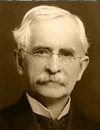 Amzi Clarence Dixon
in Raising Dry Bones
Read in context
To the man whose faith is in God alone the hopeless becomes hopeful.
Amzi Clarence Dixon
in Raising Dry Bones
Read in context
It is foolish to speak to a deaf man, more foolish to speak to a dead man, and it is the climax of folly to speak to a bone so lifeless and formless as not to be classified as man at all.
Amzi Clarence Dixon
in Raising Dry Bones
Read in context
The prophet spoke to the bones exactly what God told him.
Amzi Clarence Dixon
in Raising Dry Bones
Read in context
The prophet was commanded to call upon the breath of God to breathe upon the valley of bones, and, while he spoke God's word, God's invisible power moved upon the valley.
Amzi Clarence Dixon
in Raising Dry Bones
Read in context
It is the lack of the knowledge of God that makes them dry, and nothing but the knowledge of God can restore them to life.
Amzi Clarence Dixon
in Raising Dry Bones
Read in context
He must keep right with God and speak the word of God, while he trusts the Spirit of God.
Amzi Clarence Dixon
in Raising Dry Bones
Read in context
The temptation is for us to seek the garden with its flowers rather than the valley with its bones.
Amzi Clarence Dixon
in Raising Dry Bones
Read in context
Dwelling with the bones is more trying than just going to them on a temporary mission.
Amzi Clarence Dixon
in Raising Dry Bones
Read in context
But unless we are ready to respond to the hand of God which would lead us to the bones and make us dwell among them, we are not prepared for the work of raising them to life.
Amzi Clarence Dixon
in Raising Dry Bones
Read in context
To tell dry bones to live is a very unreasonable sort of thing when tried by rules of logic.
C.H. Spurgeon
in Come From the Four Winds, O Breath!
Read in context
God the Holy Spirit must be with us, or else we might as well go and stand on the tops of the hills of Scotland and shout to the east wind!
C.H. Spurgeon
in Come From the Four Winds, O Breath!
Read in context
It is not my power, or my experience, or my mode of thought which will bring men from death to life—it is the Holy Spirit who will do it—and He only!
C.H. Spurgeon
in Come From the Four Winds, O Breath!
Read in context
We must preach by faith as much as Noah built the ark by faith and, just as the walls of Jericho were brought down by faith—men's hearts are to be broken by faithful preaching, that is, preaching full of faith!
C.H. Spurgeon
in Come From the Four Winds, O Breath!
Read in context
It is all like the vision of the valley of dry bones: the forms of men, but there is no life in them.
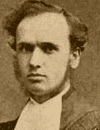 A.B. Simpson
in Isaiah Chapter 24 the Right and Wrong Way of Living
Read in context
You are somewhat impressed, and we hope that your heart is touched; but your impressions are like impressions on the sand when the tide is out, and the very next tide of the world effaces all.
 Robert Murray M'Cheyne
in The Vision of Dry Bones
Read in context
If we tell them of the wrath of God that is coming upon them, they are not moved to flee; dry bones cannot run.
Robert Murray M'Cheyne
in The Vision of Dry Bones
Read in context
Oh! it is more dismal far; for in every house there are many dead souls, and yet there is no cry.
Robert Murray M'Cheyne
in The Vision of Dry Bones
Read in context
It is the Spirit that quickens—neither the letter of the word nor the energy of our manner can give life!
C.H. Spurgeon
in A Revival Promise
Read in context
Therefore we feel that when we have prophesied to the dry bones we must also prophesy to the Wind, for unless the Divine Breath shall come, the dry bones will never live.
C.H. Spurgeon
in A Revival Promise
Read in context
The certain result of the outpouring of the Spirit is the springing up of spiritual life.
C.H. Spurgeon
in A Revival Promise
Read in context
It is upon the thirsty land, upon the heart which laments its barrenness and confesses its own unworthiness, that the Spirit of God shall come!
C.H. Spurgeon
in A Revival Promise
Read in context
Even thus, let the Spirit of God come upon any Church, and He is all that it needs to make it living and fruitful!
C.H. Spurgeon
in A Revival Promise
Read in context
The first work of the Spirit in the heart is a work during which the Spirit is compared to the wind.
C.H. Spurgeon
in The Holy Spirit and the One Church
Read in context
The Holy Spirit, like the wind, blows where He wishes and the order of His working is with the Lord, alone.
C.H. Spurgeon
in The Drought of Nature, the Rain of Grace and the Lesson Therefrom
Read in context
You were like the dry bones of Ezekiel's valley, without even the form or the moisture of life!
C.H. Spurgeon
in Christ's Resurrection and Our Newness Of Life
Read in context
The might which brought Christ from the dead and took Him to Heaven is such a tremendous power that it surely can bring the drunkard, the harlot, the blasphemer to Christ.
C.H. Spurgeon
in The Mighty Power Which Creates And Sustains Faith
Read in context
Revivals begin with God's own people; the Holy Spirit touches their heart anew, and gives them new fervour and compassion, and zeal, new light and life, and when He has thus come to you, He next goes forth to the valley of dry bones.
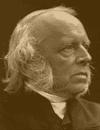 Andrew Bonar
in The Holy Spirit Convincing.
Read in context
We are instructed in this passage to call upon the Holy Spirit to come and breathe!
 David Wilkerson
in A Spirit of Slumber!
Read in context
We cannot turn the dry bones into living men, but we can prophesy to them, and, blessed be God, we can also prophesy to the four winds and so, by our means, the dead may live!
C.H. Spurgeon
in The Sphere Of Instrumentality
Read in context
What Scripture says
- Ezekiel 37:1 set down in the middle of the valley, and it was full of bones
- Ezekiel 37:3 can these bones come to life?
- Ezekiel 37:4 prophesy concerning these bones
- Ezekiel 37:5 I will cause breath to enter you, and you will come to life
- Ezekiel 37:9 come from the four winds, O breath
- Ezekiel 37:10 the breath entered them, and they came to life
- Ezekiel 37:11 these bones are the whole house of Israel
- Ezekiel 37:14 I will put My Spirit in you and you will live
- Ephesians 2:5 made us alive with Christ even when we were dead
- John 6:63 the Spirit gives life
- Zechariah 4:6 not by might nor by power, but by My Spirit
How this page is made: the quotes are taken word for word from sermons on SermonIndex and checked against them by program before the page is published. The transcripts of audio and video sermons are machine-made, so follow the link to hear the words as they were spoken. The answer above the quotes is an overview with its sources listed; it is not a statement of doctrine by SermonIndex.